Want to be in the loop?
subscribe to
our notification
Business News
VN TEXTILE INDUSTRY LOOKS TO 2020 AND BEYOND
However, in 2015, the garment sector already earned an export turnover of $27.5 billion. All the garment and textile businesses have actively taken advantage of opportunities through trade agreements such as the Trans-Pacific Partnership (TPP), Vietnam-Korea Free Trade Agreement (VKFTA), and Vietnam-EU Free Trade Agreement (EVFTA).
Vu Duc Giang, chairman of the Viet Nam Textile and Apparel Association (VITAS) said the industry was facing numerous challenges as many of its companies had closed down or halted production. Therefore, the industry wanted the Government to revise the plan as it was inappropriate and regressive. The Government should outline another long-term plan until 2040 to help the industry’s progress go in line with the country’s economic development.
According to VITAS, with the current growth, the sector has set export turnover at between $40 billion and $50 billion by 2020, instead of targets set in the current plan.
Vitas estimated that between 1988 and 2012, the sector attracted 1,551 FDI projects. Of this figure, there were 1,193 garment projects and 358 fibre production projects with a total investment of $3.5 billion. Thanks to the FDI influence, such businesses brought $2 billion into Viet Nam to the garment sector in 2015.
As a result, the total export turnover of the garment sector reached $24 billion in 2014 and $27.5 billion in 2015, and it is expected to reach $31 billion by late 2016.
Giang said that apart from the five key export products, Viet Nam also exported various kinds of fibre with an export turnover of over $3 billion annually and different types of fabric with a turnover of $1 billion per year.
Apart from the rapid production scale and strong export growth, the garment sector has also coped with unresolved shortcomings. These shortcomings needed to be handled soon to make the sector’s development sustainable.
VITAS has also proposed that the Government initiate policies to attract investments in this sector, including high-quality fibre production and dyeing projects.
In doing so, VITAS has also asked the Government to take a relook at industrial parks or key economic zones including those from the garment and textile sector.
Over the years, the garment and textile industry has not had specialised industrial zones to attract investments in textile and dyeing. As a result, the sector still relies on importing high-quality fibre for manufacturing export products, and it cost $15billion in 2015.
In addition, Giang said the Government needed to invest in infrastructure development, and create incentives for investors. Special attention should be paid to the production units and the origin of textile fibre and threads, and dyeing. To obtain these, VITAS has asked the Government to pay great attention to investment in international quality waste water treatment plants.
Source: VNS
Related News
VIETNAM ECONOMY INVESTMENT
FOREIGN INVESTORS SEEKING A SYNCHRONISED MANUFACTURING ECOSYSTEM
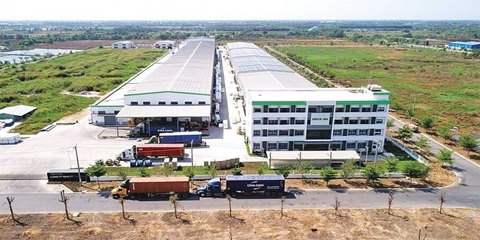
Instead of focusing only on land costs and incentives as usual, foreign investors are seeking a synchronised manufacturing ecosystem, from stable power supply and logistics to shared infrastructure and the convenience of completing residence procedures for experts to serve their long-term investment in the country.
INFRASTRUCTURE / CONSTRUCTION / LOGISTIC / PORT
DONG THAP PROVINCE STEPS UP INDUSTRIAL EXPANSION AND INFRASTRUCTURE CONNECTIVITY
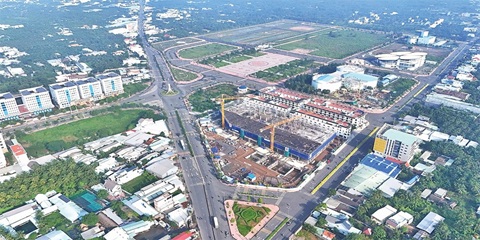
Accelerating public investment, strengthening inter-regional connectivity, and expanding industrial land are helping Dong Thap efficiently bolster competitiveness and drive economic growth. Following the 2025 merger of the former Dong Thap and Tien Giang provinces, the expanded Dong Thap province in the Mekong Delta faces mounting pressure to accelerate infrastructure development and strengthen connectivity among local economic zones, urban areas, industrial parks (IPs), and production centres.
PROPERTY / INDUSTRIAL ZONE
HCM CITY ATTRACTS US$5.7 BILLION INTO EXPORT PROCESSING AND INDUSTRIAL ZONES
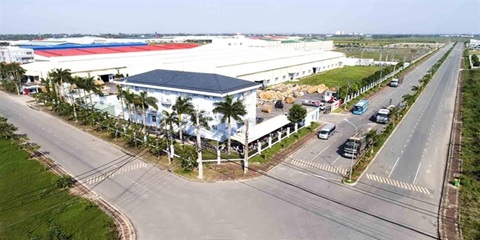
HCM City attracted US$5.7 billion in domestic and foreign investment into its export processing and industrial zones during the first nine months of 2026. The figure exceeded the city's full-year target by 31 per cent, highlighting strong momentum in high-quality industrial investment under Resolution No.10-NQ/TW. Total investment reached 131 per cent of the 2026 target of $4.25 billion and represented a 29 per cent increase compared with the same period in 2025, according to the city's Export Processing and Industrial Zones Authority (HEPZA).

BANKING / FINANCE / INSURANCE / TAX
REMITTANCES TO HCM CITY RISE NEARLY 40% IN Q3
Remittances to HCM City reached more than US$2.83 billion in the third quarter of this year, up 39.5 per cent from the previous quarter and 3.6 per cent year-on-year. This was the first quarter showing positive annual growth this year, helping narrow the decline in remittance inflows over the first nine months. According to the State Bank of Vietnam (SBV)’s Regional Branch 2, remittances transferred to HCM City through credit institutions and economic organisations totalled $2.835 billion in Q3, an increase of more than $802 million from the previous quarter.
VIETNAM ECONOMY INVESTMENT
LOCALITIES REPORT BREAKTHROUGH RESULTS IN FDI IN FIRST NINE MONTHS
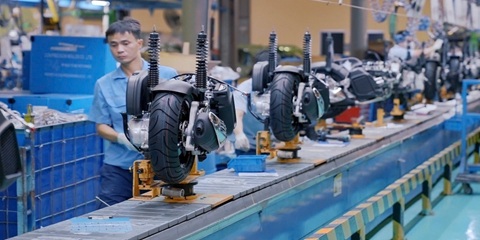
In Ho Chi Minh City, total registered capital reached $17.2 billion in the first nine months, up 4.2 times from the same period last year. The figure included more than $9.35 billion in newly registered capital and over $4.9 billion in additional capital for existing projects. Foreign investors also registered more than $2.9 billion through capital contributions and share purchases.

TECHNOLOGY
TECH SECTOR GROWTH OPENS UP OPPORTUNITIES FOR VIỆT NAM TO GO GLOBAL
The growth of the electronics, semiconductor and high-tech sectors worldwide is opening up a variety of opportunities for Vietnamese enterprises to integrate more deeply into the global supply chain. However, to become suppliers for these corporations, domestic enterprises must meet rigorous standards regarding quality, technology, productivity and order fulfilment capabilities.
Events Sponsors






















