Want to be in the loop?
subscribe to
our notification
Business News
AGRITOURISM BECOMES MORE POPULAR
Agriculture tourism (agritourism) and rural tourism in Việt Nam, where tourists can engage in farm activities, have been attracting many visitors, helping local farmers increase their incomes and enhance the quality of Vietnamese agricultural products.

Agritourism attracts may visitors, helping local farmers improve their income. -- VNA/VNS Photo Tuấn Anh
Agriculture tourism (agritourism) and rural tourism in Việt Nam, where tourists can engage in farm activities, have been attracting many visitors, helping local farmers increase their incomes and enhance the quality of Vietnamese agricultural products.
The trend of agricultural and rural tourism is not only growing in many countries worldwide but is particularly suitable for Việt Nam, a country with vast agricultural land where over 62.7 per cent of the population lives in rural areas.
Sharing with Việt Nam News, Varun Grover, country head, Việt Nam at Booking.com said that travellers today are increasingly seeking authentic, immersive and sustainable experiences that connect them with local communities and heritage. This trend is gaining traction among travellers across the world who are increasingly being drawn to responsible tourism practices.
Booking.com's 2024 Sustainable Travel Report underscores this trend in Việt Nam, with 96 per cent of surveyed travellers confirming the importance of sustainable travel and 94 per cent expressing a desire to make more sustainable choices in the next 12 months.
Notably, 21 per cent are motivated to act more sustainably simply because they believe it’s the right thing to do.
Furthermore, the 2024 Holiday Homes Outlook Report highlights the appeal of farm stays (28 per cent) and country cottages (21 per cent) among Vietnamese travellers. This aligns with the broader movement towards green and responsible tourism, where travellers seek deeper connections with destinations, embrace diverse cultures and support local economies.
Việt Nam's rich agricultural heritage, diverse landscapes, the beauty of its rural areas and warm hospitality provide a great foundation for agritourism development. Furthermore, the emphasis on community-based tourism, the desire to support local economies and the growing demand for eco-friendly travel options enhances Việt Nam’s potential in this area, Varun Grover told Việt Nam News.
Previously concentrated in rural areas, agritourism has now become popular in regions near urban centres and major cities. Tourist areas are centred around organic agriculture production, closely linked with craft villages and natural landscapes.
These models offer more than just sightseeing and rural experiences; they also involve activities like participating in the agricultural production process, learning modern farming techniques, and taking cooking classes to prepare food using clean agricultural products.


Visitors visit a farm in Măng Đen - a small town in Central Highland Kon Tum Province. -- VNA/VNS Photo Dư Toán
Daidoanket.vn quoted information from the Ministry of Agriculture and Rural Development, saying that the number of visitors participating in agricultural rural activities is increasing.
While income from agricultural production contributes around 27 per cent to total rural income, non-agricultural production and service activities make up the remaining 73 per cent.
Agricultural tourism models involving local residents have enriched the variety and appeal of tourism products and brought higher incomes to rural communities. This approach serves as a means to alleviate poverty and promote sustainable development in challenging regions and rural areas across the country.
Ngô Kiều Oanh, a passionate scientist dedicated to preserving Vietnamese traditional culture, was determined to establish an agricultural and rural tourism model in the foothills of Ba Vì, an area known for its many traditional agricultural craft villages.
"The farm is closely connected with the surrounding farming community to provide interesting information to tourists, while also serving as a promotional unit for agricultural products from the Ba Vì and Sơn Tây regions in particular, and Hà Nội in general. This is a form of development that harmonises nature, culture, and people in urban areas with rural areas, through living, vacationing, admiring scenic beauty, and enjoying fresh local specialities within a cosy family and village atmosphere," Oanh shared.

Visitors join in a farming trip in Đồng Tháp Province. Việt Nam's rich agricultural heritage, diverse landscapes, the beauty of its rural areas and warm hospitality provide a great foundation for agritourism development. -- VNA/VNS Photo Văn Trí
Nguyễn Quang Đăng from the Institute for Tourism Development Research describes this unique form of tourism as a combination of cultural experiences and natural environments in rural settings. It encompasses activities such as farm tourism, agricultural tourism, craft village tourism, festival tourism, and ecotourism, provided by farmers and rural communities to attract and serve tourists.
"The experiences from rural tourism activities, such as fishing in ponds, picking tea leaves to make tea, grinding rice with a traditional mortar to make rice paper, all bring about surprising and enjoyable experiences that evoke memories of childhood, making travel more meaningful," Đăng explained.
Comprehensive development
Developing agritourism and rural tourism is a key focus of the National Target Programme for New Rural Development 2021-25.
The programme aims to foster active participation from people, communities, enterprises, co-operatives, and other economic organisations in the effective development of rural tourism through value chain linkages.
For sustainable rural tourism development, Ngô Kiều Oanh stressed the importance of comprehensive engagement from all involved parties, including local authorities and the community. Understanding and valuing the beauty and significance of rural tourism products are critical for those in the tourism sector.
Most importantly, those involved in tourism need to truly understand and appreciate the beauty and value of rural tourism products that they and their localities are preserving and developing.

Two young people study high-tech agriculture on a farm. -- VNA/VNS Photo Dư Toán
Phạm Hương Trang underlines the necessity of well-established service spaces for successful agricultural tourism activities, including farms, fields, orchards, traditional craft villages, and culturally rich rural areas.
The crucial involvement of the local community is essential in sharing cultural values and creating unique tourism experiences. By linking the One Commune One Product (OCOP) programme with community tourism services, destinations can enhance their appeal and sustainability.
Integrated rural tourism products with large travel agencies and tourism centres, innovative promotional strategies, and leveraging digital technology are essential for attracting tourists and enhancing their sensory experiences when engaging with promoted tourism products.
In a sharing with media, Đinh Tuấn Hà, director of the non-profit OTA project, noted the need for a clear legal framework to comprehensively manage and develop agricultural tourism models. Establishing these concepts in legal documents provides a foundation for resource utilisation and oversight, fostering effective and sustainable agricultural tourism development. – VNS
Source: VNS
Related News

CHARITY / EXHIBITION / OTHER EVENTS
INVESTMENT OPPORTUNITIES IN CA MAU PROVINCE: 96 PROJECTS AND 20 STRATEGIC PROJECTS
We are pleased to share with you information on investment projects currently seeking investors in Ca Mau Province. Should your esteemed company or association be interested, we kindly invite you to review the project information and complete the registration form via the links provided. The Ho Chi Minh City Investment and Trade Promotion Centre (ITPC) will consolidate the expressions of interest and facilitate connections with the leadership of Ca Mau Province at a meeting tentatively scheduled for 13 November 2026 in Ho Chi Minh City.
MEMBER CORNER / PROMOTIONS
BẰNG KIỀU LIVESHOW - A SYMPHONY OF LOVE UNDER THE GOLDEN GLOW
A masterclass in live music that takes the audience on a soulful journey through immortal love songs, guided by the peerless artistry and emotive storytelling of renowned singer Bằng Kiều. The highlight of the night is his seamless musical chemistry with special guest Triệu Hồng Ngọc, promising passionate and deeply resonant duets inside the magnificent Grand Ballroom.
INFRASTRUCTURE / CONSTRUCTION / LOGISTIC / PORT
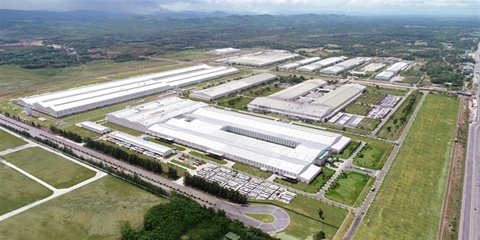
ĐÀ NẴNG GREEN-LIGHTS US$105 MILLION THAI DEVELOPMENT DEAL
The central city has approved an investment proposal by Thailand’s WHA Group to develop infrastructure for the 400ha WHA Đà Nẵng Industrial Park project on two communes of Thăng Bình and Đồng Dương, with an investment of more than VNĐ2.7 trillion (US$105 million). The city said it approved WHA Industrial Development International's status as an investor in the project, which is expected to take place between 2027 and 2034.
VIETNAM ECONOMY INVESTMENT
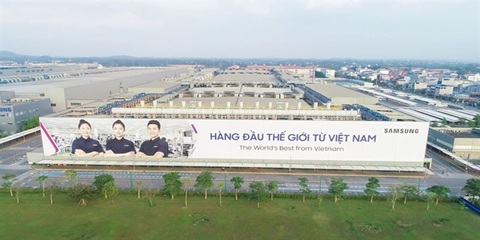
MOBILE PHONE EXPORTS RISE 20% TO $51.8 BILLION IN FIRST NINE MONTHS
Exports of mobile phones and components rose 20 per cent year-on-year to nearly US$51.8 billion in the first nine months of 2026, with China, the US and Republic of Korea accounting for more than half of the total. Shipments to the three markets reached a combined $26.18 billion, or 50.6 per cent of total exports of the product group during the period, according to data from the Vietnam Department of Customs under the Ministry of Finance.
INFRASTRUCTURE / CONSTRUCTION / LOGISTIC / PORT
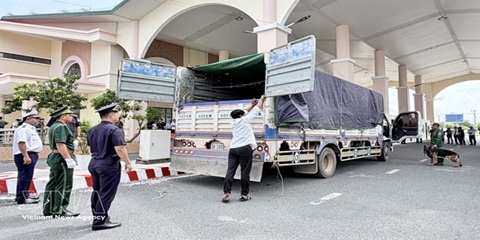
VIỆT NAM-CAMBODIA TRADE GATHERS PACE TOWARDS $20 BILLION TARGET
Trade between Việt Nam and Cambodia continues to grow, remaining a bright spot and a key pillar of bilateral cooperation as the two countries aim to raise two-way trade to US$20 billion in the coming years. After setting a record of more than $11.3 billion last year, bilateral trade reached about $8.7 billion in the first eight months of this year, up 8.3 per cent year on year.
VIETNAM ECONOMY INVESTMENT
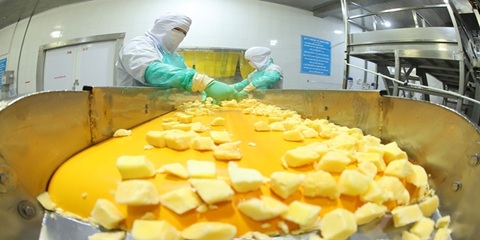
FRUIT AND VEGETABLE EXPORTS POISED TO HIT $10 BILLION IN 2026
Fruit and vegetable exports are on track to reach nearly US$10 billion in 2026, after rising 19.9 per cent year on year to nearly US$7.4 billion in the first nine months, driven by strong seasonal demand and abundant tropical fruit supplies. The Ministry of Agriculture and Environment said the growth reflected stronger international demand for fresh produce and processed agricultural products.
Events Sponsors






















