Want to be in the loop?
subscribe to
our notification
Business News
BUILDING HIGH-QUALITY HUMAN RESOURCES FOR AUTOMOTIVE INDUSTRY
The global automotive industry is undergoing a major transformation, driven by new technologies, shifting consumer preferences and growing environmental concerns. The rise of electric and self-driving vehicles is creating a demand for new skills and expertise in the automotive workforce. Meanwhile, software and electronics companies have already achieved success with many projects in the automotive sector.

Developing Vietnam's automotive supporting industry requires support from leading companies and strong government policies
Expanding and upgrading training for high-quality human resources
FPT Corporation recently signed an agreement with Cranes Varsity, one of India’s leading technology training organizations, to implement the Automotive Software Development Program aimed at developing high-quality human resources. Under this agreement, FPT will establish the Cranes FPT training system, providing Vietnamese students with access to international-standard training in automotive software development. The program covers knowledge and skills, with a focus on embedded systems, artificial intelligence (AI), and advanced automotive technologies. This marks Vietnam’s first international-standard short-term training program in automotive software development, designed to meet the growing global demand in the automotive industry.
The program spans four semesters (two years) and covers a comprehensive curriculum, from basic to advanced programming, simulation, software testing, and the application of industry standards. Nearly 30% of the coursework is dedicated to artificial intelligence (AI), ensuring students gain expertise in the latest automotive technologies. Upon completing the program, students will receive the Advanced Diploma in Automotive Software Development (ADAS) from Cranes Varsity. This internationally recognized certification equips graduates with the skills needed to meet the recruitment standards of automotive technology companies both in Vietnam and globally.
Mr. Truong Gia Binh, Chairman of FPT Corporation, emphasized that the automotive industry is experiencing a major transformation, creating a strong demand for skilled professionals across many specializations. International cooperation is key to positioning Vietnam as a major player in the global industry. This program is designed to rapidly develop high-quality human resources, not only for Vietnam but also for the global market.
Recognizing the urgent need for high-quality human resources in the rapidly evolving automotive technology industry, Faculty of Automotive Technology under the School of Mechanical and Automotive Engineering (Hanoi University of Industry) launched an English-language training program in automotive technology in 2022. This program is built on a nationally accredited curriculum and aligned with ABET standards from the United States. It equips students with both technical expertise and soft skills, preparing them for the demands of international integration. Graduates will be well-qualified to work in leading automotive companies, R&D centers specializing in smart transportation, electric vehicle development and autonomous vehicle technology.
One key training institution for high-quality human resources in the automotive industry is the School of Mechanical Engineering at Hanoi University of Science and Technology. The school offers six majors, including automotive engineering. In addition to classroom instruction, students engage in research projects alongside their instructors, gaining hands-on experience. The school's laboratories remain open for students to practice and apply their knowledge in real-world scenarios. Furthermore, the school collaborates with businesses, sending students for internships each year to help them familiarize themselves with professional working environments.
Still struggling to meet industry demand
Amid economic fluctuations and rapid advancements in science and technology, automation and modern machinery are increasingly replacing human labor, making high-quality human resources essential for the evolving automotive industry. Many automobile manufacturers are actively seeking skilled professionals who can adapt to market trends and contribute long-term to their companies. Leading firms in the manufacturing sector, such as FPT Software, VinFast, Hyundai Kefico Vietnam and Honda Vietnam, offer highly competitive salaries to graduates specializing in automotive technology, reflecting the growing demand for well-trained professionals in the field.
Truong Hai Group Corporation (THACO) currently employs around 60,000 people, with 32% holding university or postgraduate degrees, 18% having technical college qualifications and 50% being skilled technical workers. From 2022 to 2025, THACO's workforce demand is expected to grow by 15% annually, driven by its digital transformation strategy for sustainable development. To address this need, THACO established a vocational college in 2010 with a training capacity of 2,000 students per year, though this still falls short of demand. As a result, THACO collaborates with universities, research institutes and educational institutions, while also recruiting experts from Japan and South Korea to train its workforce in technology, engineering and electronics.
Many small and medium-sized enterprises (SMEs) in the automotive industry believe that only a few leading companies have the resources to actively manage and develop their workforce, while most still depend on training institutions. As an immediate solution, these businesses are strengthening partnerships with universities and colleges, investing time and resources in training programs in the hope of securing a skilled workforce. In reality, even if only 1-2 out of every 10 trained employees stay and work long-term, it is considered a success.
Vietnam's automotive supporting industry enterprises are mostly small and medium-sized, often operating with outdated technology and a workforce that lacks proper training and industry experience. The labor market faces shortages in both quality and quantity. Additionally, vocational training programs are not closely aligned with actual production demands, leading to a disconnect between labor supply and demand, training content and real-world application, and educational institutions and supporting industry businesses that require highly skilled technical workers.
To develop a sustainable and globally integrated labor market, experts suggest Vietnam implement a comprehensive policy framework for human resource development aligned with regional economic planning. This includes restructuring the education and training system from primary levels to universities and vocational schools, ensuring alignment with advanced regional and global education standards. A key priority is to cultivate highly skilled professionals, reducing the gap between graduation and employment while minimizing the need for retraining. Additionally, strengthening cooperation mechanisms between the government, educational institutions and businesses is essential to modernizing education, integrating international standards and keeping pace with industry trends.
Source: VCCI
Related News

CHARITY / EXHIBITION / OTHER EVENTS
INVESTMENT OPPORTUNITIES IN CA MAU PROVINCE: 96 PROJECTS AND 20 STRATEGIC PROJECTS
We are pleased to share with you information on investment projects currently seeking investors in Ca Mau Province. Should your esteemed company or association be interested, we kindly invite you to review the project information and complete the registration form via the links provided. The Ho Chi Minh City Investment and Trade Promotion Centre (ITPC) will consolidate the expressions of interest and facilitate connections with the leadership of Ca Mau Province at a meeting tentatively scheduled for 13 November 2026 in Ho Chi Minh City.

MEMBER CORNER / PROMOTIONS
BẰNG KIỀU LIVESHOW - A SYMPHONY OF LOVE UNDER THE GOLDEN GLOW
A masterclass in live music that takes the audience on a soulful journey through immortal love songs, guided by the peerless artistry and emotive storytelling of renowned singer Bằng Kiều. The highlight of the night is his seamless musical chemistry with special guest Triệu Hồng Ngọc, promising passionate and deeply resonant duets inside the magnificent Grand Ballroom.
INFRASTRUCTURE / CONSTRUCTION / LOGISTIC / PORT
ĐÀ NẴNG GREEN-LIGHTS US$105 MILLION THAI DEVELOPMENT DEAL
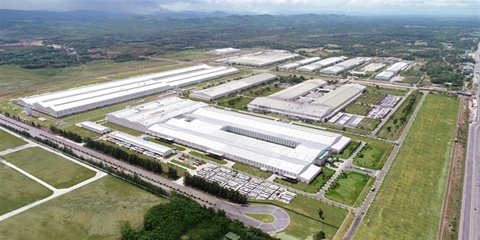
The central city has approved an investment proposal by Thailand’s WHA Group to develop infrastructure for the 400ha WHA Đà Nẵng Industrial Park project on two communes of Thăng Bình and Đồng Dương, with an investment of more than VNĐ2.7 trillion (US$105 million). The city said it approved WHA Industrial Development International's status as an investor in the project, which is expected to take place between 2027 and 2034.
VIETNAM ECONOMY INVESTMENT
MOBILE PHONE EXPORTS RISE 20% TO $51.8 BILLION IN FIRST NINE MONTHS
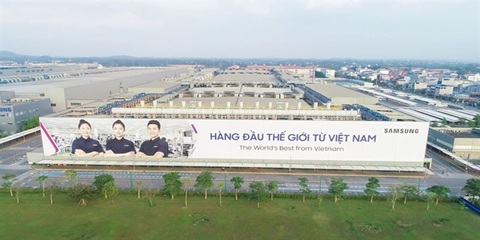
Exports of mobile phones and components rose 20 per cent year-on-year to nearly US$51.8 billion in the first nine months of 2026, with China, the US and Republic of Korea accounting for more than half of the total. Shipments to the three markets reached a combined $26.18 billion, or 50.6 per cent of total exports of the product group during the period, according to data from the Vietnam Department of Customs under the Ministry of Finance.

INFRASTRUCTURE / CONSTRUCTION / LOGISTIC / PORT
VIỆT NAM-CAMBODIA TRADE GATHERS PACE TOWARDS $20 BILLION TARGET
Trade between Việt Nam and Cambodia continues to grow, remaining a bright spot and a key pillar of bilateral cooperation as the two countries aim to raise two-way trade to US$20 billion in the coming years. After setting a record of more than $11.3 billion last year, bilateral trade reached about $8.7 billion in the first eight months of this year, up 8.3 per cent year on year.
VIETNAM ECONOMY INVESTMENT
FRUIT AND VEGETABLE EXPORTS POISED TO HIT $10 BILLION IN 2026
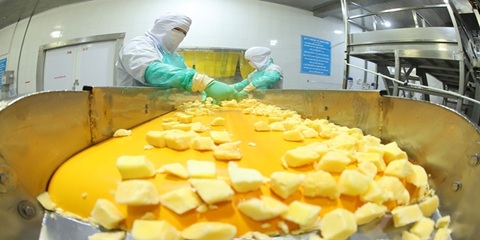
Fruit and vegetable exports are on track to reach nearly US$10 billion in 2026, after rising 19.9 per cent year on year to nearly US$7.4 billion in the first nine months, driven by strong seasonal demand and abundant tropical fruit supplies. The Ministry of Agriculture and Environment said the growth reflected stronger international demand for fresh produce and processed agricultural products.
Events Sponsors






















