Want to be in the loop?
subscribe to
our notification
Business News
OPPORTUNITIES TO INVEST WHEN REAL ESTATE MARKET BOTTOMS OUT
Although the Covid-19 pandemic has hit Vietnam’s real estate market hard, the demand for investment and real estate ownership is still high, promising a rapid recovery for the whole market in the future.
Negative impact
A survey conducted in late March 2020 with the participation of 1,100 brokers, who are customers of Batdongsan.com.vn, yielded remarkable results. Currently, 97% of brokers surveyed said that the number of transactions decreased during the pandemic, 75% recorded a decrease in the supply of goods and about 64% believed in the recovery of Vietnam's real estate market by the end of 2020.
According to Mr. Nguyen Quoc Anh, Deputy General Director of Batdongsan.com.vn, the level of interest in real estate is the lowest in the past three years, down 23% from the same period in 2019 and down 18% compared to the fourth quarter of 2019. In particular, the real estate market of the Central region decreased by 46% compared to the same period of 2019. The land segment was most affected with a 30% reduction in interest compared to the fourth quarter of 2019. With real estate for rent, the interest in townhouses decreased by 35% compared to the last quarter of 2019.
Dr. Nguyen Duc Thanh, former Director of Vietnam Institute of Economic and Policy Research (VEPR), said that the real estate market was negatively affected in both supply and demand. Real estate prices tended to fall across all segments. The difficulty of the market was also reflected in the proportion of real estate enterprises ceasing their business and enterprises dissolved in the first quarter of 2020 increasing by 94% and 69%, respectively, compared to the same period last year.
Mr. Nguyen Van Dinh, Deputy General Secretary of Vietnam Real Estate Association, Vice President and General Secretary of Vietnam Association of Realtors, said that in the first quarter of 2020, the number of new sales was relatively small; the number of newly registered real estate enterprises decreased; the number of suspended or dissolved enterprises doubled in comparison with the same period last year; many brokers had no income; and investors postponed or canceled sales plans.
Resilience
According to market surveys and information, most real estate transactions and events such as promotions, marketing, opening new sales of investors and exchanges must be canceled or delayed for the past three months. However, the demand for buying and investing in real estate always exists, some investors are also looking for opportunities to "catch the bottom" of the market.
A survey based on data of Batdongsan.com.vn, Vnexpress and General Statistics Office showed that up to 29% of respondents still chose real estate as an effective investment channel in the context of complicated Covid-19 developments. This ratio is overwhelming compared to other investment channels such as savings deposits (24%), gold (17%), and securities (12%). This is not difficult to understand because according to Vietnamese, real estate is not only an asset that can increase in price over time but also a channel to store and ensure asset value.
The research of Batdongsan.com.vn also shows the superiority of the profit of real estate investment compared to other investment channels. From 2010-2020, the price increase in Ba Dinh district of Hanoi reaches 335%, while the price increase in District 5 of Ho Chi Minh City is 213%. Meanwhile, in the same period, the price increase of gold only reaches 22% and the VN-Index is 45%.
According to Dr. Nguyen Duc Thanh, if the pandemic goes away without causing great damage to the economy, the real estate industry will recover relatively quickly compared to other markets (transportation, production). In essence, the pandemic affects only movement and travel, but the basic human needs remain the same and these needs have been compressed during the pandemic. Moreover, the Government's measures focus on expanding aggregate demand through rapid and large public investment policies after the pandemic to restore economic growth. This policy will have good influence on the real estate and construction materials markets, which may create a "leap forward" in these industries.
Mr. Nguyen Quoc Anh predicted that if the pandemic is controlled in the second quarter of 2020, the real estate market could recover in the fourth quarter of 2020. Real estate projects and investors still need to invest more in quality, utilities, green and environmentally friendly living space. In particular, the reasonably priced real estate will still be well received by buyers.
"The current difficulty is only short-term and it is an opportunity for the market to remove weak projects, investors and businesses," said Mr. Nguyen Van Dinh. Enterprises can spend this time focusing on feasible projects, restructuring business activities, and overcoming weaknesses to have higher growth when the market recovers.
According to Mr. Nguyen Le Hai Dang, Senior Director of the Meyland Training and Strategy Development Department, as the State Bank has begun to reduce interest rates, and oil prices are falling, real estate is still the optimal investment channel. However, customers and investors will be more cautious when selecting projects with high legal security, real estate valued at real costs, reasonable prices and potential for high price increases in the future.
Source: VCCI
Related News

CHARITY / EXHIBITION / OTHER EVENTS
INVESTMENT OPPORTUNITIES IN CA MAU PROVINCE: 96 PROJECTS AND 20 STRATEGIC PROJECTS
We are pleased to share with you information on investment projects currently seeking investors in Ca Mau Province. Should your esteemed company or association be interested, we kindly invite you to review the project information and complete the registration form via the links provided. The Ho Chi Minh City Investment and Trade Promotion Centre (ITPC) will consolidate the expressions of interest and facilitate connections with the leadership of Ca Mau Province at a meeting tentatively scheduled for 13 November 2026 in Ho Chi Minh City.
MEMBER CORNER / PROMOTIONS
BẰNG KIỀU LIVESHOW - A SYMPHONY OF LOVE UNDER THE GOLDEN GLOW
A masterclass in live music that takes the audience on a soulful journey through immortal love songs, guided by the peerless artistry and emotive storytelling of renowned singer Bằng Kiều. The highlight of the night is his seamless musical chemistry with special guest Triệu Hồng Ngọc, promising passionate and deeply resonant duets inside the magnificent Grand Ballroom.
INFRASTRUCTURE / CONSTRUCTION / LOGISTIC / PORT
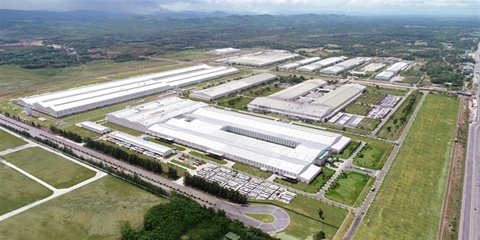
ĐÀ NẴNG GREEN-LIGHTS US$105 MILLION THAI DEVELOPMENT DEAL
The central city has approved an investment proposal by Thailand’s WHA Group to develop infrastructure for the 400ha WHA Đà Nẵng Industrial Park project on two communes of Thăng Bình and Đồng Dương, with an investment of more than VNĐ2.7 trillion (US$105 million). The city said it approved WHA Industrial Development International's status as an investor in the project, which is expected to take place between 2027 and 2034.
VIETNAM ECONOMY INVESTMENT
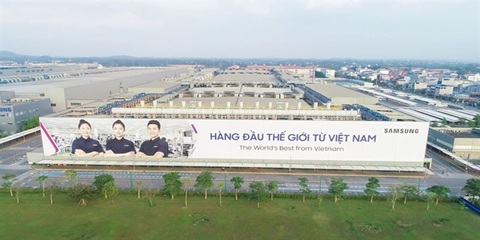
MOBILE PHONE EXPORTS RISE 20% TO $51.8 BILLION IN FIRST NINE MONTHS
Exports of mobile phones and components rose 20 per cent year-on-year to nearly US$51.8 billion in the first nine months of 2026, with China, the US and Republic of Korea accounting for more than half of the total. Shipments to the three markets reached a combined $26.18 billion, or 50.6 per cent of total exports of the product group during the period, according to data from the Vietnam Department of Customs under the Ministry of Finance.

INFRASTRUCTURE / CONSTRUCTION / LOGISTIC / PORT
VIỆT NAM-CAMBODIA TRADE GATHERS PACE TOWARDS $20 BILLION TARGET
Trade between Việt Nam and Cambodia continues to grow, remaining a bright spot and a key pillar of bilateral cooperation as the two countries aim to raise two-way trade to US$20 billion in the coming years. After setting a record of more than $11.3 billion last year, bilateral trade reached about $8.7 billion in the first eight months of this year, up 8.3 per cent year on year.
VIETNAM ECONOMY INVESTMENT
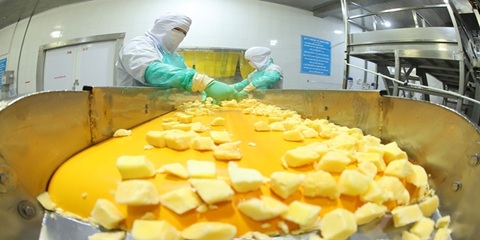
FRUIT AND VEGETABLE EXPORTS POISED TO HIT $10 BILLION IN 2026
Fruit and vegetable exports are on track to reach nearly US$10 billion in 2026, after rising 19.9 per cent year on year to nearly US$7.4 billion in the first nine months, driven by strong seasonal demand and abundant tropical fruit supplies. The Ministry of Agriculture and Environment said the growth reflected stronger international demand for fresh produce and processed agricultural products.
Events Sponsors






















