Want to be in the loop?
subscribe to
our notification
Business News
SMALL AND MEDIUM-SIZED ENTERPRISES FOCUS ON CSR PRACTICES
SMEs now account for over 95 per cent of the total enterprises in Việt Nam. They also recruit 51 per cent of the social workforce, contributing more than 40 per cent of GDP and 30 per cent of total state budget revenue.
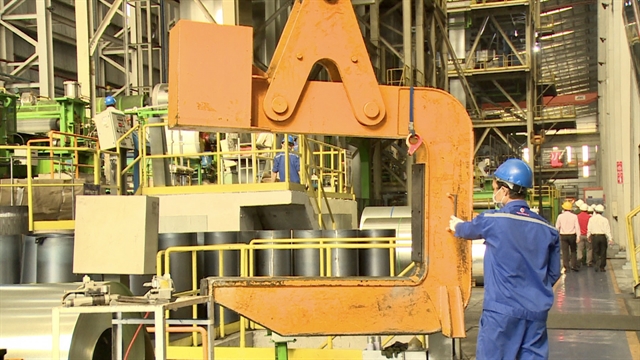
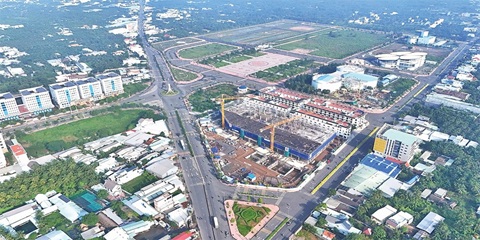
A firm in Bình Dương Province. More and more SMEs have paid attention to implementing CSR activities. — Photo dangcongsan.vn
HÀ NỘI — More small and medium-sized enterprises (SMEs) in Việt Nam have integrated environmental, social and government (ESG) practices into their operations amid the global trend of sustainable development and responsible business.
SMEs now account for over 95 per cent of the total enterprises in Việt Nam. They also recruit 51 per cent of the social workforce, contributing more than 40 per cent of GDP and 30 per cent of the total State budget revenue.
Chairman of Pacific Asia Commercial Dispute Resolution Arbitration Centre Trần Minh Sơn said many SMEs that paid attention to implementing CSR activities said corporate profits and returns on investment must be viewed in a broader context. That includes socio-economic issues and corporate social responsibility.
These companies said they voluntarily pursue social and environmental concerns from labour and employment practices, environmental issues such as biodiversity, climate change, pollution prevention, fighting bribery and corruption to active participation in community activities, Sơn said.
CEO of Việt Trường Co in Hải Phòng City, Ngô Minh Phương, said a company can ensure sustainable business performance when it archives business growth and development goals without having a negative influence on social development and the environment.
Integrating ESG practices into their operation could help businesses increase profits, outrank their competition, and affirm their reputation in the business environment, Phương said.
ESG has become mainstream in Việt Nam in recent years, driven by the Vietnamese Government’s strong signal to promote ESG-related practices, especially with a strong commitment to the transition to a carbon-neutral economy by 2050 at the 2021 United Nations Climate Change Conference (COP26), coupled with investors’ growing demand for sustainable development.
According to the report 'From Ambition to Impact' on Việt Nam ESG readiness, jointly developed by PwC Vietnam and the Việt Nam Institute of Directors, most businesses in Việt Nam are just starting on the ESG journey.
Although 80 per cent have made ESG commitments or plan to do so in the next two to four years, there were gaps between ambition and action.
PwC’s report showed that only 66 per cent have some ESG programmes in place, 24 per cent possess a clear governing structure, five per cent have active board involvement on ESG matters and 28 per cent have strong ESG risk metrics to monitor progress, while 71 per cent lack understanding of data required for reporting and 70 per cent have none or very limited ESG reporting.
Experts said that consumers are increasingly concerned about the environmental and social footprint of the products and services they consume. Meanwhile, investors tend to look for environmental, social and governance criteria when making investment decisions. — VNS
Source: VNS
Related News

BANKING / FINANCE / INSURANCE / TAX
REMITTANCES TO HCM CITY RISE NEARLY 40% IN Q3
Remittances to HCM City reached more than US$2.83 billion in the third quarter of this year, up 39.5 per cent from the previous quarter and 3.6 per cent year-on-year. This was the first quarter showing positive annual growth this year, helping narrow the decline in remittance inflows over the first nine months. According to the State Bank of Vietnam (SBV)’s Regional Branch 2, remittances transferred to HCM City through credit institutions and economic organisations totalled $2.835 billion in Q3, an increase of more than $802 million from the previous quarter.

TECHNOLOGY
TECH SECTOR GROWTH OPENS UP OPPORTUNITIES FOR VIỆT NAM TO GO GLOBAL
The growth of the electronics, semiconductor and high-tech sectors worldwide is opening up a variety of opportunities for Vietnamese enterprises to integrate more deeply into the global supply chain. However, to become suppliers for these corporations, domestic enterprises must meet rigorous standards regarding quality, technology, productivity and order fulfilment capabilities.
VIETNAM ECONOMY INVESTMENT
FOREIGN INVESTORS SEEKING A SYNCHRONISED MANUFACTURING ECOSYSTEM
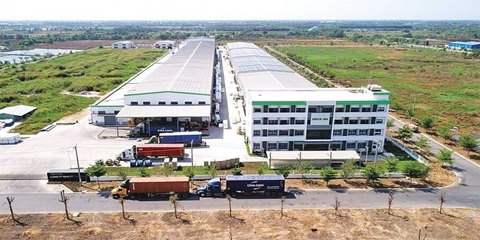
Instead of focusing only on land costs and incentives as usual, foreign investors are seeking a synchronised manufacturing ecosystem, from stable power supply and logistics to shared infrastructure and the convenience of completing residence procedures for experts to serve their long-term investment in the country.
MEMBER CORNER / PROMOTIONS
SENTRYSAFE FHW40200 – PROTECT YOUR VALUABLES, ENJOY PEACE OF MIND!
Looking for a reliable solution to protect your important documents, cash, and valuables from fire and water damage? Genuine SENTRYSAFE - Reliable protection for your valuables and peace of mind! Contact Sen Wai Vietnam for more information and personalized product recommendations.
PROPERTY / INDUSTRIAL ZONE
HCM CITY ATTRACTS US$5.7 BILLION INTO EXPORT PROCESSING AND INDUSTRIAL ZONES
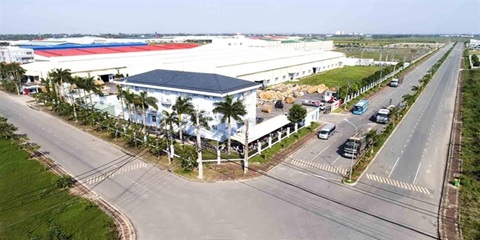
HCM City attracted US$5.7 billion in domestic and foreign investment into its export processing and industrial zones during the first nine months of 2026. The figure exceeded the city's full-year target by 31 per cent, highlighting strong momentum in high-quality industrial investment under Resolution No.10-NQ/TW. Total investment reached 131 per cent of the 2026 target of $4.25 billion and represented a 29 per cent increase compared with the same period in 2025, according to the city's Export Processing and Industrial Zones Authority (HEPZA).
INFRASTRUCTURE / CONSTRUCTION / LOGISTIC / PORT
DONG THAP PROVINCE STEPS UP INDUSTRIAL EXPANSION AND INFRASTRUCTURE CONNECTIVITY
Accelerating public investment, strengthening inter-regional connectivity, and expanding industrial land are helping Dong Thap efficiently bolster competitiveness and drive economic growth. Following the 2025 merger of the former Dong Thap and Tien Giang provinces, the expanded Dong Thap province in the Mekong Delta faces mounting pressure to accelerate infrastructure development and strengthen connectivity among local economic zones, urban areas, industrial parks (IPs), and production centres.
Events Sponsors






















