Want to be in the loop?
subscribe to
our notification
Business News
THE BRIGHT PROSPECTS OF VIỆT NAM'S ASSET MANAGEMENT INDUSTRY
Việt Nam boasts 19,400 US dollar millionaires - a 98 per cent increase over the past decade.

Services for VPBank's priority customers. — Photo courtesy of VPBank
HÀ NỘI — In the dynamic global economic landscape, the asset management sector is emerging as a standout field, with rapid growth fuelled by wealthy, middle-class and high-net-worth investors, transitioning towards professional asset management models and high-tech applications.
According to a 2023 Knight Frank report, Việt Nam boasts 19,400 US dollar millionaires, marking a 98 per cent increase over the past decade, which includes six billionaires and 58 individuals with over US$100 million in assets.
The robust development of the affluent and middle-class is driving demand for estate management services as individuals and family businesses focus on optimising assets and long-term financial planning.
McKinsey forecasts a 20 per cent annual market growth rate in this sector, with revenue projected to increase by 23 per cent annually over the next three years.
By 2027, the Vietnamese estate management market is expected to reach approximately $130 billion.
For highly liquid assets like stocks and bonds, the Assets Under Management (AUM) in Việt Nam has surged from VNĐ95 trillion ($4.5 billion) in 2014, to over VNĐ600 trillion ($25 billion) in 2023, equivalent to 5.7 per cent of GDP, according to the State Securities Commission of Việt Nam (SSC).
Compared to other markets in the region such as Thailand, Malaysia (30 - 40 per cent of GDP), or developed countries and regions like Taiwan (China), South Korea (60 - 67 per cent of GDP), Việt Nam still holds significant development potential.
The CEO of Thiên Việt Asset Management JSC, Trần Vinh Quang, said that the middle class is experiencing significant growth and the expected upgrade of the stock market will be a driving force propelling the asset management industry to reach remarkable heights in the coming decade.
Moreover, the increasing savings rate for investment from the middle-income investor group, reaching 10 - 12 per cent annually, is expanding opportunities for the market.
These factors provide a solid foundation for asset management companies in Việt Nam to develop comprehensive financial solutions, meet customer needs and enhance competitive capabilities in both regional and international markets.
The asset management sector in Asia is rapidly evolving, presenting significant opportunities for Việt Nam. Domestic clients prioritise sustainable financial solutions, reasonable risks and deep market understanding.
This scenario, both an opportunity and a challenge, demands enterprises to innovate, digitise and improve service quality to meet increasingly high expectations.
The future of Việt Nam's asset management industry will depend on continuous innovation and technology applications to address the diverse needs of customers. — VNS
Source: VNS
Related News
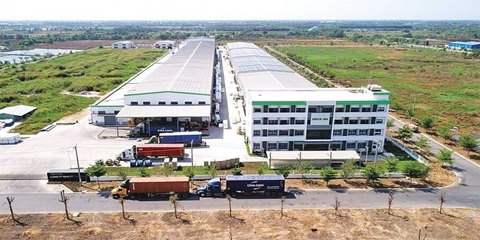
VIETNAM ECONOMY INVESTMENT
FOREIGN INVESTORS SEEKING A SYNCHRONISED MANUFACTURING ECOSYSTEM
Instead of focusing only on land costs and incentives as usual, foreign investors are seeking a synchronised manufacturing ecosystem, from stable power supply and logistics to shared infrastructure and the convenience of completing residence procedures for experts to serve their long-term investment in the country.
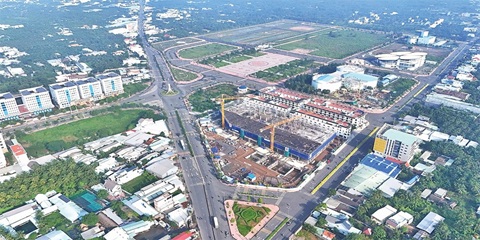
INFRASTRUCTURE / CONSTRUCTION / LOGISTIC / PORT
DONG THAP PROVINCE STEPS UP INDUSTRIAL EXPANSION AND INFRASTRUCTURE CONNECTIVITY
Accelerating public investment, strengthening inter-regional connectivity, and expanding industrial land are helping Dong Thap efficiently bolster competitiveness and drive economic growth. Following the 2025 merger of the former Dong Thap and Tien Giang provinces, the expanded Dong Thap province in the Mekong Delta faces mounting pressure to accelerate infrastructure development and strengthen connectivity among local economic zones, urban areas, industrial parks (IPs), and production centres.
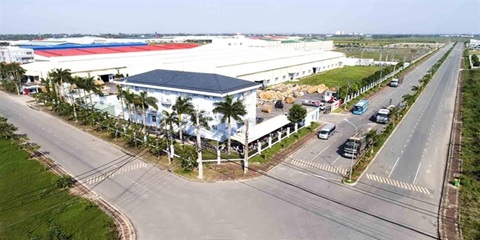
PROPERTY / INDUSTRIAL ZONE
HCM CITY ATTRACTS US$5.7 BILLION INTO EXPORT PROCESSING AND INDUSTRIAL ZONES
HCM City attracted US$5.7 billion in domestic and foreign investment into its export processing and industrial zones during the first nine months of 2026. The figure exceeded the city's full-year target by 31 per cent, highlighting strong momentum in high-quality industrial investment under Resolution No.10-NQ/TW. Total investment reached 131 per cent of the 2026 target of $4.25 billion and represented a 29 per cent increase compared with the same period in 2025, according to the city's Export Processing and Industrial Zones Authority (HEPZA).

BANKING / FINANCE / INSURANCE / TAX
REMITTANCES TO HCM CITY RISE NEARLY 40% IN Q3
Remittances to HCM City reached more than US$2.83 billion in the third quarter of this year, up 39.5 per cent from the previous quarter and 3.6 per cent year-on-year. This was the first quarter showing positive annual growth this year, helping narrow the decline in remittance inflows over the first nine months. According to the State Bank of Vietnam (SBV)’s Regional Branch 2, remittances transferred to HCM City through credit institutions and economic organisations totalled $2.835 billion in Q3, an increase of more than $802 million from the previous quarter.
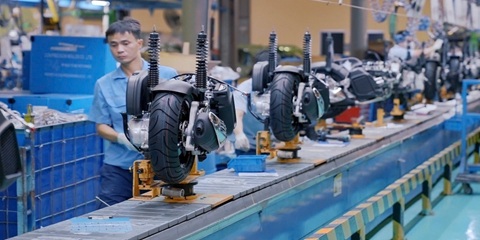
VIETNAM ECONOMY INVESTMENT
LOCALITIES REPORT BREAKTHROUGH RESULTS IN FDI IN FIRST NINE MONTHS
In Ho Chi Minh City, total registered capital reached $17.2 billion in the first nine months, up 4.2 times from the same period last year. The figure included more than $9.35 billion in newly registered capital and over $4.9 billion in additional capital for existing projects. Foreign investors also registered more than $2.9 billion through capital contributions and share purchases.

TECHNOLOGY
TECH SECTOR GROWTH OPENS UP OPPORTUNITIES FOR VIỆT NAM TO GO GLOBAL
The growth of the electronics, semiconductor and high-tech sectors worldwide is opening up a variety of opportunities for Vietnamese enterprises to integrate more deeply into the global supply chain. However, to become suppliers for these corporations, domestic enterprises must meet rigorous standards regarding quality, technology, productivity and order fulfilment capabilities.
Events Sponsors






















