Want to be in the loop?
subscribe to
our notification
Business News
MORE STRATEGIES INTRODUCED TO SUPPORT BUSINESSES
Prime Minister Pham Minh Chinh last week ordered that ministries and localities must synchronously deploy solutions to boost the recovery and development of business and production activities nationwide.
“The prime target is to remove enterprises’ difficulties and boost both supply and demand, helping them to improve productivity and operational effectiveness, then helping ameliorate the economy’s competitiveness. This will also help us to reach the desired growth goal of at least 6.5 per cent this year,” PM Chinh said.
“All legal regulations must be reviewed, with any complicated and/or unnecessary regulations to be removed as soon as possible. All feedback and ideas from the business community on regulations must be listened to,” he added.
On January 30, the government enacted Resolution No.07/NQ-CP on reducing land and water surface rentals for 2022 for those affected by the recent pandemic. The resolution stipulates a 30 per cent reduction in land and water surface rentals in 2022 for organisations, units, businesses, households, and individuals that are directly leasing land from the state under a decision or contract or certificate on land use rights ownership of houses and other land-attached assets of authorised agencies in the form of land rental with annual payment.
The Ministry of Finance shall submit to the prime minister for enactment of a decision on the reduction of land and water surface rentals.
Resolution 07 is among many measures which will be promulgated by the government to assist the business community and individuals.
“The economy is facing difficulties in supply and demand. Production and exports are showing signals of slowdown in growth. The domestic purchasing power’s recovery remains slow,” PM Chinh said. “Assisting enterprises must be considered one of the prime tasks.”
Under Resolution No.01/NQ-CP dated January 6 on the nation’s socioeconomic development plan, state budget estimates, improvement of the business environment, and enhancement of national competitiveness, the government ordered the implementation of many more measures to support enterprise and investors.
“[The government will] centre on solving difficulties and supporting enterprises to restore production and business, while putting large-scale important industrial projects into operation in order to increase production capacity; and expanding and diversifying import and export markets,” Resolution 01 stated. “It will synchronously implement solutions to stabilise production, ensure the balance between supply and demand of basic and essential goods such as petrol, electricity, coal, and fertiliser.”
In 2023, the government will also improve management capacity and efficiency of credit institutions; in which efforts are to be made to continue to encourage credit institutions to reduce costs, stabilise lending interest rates in order to assist businesses to recover and develop production and business.
The government will also focus on directing credit institutions to increase transparency in operations, overcome share ownership that exceeds the permissible limit, and review and prevent cross-ownership and illegal lending under the law.
In this year, the government will also “improve the quality of business support services, especially for small- and medium-sized enterprises, while focusing on providing consultation and training for businesses in terms of corporate restructuring, finance, human resources, markets, risk management, digital transformation, and participation in sustainable value chains,” read Resolution 01.
According to the General Statistics Office, Vietnam’s index for industrial production (IIP) in 2022 is estimated to climb at a relatively high level of 7.8 per cent on-year, but a close look at the situation revealed that the on-year IIP tends to reduce, at 6.8 per cent in Q1, 9.8 per cent in Q2, and 10.9 per cent in Q3, but plummet to only 3 per cent in Q4.
The IIP saw an on-year decrease over the past four months. After reaching a peak of 15.6 per cent in August, it dropped to 13 per cent in September, 6.3 per cent in October, and 5.3 per cent in November before falling down to only 0.2 per cent in December. In January during Lunar New Year, the IIP declined 14.6 per cent on-month and 8 per cent on-year.
The government has predicted the global situation will be difficult to forecast, negatively affecting the Vietnamese economy. “Strategic and economic competition as well as trade disputes are expected to become more intense. The military conflict in Ukraine could continue, and the consequences of the pandemic still need to be overcome across several years,” read Resolution 01.
Inflation continued at a high level, and the trend of tightening monetary policy and increasing interest rates still persists in many countries, the document continued. There is also a global increase in risks of illiquidity, instabilities in finance, currency, public debt, real estate, food security, energy security, and information.
“In Vietnam, the economy is projected to face big pressures in inflation, exchange rate, and a hike in interest rate. Moreover, production and business activities will continue to face many challenges. Vietnam’s traditional and large import and export markets have and may continue to be narrowed down,” it said.
Source: VIR
Related News
BANKING / FINANCE / INSURANCE / TAX
REMITTANCES TO HCM CITY RISE NEARLY 40% IN Q3
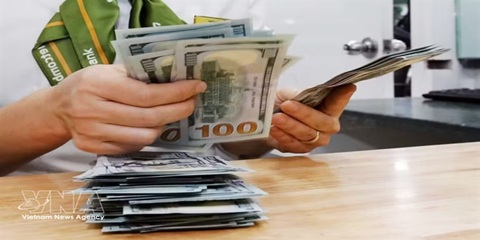
Remittances to HCM City reached more than US$2.83 billion in the third quarter of this year, up 39.5 per cent from the previous quarter and 3.6 per cent year-on-year. This was the first quarter showing positive annual growth this year, helping narrow the decline in remittance inflows over the first nine months. According to the State Bank of Vietnam (SBV)’s Regional Branch 2, remittances transferred to HCM City through credit institutions and economic organisations totalled $2.835 billion in Q3, an increase of more than $802 million from the previous quarter.
TECHNOLOGY
TECH SECTOR GROWTH OPENS UP OPPORTUNITIES FOR VIỆT NAM TO GO GLOBAL
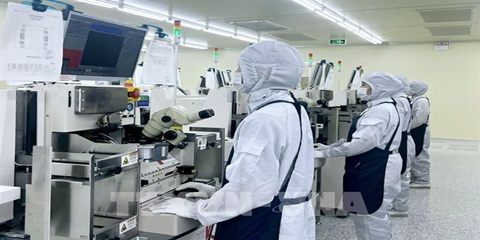
The growth of the electronics, semiconductor and high-tech sectors worldwide is opening up a variety of opportunities for Vietnamese enterprises to integrate more deeply into the global supply chain. However, to become suppliers for these corporations, domestic enterprises must meet rigorous standards regarding quality, technology, productivity and order fulfilment capabilities.
VIETNAM ECONOMY INVESTMENT
FOREIGN INVESTORS SEEKING A SYNCHRONISED MANUFACTURING ECOSYSTEM
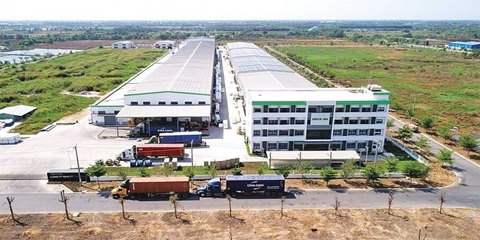
Instead of focusing only on land costs and incentives as usual, foreign investors are seeking a synchronised manufacturing ecosystem, from stable power supply and logistics to shared infrastructure and the convenience of completing residence procedures for experts to serve their long-term investment in the country.
MEMBER CORNER / PROMOTIONS
SENTRYSAFE FHW40200 – PROTECT YOUR VALUABLES, ENJOY PEACE OF MIND!
Looking for a reliable solution to protect your important documents, cash, and valuables from fire and water damage? Genuine SENTRYSAFE - Reliable protection for your valuables and peace of mind! Contact Sen Wai Vietnam for more information and personalized product recommendations.
PROPERTY / INDUSTRIAL ZONE
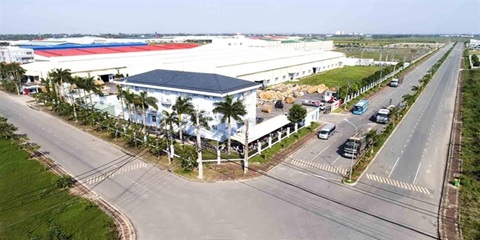
HCM CITY ATTRACTS US$5.7 BILLION INTO EXPORT PROCESSING AND INDUSTRIAL ZONES
HCM City attracted US$5.7 billion in domestic and foreign investment into its export processing and industrial zones during the first nine months of 2026. The figure exceeded the city's full-year target by 31 per cent, highlighting strong momentum in high-quality industrial investment under Resolution No.10-NQ/TW. Total investment reached 131 per cent of the 2026 target of $4.25 billion and represented a 29 per cent increase compared with the same period in 2025, according to the city's Export Processing and Industrial Zones Authority (HEPZA).
INFRASTRUCTURE / CONSTRUCTION / LOGISTIC / PORT
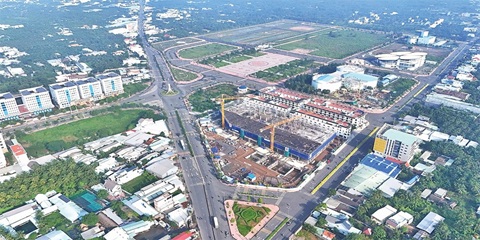
DONG THAP PROVINCE STEPS UP INDUSTRIAL EXPANSION AND INFRASTRUCTURE CONNECTIVITY
Accelerating public investment, strengthening inter-regional connectivity, and expanding industrial land are helping Dong Thap efficiently bolster competitiveness and drive economic growth. Following the 2025 merger of the former Dong Thap and Tien Giang provinces, the expanded Dong Thap province in the Mekong Delta faces mounting pressure to accelerate infrastructure development and strengthen connectivity among local economic zones, urban areas, industrial parks (IPs), and production centres.
Events Sponsors






















