Want to be in the loop?
subscribe to
our notification
Business News
HANOI'S ECONOMY CONTINUES TO SUSTAIN GROWTH
With the theme "discipline, responsibility, action, creativity, and development", Hanoi has outlined five key areas of leadership and management.
Speaking at the opening session of the 20th meeting of Hanoi People’s Council on December 4, Deputy Chairman of Hanoi People’s Committee Ha Minh Hai reported that the capital’s economy has maintained high growth, with regional GDP rising by 6.12 per cent in the first nine months of the year, and expected to exceed 6.5 per cent for the full year.
“Hanoi has ensured balanced state budget revenue and expenditure while allocating sufficient capital for development investments,” Hai said. “Domestic revenue accounted for $19.25 billion, representing 93.8 per cent of the total, while the local government’s share of revenues under allocation regulations is projected at $5.98 billion, hitting 111.3 per cent of the target and up 34 per cent on-year.”
At the conference, the deputy chairman stated that Hanoi has effectively implemented financial and credit policies, promptly addressing the needs for production and business.
The city achieved 23 of its 24 socioeconomic targets for 2024, with the only shortfall being the public transport passenger rate. Hanoi has created over 196,000 jobs this year, reaching 118.9 per cent of the plan. Social welfare initiatives have been prioritised, with over $416.7 million allocated through the Social Policy Bank to support more than 96,000 disadvantaged households.
The city also led the nation in welfare policies, completing housing upgrades for all 714 identified low-income households and allocating $11 million to help Tuyen Quang and Phu Tho provinces eliminate substandard housing.
In addition, the city has intensified anti-corruption and anti-waste measures, conducting a comprehensive review of 712 delayed projects. Hanoi became the first locality in the country to establish a Steering Committee for Waste Prevention, launched on November 20. Administrative reforms and digital transformation, including the implementation of the National Digital Transformation Project, have been critical priorities, focusing on practical, citizen-centred solutions that enhance value for residents and businesses.
Despite these achievements, Hai acknowledged challenges, including uneven capacity among officials, a lack of creativity and professionalism, and inefficiencies in administrative processes. He noted the absence of fully developed inter-agency coordination mechanisms and delayed restructuring of administrative procedures, which remain overly formalistic.
“Looking ahead, Hanoi is determined to meet its socioeconomic development targets for 2025 and the broader 2021-2025 period. The city has established 25 key indicators, including five economic, 14 socio-cultural, and five urban and environmental goals, with a new target to increase social housing availability in 2025,” he added.
Hanoi has outlined three growth scenarios for 2025. Under the baseline scenario, regional GDP is projected to grow by 6.5-7.5 per cent, with per capita regional GDP reaching $7,184-$7,250. In the high-growth scenario, regional GDP could exceed 8 per cent, raising per capita above $7,292.
“To achieve these goals, the city has identified 10 core tasks, focusing on economic development, inflation control, investment attraction, and solving delays in project execution. These efforts will be guided by the strategic objectives in Politburo Resolution 15, the Hanoi Master Plan, and the amended Capital Law,” Hai said.
Source: VIR
Related News
BANKING / FINANCE / INSURANCE / TAX
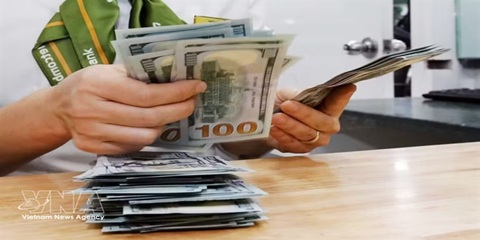
REMITTANCES TO HCM CITY RISE NEARLY 40% IN Q3
Remittances to HCM City reached more than US$2.83 billion in the third quarter of this year, up 39.5 per cent from the previous quarter and 3.6 per cent year-on-year. This was the first quarter showing positive annual growth this year, helping narrow the decline in remittance inflows over the first nine months. According to the State Bank of Vietnam (SBV)’s Regional Branch 2, remittances transferred to HCM City through credit institutions and economic organisations totalled $2.835 billion in Q3, an increase of more than $802 million from the previous quarter.
TECHNOLOGY
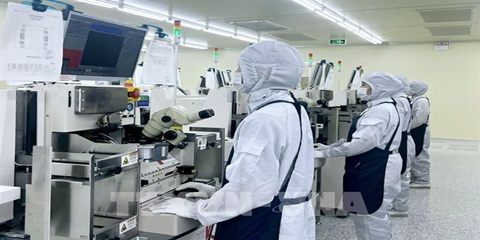
TECH SECTOR GROWTH OPENS UP OPPORTUNITIES FOR VIỆT NAM TO GO GLOBAL
The growth of the electronics, semiconductor and high-tech sectors worldwide is opening up a variety of opportunities for Vietnamese enterprises to integrate more deeply into the global supply chain. However, to become suppliers for these corporations, domestic enterprises must meet rigorous standards regarding quality, technology, productivity and order fulfilment capabilities.
VIETNAM ECONOMY INVESTMENT
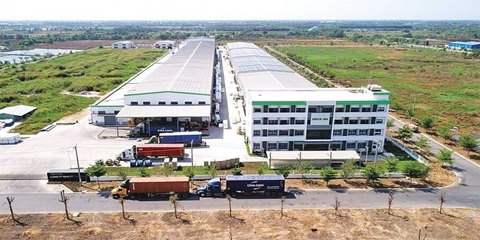
FOREIGN INVESTORS SEEKING A SYNCHRONISED MANUFACTURING ECOSYSTEM
Instead of focusing only on land costs and incentives as usual, foreign investors are seeking a synchronised manufacturing ecosystem, from stable power supply and logistics to shared infrastructure and the convenience of completing residence procedures for experts to serve their long-term investment in the country.
MEMBER CORNER / PROMOTIONS
SENTRYSAFE FHW40200 – PROTECT YOUR VALUABLES, ENJOY PEACE OF MIND!
Looking for a reliable solution to protect your important documents, cash, and valuables from fire and water damage? Genuine SENTRYSAFE - Reliable protection for your valuables and peace of mind! Contact Sen Wai Vietnam for more information and personalized product recommendations.
PROPERTY / INDUSTRIAL ZONE
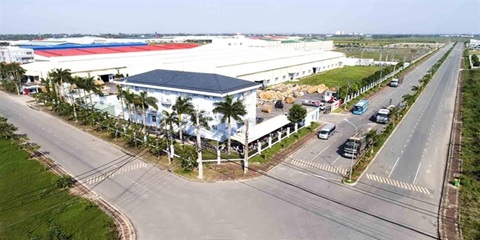
HCM CITY ATTRACTS US$5.7 BILLION INTO EXPORT PROCESSING AND INDUSTRIAL ZONES
HCM City attracted US$5.7 billion in domestic and foreign investment into its export processing and industrial zones during the first nine months of 2026. The figure exceeded the city's full-year target by 31 per cent, highlighting strong momentum in high-quality industrial investment under Resolution No.10-NQ/TW. Total investment reached 131 per cent of the 2026 target of $4.25 billion and represented a 29 per cent increase compared with the same period in 2025, according to the city's Export Processing and Industrial Zones Authority (HEPZA).
INFRASTRUCTURE / CONSTRUCTION / LOGISTIC / PORT
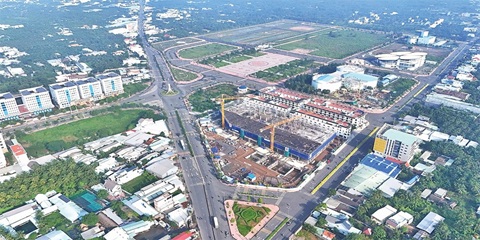
DONG THAP PROVINCE STEPS UP INDUSTRIAL EXPANSION AND INFRASTRUCTURE CONNECTIVITY
Accelerating public investment, strengthening inter-regional connectivity, and expanding industrial land are helping Dong Thap efficiently bolster competitiveness and drive economic growth. Following the 2025 merger of the former Dong Thap and Tien Giang provinces, the expanded Dong Thap province in the Mekong Delta faces mounting pressure to accelerate infrastructure development and strengthen connectivity among local economic zones, urban areas, industrial parks (IPs), and production centres.
Events Sponsors






















