Want to be in the loop?
subscribe to
our notification
Business News
CLEAR LEGAL FRAMEWORK NEEDED TO UNLOCK DIGITAL ASSET POTENTIAL
The past decade has seen remarkable advancements in technology worldwide, particularly in digital assets such as blockchain, cryptocurrencies, asset tokenization and decentralized finance (DeFi). Once unfamiliar, digital assets have now become integral to the global financial system. Leading nations in this field not only to drive innovation but also establish a strategic edge in the global economy.
Much development potential
Mr. Nguyen Duy Hung, Chairman of the Board of Directors of SSI Securities Corporation, said that amid the global trends in technology and the digital asset market, Vietnam is emerging as a notable player, driven by its young, dynamic workforce and strong enthusiasm for innovation. According to recent research by Forbes, Vietnam ranks second globally in digital asset ownership and interest. Additionally, data from the 10 largest global exchanges participating in the Vietnam Tech Impact Summit 2024 (VTIS 2024) reveals that Vietnam ranks among the top four markets worldwide by trading volume. Digital assets have transcended being mere technological solutions, becoming integral to the daily lives of families across the country.
According to Mr. Truong Gia Binh, Chairman of the Board of Directors of FPT Corporation, Vietnam has a lot of potential to develop in the field of information technology. Artificial intelligence (AI) is having a profound impact on the labor market, requiring people to adapt to this change by learning and improving skills, mastering AI and technology in the working process. In particular, Vietnam has abundant human resources who are ready to learn new things.
He emphasized that the revolution called digital transformation marks the era of the country's rise, so that the Vietnamese people can stand on par with advanced nations in the world. Vietnam has expanded diplomacy and trade connections with many countries in the world. “Opportunities are open to us, the important thing is whether we can seize them or not. The most important of these is data, because all technologies develop around data. Data is a valuable resource for Vietnam and the whole world. Data is the fuel of the future. Whoever knows how to exploit, process and use it can conquer new heights. A new world order is established when countries control data better,” added Binh.
Mr. Truong Gia Binh emphasized that Vietnam holds a prominent position and is shining brightly on the global technology map. Vietnam ranks second after India in software exports and has a technology workforce that many countries do not have. Many businesses have chosen Vietnam as their second home and many companies from other countries have chosen Vietnam as their home.
Transparency and clarity of legal framework - Key development
Vietnam is a country with a young population that loves technology and is willing to experiment with new trends. This creates favorable conditions for Vietnam to become a center for digital asset development in the region. According to Mr. Nguyen Duy Hung, to maximize the potential of digital assets, a core factor is transparency and clarity in the legal framework. This is the fundamental factor that helps investors, businesses and the community to develop in a safe and sustainable environment.
However, the current reality shows that due to the lack of a clear legal framework, this field is still facing many challenges. Enterprises in the field of blockchain and digital assets in Vietnam still have to operate in a lack of direction, causing them to lose their competitive advantage compared to neighboring countries such as Singapore or Thailand. In addition, the lack of regulations leads to the inability to protect users from fraudulent or non-transparent activities. Not to mention while the opportunities are gradually disappearing, foreign investors and large technology corporations tend to choose other countries with more favorable legal environments.
Building a legal framework for digital assets in Vietnam is not only a need for businesses but also a necessary condition to promote the development of the technology industry in particular and the economy in general. Therefore, according to Mr. Nguyen Duy Hung, SSI recommends that the Government soon issue a clear and transparent legal framework to regulate activities related to digital assets, creating trust for investors and market participants. Support innovative businesses in the field of blockchain and digital technology through investment incentives, research funding and international cooperation.
In addition, it is necessary to build flexible management mechanisms to both protect users and not lose creativity - the core of digital assets. At the same time, it is needed to strengthen international cooperation in the field of digital assets, take advantage of the experience of developed countries to build an effective legal framework, suitable for the characteristics of Vietnam.
If these bottlenecks can be resolved, according to Mr. Nguyen Duy Hung, with a strategic vision and support from the Government, Vietnam can completely become a center for innovation in digital assets in the region. This is not only an opportunity for Vietnam to catch up with global trends but also a way to raise the country's position on the world technology map.
The Government has reportedly submitted the Law on Digital Technology Industry to the National Assembly, including four articles that define the concept, determination criteria, management principles, and state management responsibilities for digital assets. In the review report, the Committee for Science, Technology and Environment said that the provisions on digital assets in the draft Law are necessary. However, digital asset management is a new and complicated issue, so it needs to be carefully considered. In particular, the Government needs to study the classification of digital assets and develop corresponding management regulations.
Source: VCCI
Related News

CHARITY / EXHIBITION / OTHER EVENTS
INVESTMENT OPPORTUNITIES IN CA MAU PROVINCE: 96 PROJECTS AND 20 STRATEGIC PROJECTS
We are pleased to share with you information on investment projects currently seeking investors in Ca Mau Province. Should your esteemed company or association be interested, we kindly invite you to review the project information and complete the registration form via the links provided. The Ho Chi Minh City Investment and Trade Promotion Centre (ITPC) will consolidate the expressions of interest and facilitate connections with the leadership of Ca Mau Province at a meeting tentatively scheduled for 13 November 2026 in Ho Chi Minh City.
MEMBER CORNER / PROMOTIONS
BẰNG KIỀU LIVESHOW - A SYMPHONY OF LOVE UNDER THE GOLDEN GLOW
A masterclass in live music that takes the audience on a soulful journey through immortal love songs, guided by the peerless artistry and emotive storytelling of renowned singer Bằng Kiều. The highlight of the night is his seamless musical chemistry with special guest Triệu Hồng Ngọc, promising passionate and deeply resonant duets inside the magnificent Grand Ballroom.
INFRASTRUCTURE / CONSTRUCTION / LOGISTIC / PORT
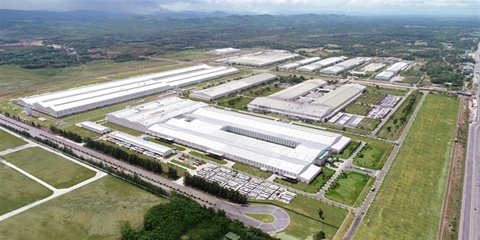
ĐÀ NẴNG GREEN-LIGHTS US$105 MILLION THAI DEVELOPMENT DEAL
The central city has approved an investment proposal by Thailand’s WHA Group to develop infrastructure for the 400ha WHA Đà Nẵng Industrial Park project on two communes of Thăng Bình and Đồng Dương, with an investment of more than VNĐ2.7 trillion (US$105 million). The city said it approved WHA Industrial Development International's status as an investor in the project, which is expected to take place between 2027 and 2034.
VIETNAM ECONOMY INVESTMENT
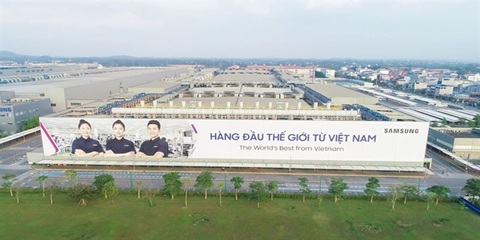
MOBILE PHONE EXPORTS RISE 20% TO $51.8 BILLION IN FIRST NINE MONTHS
Exports of mobile phones and components rose 20 per cent year-on-year to nearly US$51.8 billion in the first nine months of 2026, with China, the US and Republic of Korea accounting for more than half of the total. Shipments to the three markets reached a combined $26.18 billion, or 50.6 per cent of total exports of the product group during the period, according to data from the Vietnam Department of Customs under the Ministry of Finance.

INFRASTRUCTURE / CONSTRUCTION / LOGISTIC / PORT
VIỆT NAM-CAMBODIA TRADE GATHERS PACE TOWARDS $20 BILLION TARGET
Trade between Việt Nam and Cambodia continues to grow, remaining a bright spot and a key pillar of bilateral cooperation as the two countries aim to raise two-way trade to US$20 billion in the coming years. After setting a record of more than $11.3 billion last year, bilateral trade reached about $8.7 billion in the first eight months of this year, up 8.3 per cent year on year.
VIETNAM ECONOMY INVESTMENT
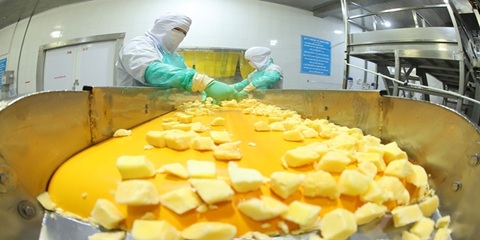
FRUIT AND VEGETABLE EXPORTS POISED TO HIT $10 BILLION IN 2026
Fruit and vegetable exports are on track to reach nearly US$10 billion in 2026, after rising 19.9 per cent year on year to nearly US$7.4 billion in the first nine months, driven by strong seasonal demand and abundant tropical fruit supplies. The Ministry of Agriculture and Environment said the growth reflected stronger international demand for fresh produce and processed agricultural products.
Events Sponsors






















