Want to be in the loop?
subscribe to
our notification
Business News
HCM CITY ACCELERATES POWER INFRASTRUCTURE INVESTMENT TO ATTRACT HIGH-TECH CAPITAL
High-tech projects, particularly data centres, are not confined to SHTP but are also expanding into export processing zones and industrial parks across HCM City, driving up electricity demand.
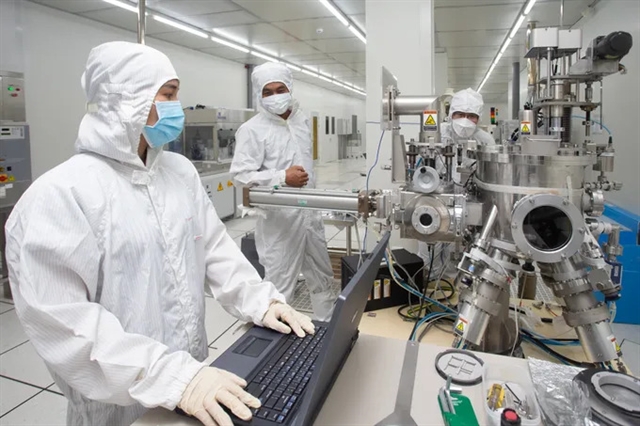
Workers operate and ensure the smooth functioning of machinery at the HCM City Hi-Tech Park Training Centre. Photo: sggp.org.vn
HÀ NỘI — Proactively developing power infrastructure, diversifying energy supplies and expanding access to green energy are becoming essential for HCM City to maintain its competitive edge in attracting high-tech foreign direct investment (FDI).
Rapidly rising electricity demand
According to Travis Mitchell, Executive Director at the American Chamber of Commerce in Việt Nam (AmCham), high technology and semiconductors offer considerable potential for attracting investment from US businesses to HCM City. The city needs to ensure a stable power supply at competitive prices.
Nguyễn Kỳ Phùng, head of the Saigon Hi-Tech Park (SHTP) Management Board, said investment projects in the park are shifting towards sectors with high electricity consumption, particularly data centres and the semiconductor industry.
SHTP currently has 147 dedicated substations with a total installed capacity of 469,535 kVA, which basically meets current production needs. However, without the timely addition of power sources and grid infrastructure, the park will face considerable pressure as data centre and semiconductor projects, as well as its expansion area, become operational.
SHTP’s electricity demand through 2030 has been calculated and incorporated into the power supply plan. During 2025-2030, four 110 kV substations with a combined minimum capacity of 504 MVA will be added to the existing 913-ha park, while another 110 kV substation with a minimum capacity of 189 MVA will be built in the 194.84-ha expansion area. This brings the minimum additional capacity for the two areas to 693 MVA.
High-tech projects, particularly data centres, are not confined to SHTP but are also expanding into export processing zones and industrial parks across HCM City, driving up electricity demand.
Proactively securing supply to sustain investment appeal
HCM City currently consumes around 58 billion kWh of electricity annually, with peak demand reaching about 9,471 MW. By 2030, the city’s electricity consumption is forecast to reach 93.972 billion kWh, with peak demand of about 16,103 MW.
In response to this rapid growth, calculations by the municipal Department of Industry and Trade show that the city needs to add around 6,000 MW of capacity to meet electricity demand for production.
Bùi Trung Kiên, Deputy General Director of HCM City Power Corporation (EVNHCMC), said that the proactive efforts of the power sector and industrial park infrastructure developers played an important role in maintaining the city’s position as an attractive investment destination.
The city’s power sector has focused on upgrading infrastructure, accelerating grid automation and building additional transmission lines and substations to ensure a stable electricity supply while improving system quality and reliability.
According to Lê Huỳnh Minh Tú, Deputy Director of the municipal Department of Industry and Trade, the city plans to establish a national energy centre in the Bà Rịa-Vũng Tàu area. The centre is intended to focus on supplying energy to the city, including its data centres.
On September 22, 2026, the HCM City People’s Council adopted Resolution No. 47/2026/NQ-HDND, under which the city has added participants in direct power trading through dedicated connection grids, including power generators using liquefied natural gas (LNG)-fired thermal power plants and electricity consumers in industrial parks, export processing zones, economic zones, industrial clusters and hi-tech parks.
Alongside the direct power purchase mechanism, renewable energy development is also opening up opportunities to supplement the city’s long-term power supply.
In 2026, Pacifico Energy Vietnam Co., Ltd., a subsidiary of US-based Pacifico Energy, received approval from the Ministry of Agriculture and Environment to use designated sea areas to conduct surveys for the development of two offshore wind power projects.
Of them, an offshore wind power project in the southern region is expected to have a capacity of 500 MW in waters off HCM City, with total investment estimated at around US$2 billion. — VNA/VNS
Source: VNS
Related News
VIETNAM ECONOMY INVESTMENT
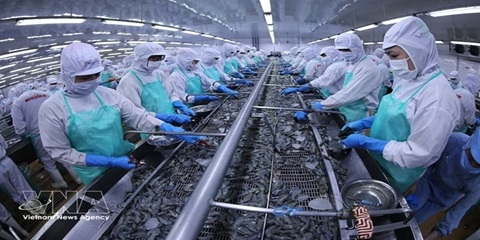
VIETNAMESE SEAFOOD EXPORTS CLOSE IN ON $12 BLN RECORD
Việt Nam remains well placed, with seafood sold in most countries and accepted in premium markets on the back of deep-processing capacity and a broad product mix. Việt Nam’s seafood exports kept up double-digit growth in the first 10 months of 2026, reaching nearly US$10.5 billion, up more than 12 per cent from a year earlier. That gives the sector new momentum into year-end when holiday demand climbs in western and Asian markets.

MEMBER CORNER / PROMOTIONS
COSMOPARK ECO INDUSTRIAL ZONE – LONG-TERM ADVANTAGES FOR INDUSTRIAL INVESTORS IN VIETNAM
Spanning 322.3 hectares, with a project operational term extending to 2095 and plans for large-scale power infrastructure, COSMOPARK Eco Industrial Zone offers a strong foundation for manufacturing, high-tech industries, and international supply chain development. As global supply chains continue to evolve, Vietnam is strengthening its position as a strategic destination for international businesses seeking to diversify their manufacturing operations.
VIETNAM ECONOMY INVESTMENT
VIETNAMESE COMPANIES OPTIMISTIC ON INTERNATIONAL GROWTH
Vietnamese businesses are among the most confident about the outlook for international trade, according to HSBC’s Global Trade Pulse Survey 2026, released on November 16. The survey captures the views of 10,000 senior business leaders across 26 markets on trade, tariffs, supply chains, and technology. Findings show that 94 per cent of Vietnamese businesses expect their international trade to grow over the next two years. Vietnam ranks joint top in the survey with the Philippines, compared with 86 per cent globally.
GARMENT / TEXTILE
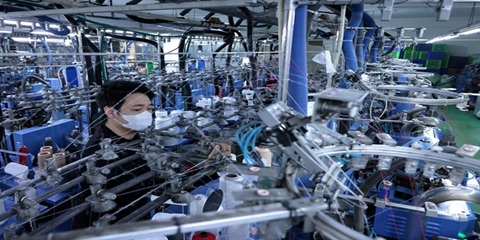
TEXTILE, GARMENT FIRMS REFORM TO MEET CPTPP ORIGIN RULES
Vietnamese textile and garment manufacturers are aggressively restructuring their supply chains and diversifying material sources to unlock untapped tariff benefits. To capitalise on the Comprehensive and Progressive Agreement for Trans-Pacific Partnership (CPTPP), companies are racing to align with the pact's strict "yarn-forward" rules — a task made difficult by a shortage of raw materials within the trade bloc.
TECHNOLOGY
ĐÀ NẴNG SEEKS TO BUILD HIGH-TECH AGRICULTURE, INTEGRATED VALUE CHAINS
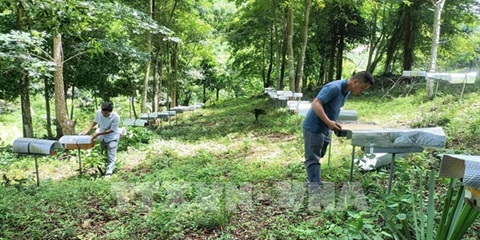
Đà Nẵng is seeking to transform its agricultural sector from a supplier of raw materials into a technology-driven, market-oriented economy, with investment opportunities spanning concentrated production areas, deep processing, logistics and agricultural product distribution. The city aims to shift from traditional agricultural production towards agricultural economic development, organising value chains and increasing the technological content and added value of products through closer links between production and processing.
CHARITY / EXHIBITION / OTHER EVENTS
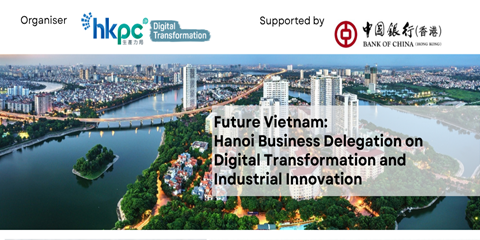
BOCHK ‧ HKPC FUTURE VIETNAM: HANOI BUSINESS DELEGATION ON DIGITAL TRANSFORMATION AND INDUSTRIAL INNOVATION
Interested in exploring Vietnam’s latest developments in digital transformation, technology adoption and industrial innovation? Organised by the Hong Kong Productivity Council (HKPC) and fully supported by Bank of China (Hong Kong) Limited, the "Future Vietnam: Hanoi Business Delegation on Digital Transformation and Industrial Innovation” will feature visits to leading high-tech enterprises across Vietnam and engage with local chambers of commerce, industry organisations and associations. Join us to expand your high-value business network and seize emerging opportunities in the ASEAN market!
Events Sponsors