Want to be in the loop?
subscribe to
our notification
Business News
ĐÀ NẴNG SEEKS TO BUILD HIGH-TECH AGRICULTURE, INTEGRATED VALUE CHAINS
The city has a broader production base, more diverse sources of raw materials and greater potential to connect agriculture with urban centres, tourism, services, science and technology, ports, airports and logistics networks.
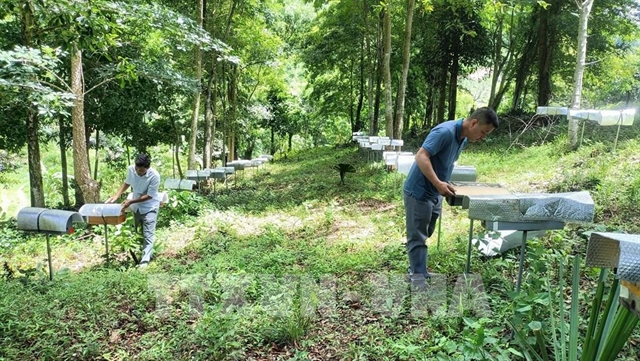
Using technology helps address practical problems, reduce costs, improve product quality and secure stable outlets. — VNA/VNS Photo
HÀ NỘI — Đà Nẵng is seeking to transform its agricultural sector from a supplier of raw materials into a technology-driven, market-oriented economy, with investment opportunities spanning concentrated production areas, deep processing, logistics and agricultural product distribution.
The city aims to shift from traditional agricultural production towards agricultural economic development, organising value chains and increasing the technological content and added value of products through closer links between production and processing.
Following administrative restructuring, Đà Nẵng has a broader production base, more diverse sources of raw materials and greater potential to connect agriculture with urban centres, tourism, services, science and technology, ports, airports and logistics networks.
These advantages align with the direction set out in Resolution No. 57-NQ/TW, which prioritises breakthroughs in science and technology, innovation and national digital transformation.
According to Hồ Quang Bửu, vice chairman of the Đà Nẵng People's Committee, the city's new development space offers investment opportunities across the entire agricultural value chain rather than production alone.
"What matters is not only that the city has more land, forests, sea areas, raw-material zones or distinctive products. Greater value lies in the ability to bring these resources into a shared development space encompassing urban areas, tourism, services, science and technology, seaports, airports, logistics and markets," Bửu said.
He said the city needed to move beyond exploiting natural resources and increasing output towards raising the value generated by each unit of resources, improving product quality, increasing added value and strengthening the competitiveness of agricultural goods.
Đà Nẵng has more than one million hectares of agricultural land and over 688,000ha of forest, according to Vũ Thị Bích Hậu, deputy director of the municipal Department of Agriculture and Environment.
The lowland areas have advantages in commercial farming, high-tech and organic agriculture, fruit cultivation and high-quality rice production. The midland and mountainous areas offer potential for concentrated livestock farming, forestry, medicinal plants and forest-based economic activities.
The livestock sector could develop biosecure production zones and integrated chains covering breeding, feed, farming, slaughtering, preservation and distribution. In mountainous areas, opportunities include raw-material production, non-timber forest products, medicinal plants grown under forest canopies and forestry processing linked to forest protection.
Hậu said raw materials should form the foundation of agricultural development, while processing, preservation, logistics and market access would turn those resources into competitive products.
Huỳnh Triều, a producer in Thăng Trường Commune with facilities including a solar power station, pig farm, plantation forest and biological mushroom production site, called for more incentives to attract investment in high-tech and concentrated agricultural production.
He proposed expanding green and circular-economy models, including organic farming, water-saving technologies, emissions reduction, agricultural by-product reuse, livestock waste treatment, organic fertiliser and biogas production, medicinal plants under forest canopies and clean energy.
"Green and circular economies, together with forest-based economic activities, are effective investment trends that support sustainable resource use," Triều said, calling for more favourable financing and technology mechanisms.
At the farm level, producers are also seeking practical support to adopt technology and expand commercial production.
Thái Nguyên Khoa, whose fruit orchard and pepper farm in Tiên Phước Commune generate an annual revenue of more than VNĐ300 million (US$11,600), said farmers and farm owners needed guidance on technologies suited to their production scale.
Technology should help producers address practical problems, reduce costs, improve product quality and secure stable outlets, enabling them to increase income per unit of land, he said. — BIZHUB/VNS
Source: VNS
Related News
CHARITY / EXHIBITION / OTHER EVENTS
BOCHK ‧ HKPC FUTURE VIETNAM: HANOI BUSINESS DELEGATION ON DIGITAL TRANSFORMATION AND INDUSTRIAL INNOVATION
Interested in exploring Vietnam’s latest developments in digital transformation, technology adoption and industrial innovation? Organised by the Hong Kong Productivity Council (HKPC) and fully supported by Bank of China (Hong Kong) Limited, the "Future Vietnam: Hanoi Business Delegation on Digital Transformation and Industrial Innovation” will feature visits to leading high-tech enterprises across Vietnam and engage with local chambers of commerce, industry organisations and associations. Join us to expand your high-value business network and seize emerging opportunities in the ASEAN market!
TECHNOLOGY
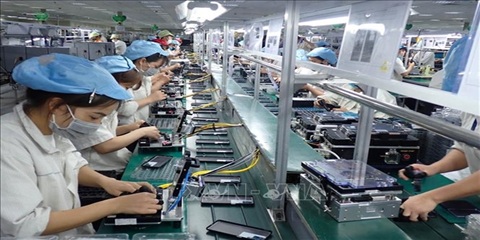
VIỆT NAM'S DIGITAL TECHNOLOGY INDUSTRY REVENUE SURGES 53% TO $254.6B
Việt Nam's digital technology industry generated an estimated US$254.6 billion in revenue in the first 10 months of 2026, up 53 per cent from a year earlier, while exports rose 46.2 per cent to $212 billion, the Ministry of Science and Technology said in its latest report. According to the report, hardware and electronics exports reached an estimated $30.681 billion in October, up 108 per cent from the same month last year.
MEMBER CORNER / PROMOTIONS
COSMOPARK ECO INDUSTRIAL ZONE – LONG-TERM ADVANTAGES FOR INDUSTRIAL INVESTORS IN VIETNAM
Spanning 322.3 hectares, with a project operational term extending to 2095 and plans for large-scale power infrastructure, COSMOPARK Eco Industrial Zone offers a strong foundation for manufacturing, high-tech industries, and international supply chain development. As global supply chains continue to evolve, Vietnam is strengthening its position as a strategic destination for international businesses seeking to diversify their manufacturing operations.
INFRASTRUCTURE / CONSTRUCTION / LOGISTIC / PORT
HCM CITY ACCELERATES POWER INFRASTRUCTURE INVESTMENT TO ATTRACT HIGH-TECH CAPITAL
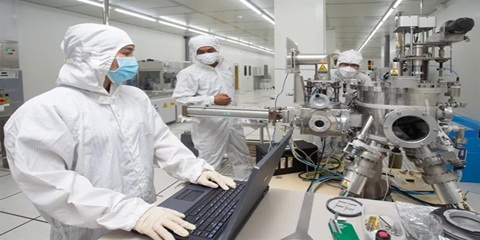
High-tech projects, particularly data centres, are not confined to SHTP but are also expanding into export processing zones and industrial parks across HCM City, driving up electricity demand. Proactively developing power infrastructure, diversifying energy supplies and expanding access to green energy are becoming essential for HCM City to maintain its competitive edge in attracting high-tech foreign direct investment (FDI).
VIETNAM ECONOMY INVESTMENT
VIETNAMESE SEAFOOD EXPORTS CLOSE IN ON $12 BLN RECORD
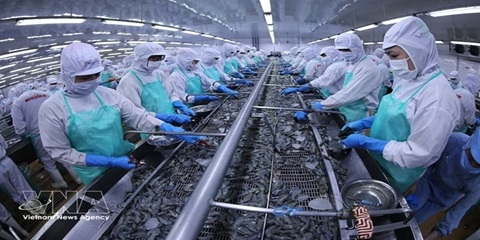
Việt Nam remains well placed, with seafood sold in most countries and accepted in premium markets on the back of deep-processing capacity and a broad product mix. Việt Nam’s seafood exports kept up double-digit growth in the first 10 months of 2026, reaching nearly US$10.5 billion, up more than 12 per cent from a year earlier. That gives the sector new momentum into year-end when holiday demand climbs in western and Asian markets.
GARMENT / TEXTILE
TEXTILE, GARMENT FIRMS REFORM TO MEET CPTPP ORIGIN RULES
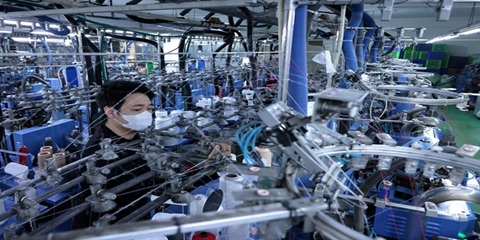
Vietnamese textile and garment manufacturers are aggressively restructuring their supply chains and diversifying material sources to unlock untapped tariff benefits. To capitalise on the Comprehensive and Progressive Agreement for Trans-Pacific Partnership (CPTPP), companies are racing to align with the pact's strict "yarn-forward" rules — a task made difficult by a shortage of raw materials within the trade bloc.
Events Sponsors