Want to be in the loop?
subscribe to
our notification
Business News
EXPORTS AND FDI VIETNAM’S GROWTH DRIVERS IN Q4
Vietnam’s economy in the first eight months of 2024 showed positive results, with a strong growth rate highly regarded by international organizations.
Many international institutions are optimistic about Vietnam's economic growth. The World Bank predicts a 6.1% increase in 2024, and 6.5% in 2025 and 2026; UOB forecasts growth above 6%, and HSBC 6.5%.
McKinsey forecasts that Vietnam and the Philippines will be the two fastest-growing economies in Southeast Asia, with growth rates of 6.9% and 6.3%, respectively, while Malaysia is expected to reach 5.9%.
In the first eight months, the macroeconomic environment remained stable, with controlled inflation and maintained economic balances. Industrial production rose by 8.6%, while the consumer price index increased by 4.04%, within the control limits set by the National Assembly. Public investment capital disbursement is estimated at 47.8% of the annual plan, down 0.8 percentage points from last year. Foreign direct investment (FDI) reached US$14.15 billion, an 8% year-on-year increase and the highest in the past five years. Goods exports played a key role in economic growth, reaching US$265.09 billion, up 15.8% from last year. If the current export momentum continues, the total export turnover for the year could reach a record US$400 billion, surpassing the US$371.82 billion from 2022. The trade balance posted a surplus of US$19.07 billion.
These results reflected the authorities’ efforts in speeding up public investment disbursement. For instance, the 500kV Quang Trach-Pho Noi transmission line's construction was cut from 3-4 years to 7 months thanks to decisive leadership and concentrated resources. The Government has also been actively enhancing legal frameworks, improving the business and investment environment, and boosting investment in critical infrastructure projects with over 2,021 kilometers of highways now open to traffic.
Additionally, the Government prioritized institutional reforms. To date, the Land Law, Housing Law, and Real Estate Business Law have been approved by the National Assembly, effective from August 1, 2024. Over the past eight months, tax and fee reductions have saved businesses nearly VND90 trillion, with the annual savings expected to reach approximately VND187 trillion. Social housing loan packages worth VND140 trillion and loans for the forestry and fisheries sectors totaling VND30 trillion are also being accelerated for disbursement.
Despite positive results, the domestic market faces challenges as consumer demand remains weak, with total retail sales up by only 8.5% compared to 10.3% last year. Vietnamese businesses continue to face increasing competition both domestically and internationally, and risk from trade defense lawsuits and anti-dumping taxes.
The Ministry of Planning and Investment proposed solutions such as stimulating consumption through tax and social welfare measures, while also speeding up the public investment disbursement. Deputy Prime Minister Tran Hong Ha emphasized clearly classifying public investment projects to prioritize funding for those with the potential for rapid and efficient implementation.
Ministries and localities are focusing on restoring and promoting investment from the private sector through specific mechanisms and policies aimed at reactivating and unlocking private investment resources, making this sector a key driver of long-term growth.
The Ministry of Industry and Trade needs to continue promoting trade, diversifying export and import markets, while also supporting businesses in seizing opportunities and fully implementing commitments in free trade agreements to boost exports.
Source: VCCI
Related News
VIETNAM ECONOMY INVESTMENT
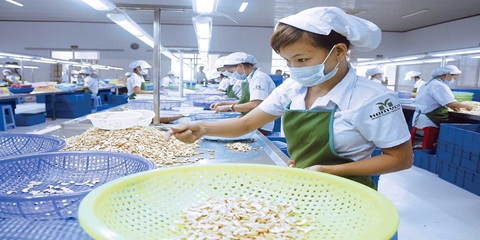
VIETNAMESE COMPANIES OPTIMISTIC ON INTERNATIONAL GROWTH
Vietnamese businesses are among the most confident about the outlook for international trade, according to HSBC’s Global Trade Pulse Survey 2026, released on November 16. The survey captures the views of 10,000 senior business leaders across 26 markets on trade, tariffs, supply chains, and technology. Findings show that 94 per cent of Vietnamese businesses expect their international trade to grow over the next two years. Vietnam ranks joint top in the survey with the Philippines, compared with 86 per cent globally.
TECHNOLOGY
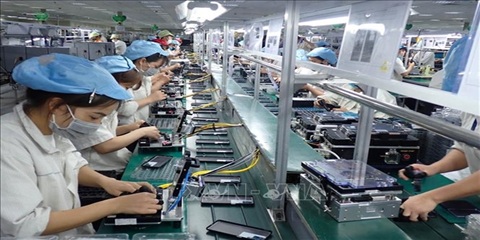
VIỆT NAM'S DIGITAL TECHNOLOGY INDUSTRY REVENUE SURGES 53% TO $254.6B
Việt Nam's digital technology industry generated an estimated US$254.6 billion in revenue in the first 10 months of 2026, up 53 per cent from a year earlier, while exports rose 46.2 per cent to $212 billion, the Ministry of Science and Technology said in its latest report. According to the report, hardware and electronics exports reached an estimated $30.681 billion in October, up 108 per cent from the same month last year.
CHARITY / EXHIBITION / OTHER EVENTS
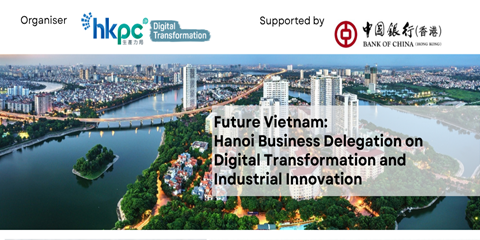
BOCHK ‧ HKPC FUTURE VIETNAM: HANOI BUSINESS DELEGATION ON DIGITAL TRANSFORMATION AND INDUSTRIAL INNOVATION
Interested in exploring Vietnam’s latest developments in digital transformation, technology adoption and industrial innovation? Organised by the Hong Kong Productivity Council (HKPC) and fully supported by Bank of China (Hong Kong) Limited, the "Future Vietnam: Hanoi Business Delegation on Digital Transformation and Industrial Innovation” will feature visits to leading high-tech enterprises across Vietnam and engage with local chambers of commerce, industry organisations and associations. Join us to expand your high-value business network and seize emerging opportunities in the ASEAN market!
GARMENT / TEXTILE
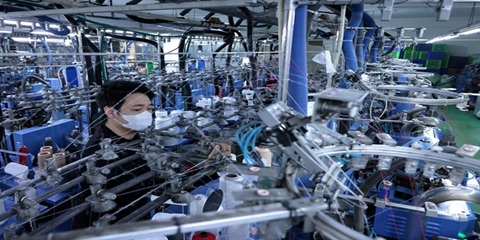
TEXTILE, GARMENT FIRMS REFORM TO MEET CPTPP ORIGIN RULES
Vietnamese textile and garment manufacturers are aggressively restructuring their supply chains and diversifying material sources to unlock untapped tariff benefits. To capitalise on the Comprehensive and Progressive Agreement for Trans-Pacific Partnership (CPTPP), companies are racing to align with the pact's strict "yarn-forward" rules — a task made difficult by a shortage of raw materials within the trade bloc.
TECHNOLOGY
ĐÀ NẴNG SEEKS TO BUILD HIGH-TECH AGRICULTURE, INTEGRATED VALUE CHAINS
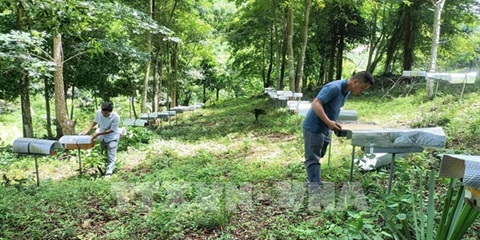
Đà Nẵng is seeking to transform its agricultural sector from a supplier of raw materials into a technology-driven, market-oriented economy, with investment opportunities spanning concentrated production areas, deep processing, logistics and agricultural product distribution. The city aims to shift from traditional agricultural production towards agricultural economic development, organising value chains and increasing the technological content and added value of products through closer links between production and processing.
INFRASTRUCTURE / CONSTRUCTION / LOGISTIC / PORT
HCM CITY ACCELERATES POWER INFRASTRUCTURE INVESTMENT TO ATTRACT HIGH-TECH CAPITAL
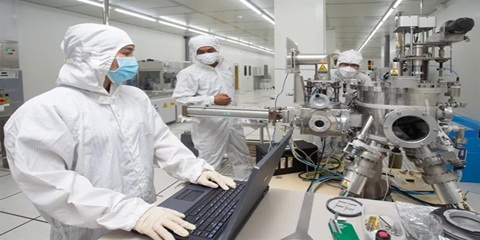
High-tech projects, particularly data centres, are not confined to SHTP but are also expanding into export processing zones and industrial parks across HCM City, driving up electricity demand. Proactively developing power infrastructure, diversifying energy supplies and expanding access to green energy are becoming essential for HCM City to maintain its competitive edge in attracting high-tech foreign direct investment (FDI).
Events Sponsors