Want to be in the loop?
subscribe to
our notification
Business News
APPROPRIATE FOREIGN OWNERSHIP LIMIT AT BANKS EXPECTED TO ATTRACT INVESTMENT
Foreign ownership limits at credit institutions were expected to be raised to an appropriate level to attract foreign investment, which plays an important role in improving operational efficiency and accelerating the banking sector's restructuring.
The State Bank of Việt Nam is drafting a decree to amend several points of the Government’s Decree No 01/2004/NĐ-CP dated January 3, 2014, about foreign investors purchasing stakes at Việt Nam’s credit institutions.
An amendment proposal which attracted attention was that banks which received the forced transfer of weak credit institutions could extend the foreign ownership limit from 30 per cent to 49 per cent.
Nguyễn Thế Minh from Yuanta Securities Việt Nam said that to attract big foreign investors, the foreign ownership limit must be attractive enough to ensure their rights.
Increasing the foreign ownership limit to 49 per cent might create a “magnet” for foreign investors, he said, adding that this would also help foreign investors to have large enough stakes to participate in the governance and management to improve operational efficiency and accelerate the restructuring process.
According to Yuanta, among banks which were participating in the process of restructuring weak credit institutions, except for Vietcombank, which has a State stake of more than 50 per cent, the remaining three banks, including MBBank, HDBank and VPBank, would have the opportunity to increase the room for foreign ownership.
The foreign stake at MBBank is currently at 23.24 per cent, HDBank 18 per cent and VPBank 17.6 per cent, much lower than the proposed limit of 49 per cent.
If the foreign ownership limit at credit institutions is raised to 49 per cent, there would be significant room for banks to raise capital from international financial institutions to restructure weak banks transferred to them.
Under the EU – Việt Nam Free Trade Agreement, within five years of the agreement's effective date, Việt Nam would consider allowing two European credit institutions to own up to 49 per cent of the charter capital of two Vietnamese banks (except for the Big 4 group).
This meant that up to five banks could have a foreign ownership limit of 49 per cent.
According to Vietnam Securities Depository, as of January 3, among 30 listed commercial banks, 16 of them had at least 15 per cent in foreign stakes.
Despite the proposal to increase foreign ownership limits, it is not easy to attract foreign investment.
While some banks are running out of room for more foreign ownership, others failed to attract foreign investments to the limit of 30 per cent.
According to General Director of the Banking Association Nguyễn Quốc Hùng it is necessary to improve the legal framework in a way that is more in line with international practices and ensures long-term stability and consistency.
Hùng said that increasing the foreign ownership limit was necessary, but it must ensure the harmonisation of benefits between investors and State management requirements, stressing that clear and consistent policies from the beginning would greatly support commercial banks in accelerating the restructuring and integration process.
With a cautious viewpoint, expert Võ Trí Thành said that there should be different foreign ownership limits for different groups of banks, depending on the assessment of the State Bank of Việt Nam.
For example, commercial joint stock banks which completed Basel II and were underway to implement Basel III could be allowed to increase their foreign ownership limit to more than 30 per cent.
However, Việt Nam needed to study more carefully the benefits of increasing the foreign ownership limit, Trần Thị Hồng Minh, Director of the Centre Institute for Economic Management, said.
She added that the increase of foreign ownership limit should be considered along with other policies and proposals about developing international financial hubs, fintech and payment intermediaries.
Promote securities market
In June 2022, once again, Việt Nam was not included in the list of Morgan Stanley Capital International (MSCI) for consideration of upgrading from a frontier market to an emerging market. Out of 17 ranking criteria, MSCI assessed that Việt Nam did not meet nine criteria, one of which was “foreign ownership limit”.
Financial expert Dương Anh Vũ said it was necessary to increase the foreign ownership limit at listed banks early.
Many other markets in the region with T+ transactions and similar securities market infrastructure and technical conditions were upgraded to emerging markets while Việt Nam remained at frontier status. The only difference was that foreign ownership in Việt Nam was limited, Vũ pointed out.
According to Minh, foreign ownership was the core factor in upgrading to an emerging market.
“We must create a fair playing ground for every investor,” he stressed.
In other words, if foreign ownership at banks was still limited at 30 per cent, the road to emerging markets was far away, Minh said, adding that banking stocks were the group with the highest market capitalisation on the stock market.
Source: VNS
Related News

BANKING / FINANCE / INSURANCE / TAX
REMITTANCES TO HCM CITY RISE NEARLY 40% IN Q3
Remittances to HCM City reached more than US$2.83 billion in the third quarter of this year, up 39.5 per cent from the previous quarter and 3.6 per cent year-on-year. This was the first quarter showing positive annual growth this year, helping narrow the decline in remittance inflows over the first nine months. According to the State Bank of Vietnam (SBV)’s Regional Branch 2, remittances transferred to HCM City through credit institutions and economic organisations totalled $2.835 billion in Q3, an increase of more than $802 million from the previous quarter.

TECHNOLOGY
TECH SECTOR GROWTH OPENS UP OPPORTUNITIES FOR VIỆT NAM TO GO GLOBAL
The growth of the electronics, semiconductor and high-tech sectors worldwide is opening up a variety of opportunities for Vietnamese enterprises to integrate more deeply into the global supply chain. However, to become suppliers for these corporations, domestic enterprises must meet rigorous standards regarding quality, technology, productivity and order fulfilment capabilities.
VIETNAM ECONOMY INVESTMENT
FOREIGN INVESTORS SEEKING A SYNCHRONISED MANUFACTURING ECOSYSTEM
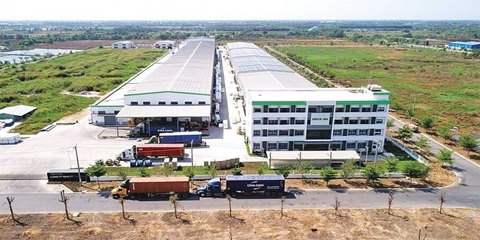
Instead of focusing only on land costs and incentives as usual, foreign investors are seeking a synchronised manufacturing ecosystem, from stable power supply and logistics to shared infrastructure and the convenience of completing residence procedures for experts to serve their long-term investment in the country.
MEMBER CORNER / PROMOTIONS
SENTRYSAFE FHW40200 – PROTECT YOUR VALUABLES, ENJOY PEACE OF MIND!
Looking for a reliable solution to protect your important documents, cash, and valuables from fire and water damage? Genuine SENTRYSAFE - Reliable protection for your valuables and peace of mind! Contact Sen Wai Vietnam for more information and personalized product recommendations.
PROPERTY / INDUSTRIAL ZONE
HCM CITY ATTRACTS US$5.7 BILLION INTO EXPORT PROCESSING AND INDUSTRIAL ZONES
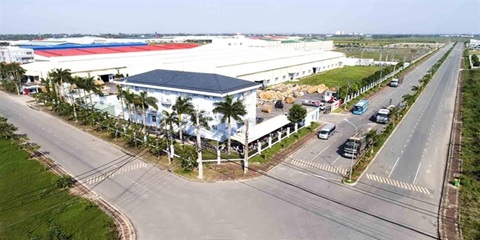
HCM City attracted US$5.7 billion in domestic and foreign investment into its export processing and industrial zones during the first nine months of 2026. The figure exceeded the city's full-year target by 31 per cent, highlighting strong momentum in high-quality industrial investment under Resolution No.10-NQ/TW. Total investment reached 131 per cent of the 2026 target of $4.25 billion and represented a 29 per cent increase compared with the same period in 2025, according to the city's Export Processing and Industrial Zones Authority (HEPZA).
INFRASTRUCTURE / CONSTRUCTION / LOGISTIC / PORT
DONG THAP PROVINCE STEPS UP INDUSTRIAL EXPANSION AND INFRASTRUCTURE CONNECTIVITY
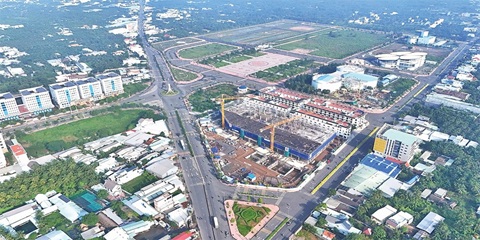
Accelerating public investment, strengthening inter-regional connectivity, and expanding industrial land are helping Dong Thap efficiently bolster competitiveness and drive economic growth. Following the 2025 merger of the former Dong Thap and Tien Giang provinces, the expanded Dong Thap province in the Mekong Delta faces mounting pressure to accelerate infrastructure development and strengthen connectivity among local economic zones, urban areas, industrial parks (IPs), and production centres.
Events Sponsors






















