Want to be in the loop?
subscribe to
our notification
Business News
FLEXIBLE FISCAL POLICY HELPS DRIVE ECONOMIC GROWTH
Tax and fee relief measures have had a noticeable impact on businesses, particularly amid pressures from input costs, capital, markets, competition and the need to transform growth models.
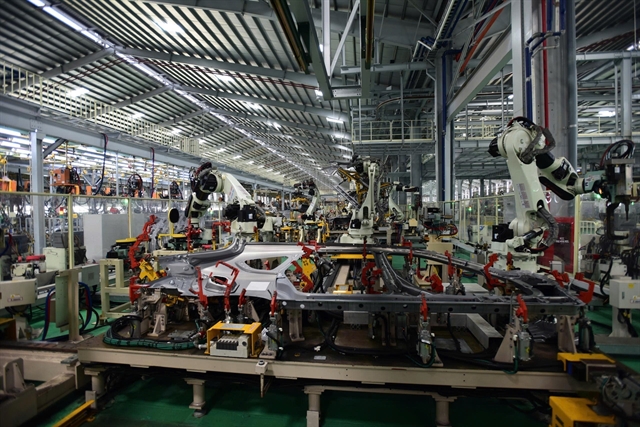
An automobile assembly line of THACO Truong Hai Group. State budget revenue in the first eight months of 2026 was estimated at VNĐ2.02 quadrillion (US$77.7 billion), equivalent to 80 per cent of the annual estimate and up 16 per cent year-on-year. — VNA/VNS Photo Hải Âu
HÀ NỘI — Việt Nam’s fiscal policy has been implemented in a targeted expansionary manner since early 2026, helping maintain macroeconomic stability and supporting the country’s goal of achieving double-digit economic growth.
According to the Ministry of Finance, State budget revenue in the first eight months of 2026 was estimated at VNĐ2.02 quadrillion (US$77.7 billion), equivalent to 80 per cent of the annual estimate and up 16 per cent year-on-year. Domestic revenue reached VNĐ1.75 quadrillion, accounting for 86.6 per cent of total revenue and rising 16.6 per cent. Meanwhile, crude oil revenue stood at VNĐ43.6 trillion, exceeding the annual estimate by 1.5 per cent, while revenue from import-export activities reached VNĐ223.9 trillion, up 7.9 per cent.
The stronger revenue base has provided room for State budget spending and continued fiscal support. State budget expenditure in the period was estimated at over VNĐ1.6 quadrillion, equivalent to 50.0 per cent of the annual estimate and up 13.3 per cent year-on-year. Tax, fee and land-rent exemptions, reductions and extensions were estimated to amount to around VNĐ209 trillion.
Mạc Quốc Anh, Vice Chairman and Secretary General of the Hanoi Association of Small- and Medium-Sized Enterprises, said tax and fee relief measures have had a noticeable impact on businesses, particularly amid pressures from input costs, capital, markets, competition and the need to transform their growth models.
He noted that fiscal policy has shifted from temporary support to larger-scale, sustained and relatively comprehensive measures. The continued reduction of value-added tax (VAT) from 10 per cent to 8 per cent for many categories of goods and services through the end of 2026, for example, has helped reduce costs, stimulate consumption and support aggregate demand.
Under the National Assembly's Resolution No. 43/2026/QH16, businesses with annual revenue of no more than VNĐ10 billion are eligible for a 30 per cent reduction in corporate income tax payable for the 2026 and 2027 tax periods, while business individual owners meeting the corresponding revenue threshold are entitled to a 30 per cent reduction in personal income tax.
Nguyễn Văn Được, General Director of Trọng Tín Accounting and Tax Consulting Co., Ltd., said fiscal policy has shifted towards more targeted measures designed not only to ease immediate difficulties but also to create room for investment, production expansion and stronger competitiveness.
From a business perspective, An Phát JSC Director Nguyễn Văn Diệu said tax and fee relief, together with stronger public investment, could improve firms’ resilience, stimulate aggregate demand and expand business opportunities. He, however, stressed that policy effectiveness also depends on transparency, stability and accessibility, calling for simpler procedures and timely, comprehensive information on support programmes. — VNA/VNS
Source: VNS
Related News

CHARITY / EXHIBITION / OTHER EVENTS
INVESTMENT OPPORTUNITIES IN CA MAU PROVINCE: 96 PROJECTS AND 20 STRATEGIC PROJECTS
We are pleased to share with you information on investment projects currently seeking investors in Ca Mau Province. Should your esteemed company or association be interested, we kindly invite you to review the project information and complete the registration form via the links provided. The Ho Chi Minh City Investment and Trade Promotion Centre (ITPC) will consolidate the expressions of interest and facilitate connections with the leadership of Ca Mau Province at a meeting tentatively scheduled for 13 November 2026 in Ho Chi Minh City.

MEMBER CORNER / PROMOTIONS
BẰNG KIỀU LIVESHOW - A SYMPHONY OF LOVE UNDER THE GOLDEN GLOW
A masterclass in live music that takes the audience on a soulful journey through immortal love songs, guided by the peerless artistry and emotive storytelling of renowned singer Bằng Kiều. The highlight of the night is his seamless musical chemistry with special guest Triệu Hồng Ngọc, promising passionate and deeply resonant duets inside the magnificent Grand Ballroom.
INFRASTRUCTURE / CONSTRUCTION / LOGISTIC / PORT
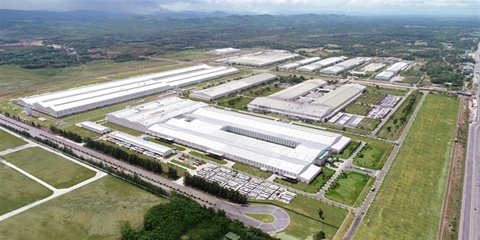
ĐÀ NẴNG GREEN-LIGHTS US$105 MILLION THAI DEVELOPMENT DEAL
The central city has approved an investment proposal by Thailand’s WHA Group to develop infrastructure for the 400ha WHA Đà Nẵng Industrial Park project on two communes of Thăng Bình and Đồng Dương, with an investment of more than VNĐ2.7 trillion (US$105 million). The city said it approved WHA Industrial Development International's status as an investor in the project, which is expected to take place between 2027 and 2034.
VIETNAM ECONOMY INVESTMENT
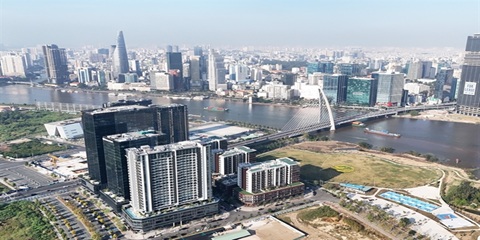
HCM CITY SHIFTS TOWARDS PRODUCTIVITY-DRIVEN GROWTH MODEL
After 40 years of Đổi mới (Renewal), HCM City is entering a new phase of development, seeking to bring together capital, technology, people, infrastructure, and markets to raise productivity and strengthen competitiveness. Before the national Đổi mới reforms were launched in 1986, the centrally planned economy left businesses with limited autonomy. Between 1976 and 1985, the city experimented with a series of “fence-breaking” initiatives, including wage-price compensation, the three-part plan, and the Directors’ Club.

INFRASTRUCTURE / CONSTRUCTION / LOGISTIC / PORT
VIỆT NAM-CAMBODIA TRADE GATHERS PACE TOWARDS $20 BILLION TARGET
Trade between Việt Nam and Cambodia continues to grow, remaining a bright spot and a key pillar of bilateral cooperation as the two countries aim to raise two-way trade to US$20 billion in the coming years. After setting a record of more than $11.3 billion last year, bilateral trade reached about $8.7 billion in the first eight months of this year, up 8.3 per cent year on year.
VIETNAM ECONOMY INVESTMENT
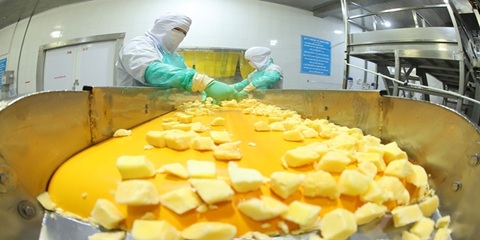
FRUIT AND VEGETABLE EXPORTS POISED TO HIT $10 BILLION IN 2026
Fruit and vegetable exports are on track to reach nearly US$10 billion in 2026, after rising 19.9 per cent year on year to nearly US$7.4 billion in the first nine months, driven by strong seasonal demand and abundant tropical fruit supplies. The Ministry of Agriculture and Environment said the growth reflected stronger international demand for fresh produce and processed agricultural products.
Events Sponsors






















