Want to be in the loop?
subscribe to
our notification
Business News
VIỆT NAM'S BUSINESSES MOVE TOWARDS AI AGENTS
Banking and financial services, telecommunications and IT are among the sectors leading AI agent trials, supported by their existing digital infrastructure.
HÀ NỘI — Việt Nam’s AI landscape is entering a new phase as businesses move beyond generative AI (GenAI) tools designed to assist human users towards autonomous AI, agentic AI and AI agents that can take action with limited supervision, experts have said.
The shift comes as Việt Nam seeks to accelerate science and technology, innovation and digital transformation under Politburo Resolution 57-NQ/TW, issued on December 22, 2024.
Regional Technical Head at ManageEngine Phạm Huân said the key difference between basic GenAI and autonomous AI agents lies in their degree of autonomy and ability to execute tasks.
GenAI typically works through a prompt-and-response model, generating content such as text, images, video and audio in response to user requests. Autonomous AI agents, by contrast, are designed to make decisions and take actions independently in pursuit of more complex goals.
Huân said that in IT operations, for example, GenAI can guide an employee through a troubleshooting procedure, while an autonomous AI agent can detect an issue, analyse its root cause and execute a system recovery script.
GenAI suggests what you should do, while an AI agent actually gets on with completing the task.
"Việt Nam is emerging as one of Southeast Asia’s most dynamic AI adoption markets, ranking second in the region with 26.5 per cent of its working-age population using AI, while also ranking among the world's top 15 economies for AI user-growth speed," he said.
However, Vietnamese enterprises remain at an early stage of deploying autonomous AI agents. Many are transitioning from GenAI to autonomous AI, with applications still largely focused on customer support chatbots, document automation and other basic use cases.
Banking and financial services, telecommunications and IT are among the sectors leading AI agent trials, supported by their existing digital infrastructure.
He said the main barriers to wider adoption are weaknesses in data governance, limited AI transparency and cybersecurity risks associated with giving AI tools greater access to core data. Once data standardisation and security challenges are addressed, AI agents could become an important driver of greater operational efficient and lower costs.
Greater autonomy also creates new cybersecurity risks, however. One of the most significant is indirect prompt injection. Instead of attacking an AI system through prompt entered directly by a user, attackers can hide malicious instructions in documents, emails or PDF files that an AI agent processes during its normal workflow.
Employees may also independently connect external AI agents to corporate data without IT teams' knowledge, creating data flows that may not be properly monitored or audited.
He said businesses should therefore adopt a defence-in-depth approach. AI agents should not receive unrestricted privileges, while identity and access controls should be applied throughout their operation. Humans should retain final approval over critical decisions and actions, with an emergency stop mechanism available when necessary.
For SMEs, an effective AI governance framework does not have to mean lengthy policy documents. Businesses can classify AI applications according to risk, allowing relatively unrestricted use of AI for non-sensitive creative tasks while requiring human oversight for internal data and customer interactions. The highest level of control should apply to AI systems handling core or financial databases.
The principle of least privilege should also be mandatory, with AI systems granted access to only the data required for their specific tasks. Enterprises should maintain human-in-the-loop checkpoints for critical operations and use centralised IT management and cybersecurity tools to monitor AI applications and data flows.
He said successful deployment is ultimately not about having the smartest AI agent, but about establishing a robust security framework in which AI can optimise processes within controlled boundaries.
For Việt Nam, the challenge will be to capture the productivity benefits of increasingly autonomous AI while strengthening the data governance, security and human oversight needed to support its wider adoption. — VNS
Source: VNS
Related News

CHARITY / EXHIBITION / OTHER EVENTS
INVESTMENT OPPORTUNITIES IN CA MAU PROVINCE: 96 PROJECTS AND 20 STRATEGIC PROJECTS
We are pleased to share with you information on investment projects currently seeking investors in Ca Mau Province. Should your esteemed company or association be interested, we kindly invite you to review the project information and complete the registration form via the links provided. The Ho Chi Minh City Investment and Trade Promotion Centre (ITPC) will consolidate the expressions of interest and facilitate connections with the leadership of Ca Mau Province at a meeting tentatively scheduled for 13 November 2026 in Ho Chi Minh City.

MEMBER CORNER / PROMOTIONS
BẰNG KIỀU LIVESHOW - A SYMPHONY OF LOVE UNDER THE GOLDEN GLOW
A masterclass in live music that takes the audience on a soulful journey through immortal love songs, guided by the peerless artistry and emotive storytelling of renowned singer Bằng Kiều. The highlight of the night is his seamless musical chemistry with special guest Triệu Hồng Ngọc, promising passionate and deeply resonant duets inside the magnificent Grand Ballroom.
INFRASTRUCTURE / CONSTRUCTION / LOGISTIC / PORT
ĐÀ NẴNG GREEN-LIGHTS US$105 MILLION THAI DEVELOPMENT DEAL
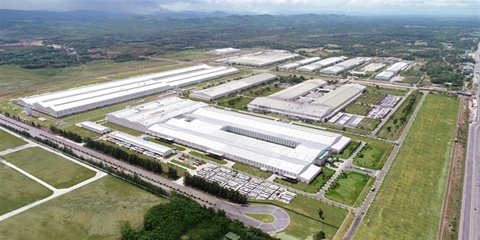
The central city has approved an investment proposal by Thailand’s WHA Group to develop infrastructure for the 400ha WHA Đà Nẵng Industrial Park project on two communes of Thăng Bình and Đồng Dương, with an investment of more than VNĐ2.7 trillion (US$105 million). The city said it approved WHA Industrial Development International's status as an investor in the project, which is expected to take place between 2027 and 2034.
VIETNAM ECONOMY INVESTMENT
MOBILE PHONE EXPORTS RISE 20% TO $51.8 BILLION IN FIRST NINE MONTHS
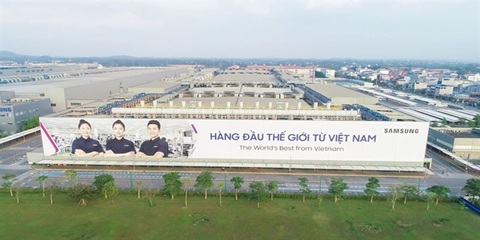
Exports of mobile phones and components rose 20 per cent year-on-year to nearly US$51.8 billion in the first nine months of 2026, with China, the US and Republic of Korea accounting for more than half of the total. Shipments to the three markets reached a combined $26.18 billion, or 50.6 per cent of total exports of the product group during the period, according to data from the Vietnam Department of Customs under the Ministry of Finance.

INFRASTRUCTURE / CONSTRUCTION / LOGISTIC / PORT
VIỆT NAM-CAMBODIA TRADE GATHERS PACE TOWARDS $20 BILLION TARGET
Trade between Việt Nam and Cambodia continues to grow, remaining a bright spot and a key pillar of bilateral cooperation as the two countries aim to raise two-way trade to US$20 billion in the coming years. After setting a record of more than $11.3 billion last year, bilateral trade reached about $8.7 billion in the first eight months of this year, up 8.3 per cent year on year.

VIETNAM ECONOMY INVESTMENT
FRUIT AND VEGETABLE EXPORTS POISED TO HIT $10 BILLION IN 2026
Fruit and vegetable exports are on track to reach nearly US$10 billion in 2026, after rising 19.9 per cent year on year to nearly US$7.4 billion in the first nine months, driven by strong seasonal demand and abundant tropical fruit supplies. The Ministry of Agriculture and Environment said the growth reflected stronger international demand for fresh produce and processed agricultural products.
Events Sponsors