Want to be in the loop?
subscribe to
our notification
Business News
VN SHOULD FOCUS ON DEEPER INTEGRATION INTO THE GLOBAL SUPPLY CHAIN NETWORK
As international businesses look to create new links in the global supply chain, Việt Nam, as well as the rest of the Southeast Asia region, can emerge as a major destination for foreign direct investment (FDI), said economists and policymakers.
Lê Hữu Phúc, who is a commercial counsellor at Việt Nam’s Embassy in Thailand, said the investment shift had been closely linked to FDI activities, having produced significant and transformative impacts on the country’s national socio-economic development.
Phúc said the investment inflow sped up Việt Nam’s industrialisation and economic growth and highlighted the country’s effort to integrate into the global supply chain network.
He said that as investments in the Renewal era once played a large part in spurring Việt Nam’s national development, current changes to the global supply chain network might open up opportunities for the country to break into highly sophisticated fields, including semiconductor and software.
There would be more opportunities for Vietnamese companies to connect and work with international businesses and engage more deeply in the global network to facilitate the transfer of technical know-how and in training a skilled labour force.
A strong investment inflow would also encourage further improvements in infrastructure, including better road networks, ports, airports and logistics facilities, as well as energy and telecommunications infrastructure, benefiting the entire economy. As advanced technologies are being introduced to Việt Nam, especially in manufacturing, as new business models, they would help drive innovation and enhance efficiency in various industries. In addition, the expansion of production supply chains would likely boost the country’s exports, helping to balance its trade.
He said the Vietnamese Government had been introducing policies to attract more FDI with top priorities such as improving the business environment, enhancing infrastructure, supporting small and medium enterprises and promoting sustainability.
An article in Singapore’s The Business Times says the supply chain shift to ASEAN economies continues to gain momentum thanks to strong inflows of foreign direct investment into the region. Between 2011 and 2021, exports from the six largest ASEAN countries grew by 41 per cent, significantly outpacing the global export growth of 22 per cent.
The emergence of trade agreements like the Regional Comprehensive Economic Partnership (RCEP), which includes ASEAN countries and major Asia-Pacific economies, has further facilitated trade flows and supply chain connections throughout the region. Relatively low labour costs in ASEAN have been a significant factor in driving the supply chain shift to the region.
Director-general of the International Investment Research Institute, Lê Anh Dũng, said Việt Nam was well-positioned to integrate deeper into the global supply chain network, thanks to its stable macro environment and dynamic economy.
As the country continues improving its business environment and infrastructure, a young educated workforce, combined with still relatively low labour costs would help make Việt Nam an attractive destination for foreign investments.
He advised the Government to speed up the digital transformation, develop strong brands and focus on training and education as the cornerstones of long-term growth within the global supply chain network. Businesses should take advantage of the numerous free trade agreements signed by Việt Nam, which open up access to major markets including the EU, Japan and Australia.
Source: VNS
Related News

BANKING / FINANCE / INSURANCE / TAX
REMITTANCES TO HCM CITY RISE NEARLY 40% IN Q3
Remittances to HCM City reached more than US$2.83 billion in the third quarter of this year, up 39.5 per cent from the previous quarter and 3.6 per cent year-on-year. This was the first quarter showing positive annual growth this year, helping narrow the decline in remittance inflows over the first nine months. According to the State Bank of Vietnam (SBV)’s Regional Branch 2, remittances transferred to HCM City through credit institutions and economic organisations totalled $2.835 billion in Q3, an increase of more than $802 million from the previous quarter.
TECHNOLOGY
TECH SECTOR GROWTH OPENS UP OPPORTUNITIES FOR VIỆT NAM TO GO GLOBAL
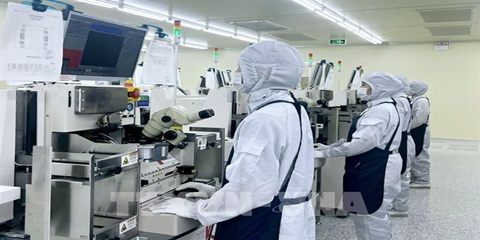
The growth of the electronics, semiconductor and high-tech sectors worldwide is opening up a variety of opportunities for Vietnamese enterprises to integrate more deeply into the global supply chain. However, to become suppliers for these corporations, domestic enterprises must meet rigorous standards regarding quality, technology, productivity and order fulfilment capabilities.
VIETNAM ECONOMY INVESTMENT
FOREIGN INVESTORS SEEKING A SYNCHRONISED MANUFACTURING ECOSYSTEM
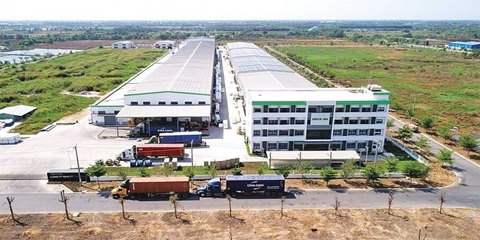
Instead of focusing only on land costs and incentives as usual, foreign investors are seeking a synchronised manufacturing ecosystem, from stable power supply and logistics to shared infrastructure and the convenience of completing residence procedures for experts to serve their long-term investment in the country.
MEMBER CORNER / PROMOTIONS
SENTRYSAFE FHW40200 – PROTECT YOUR VALUABLES, ENJOY PEACE OF MIND!
Looking for a reliable solution to protect your important documents, cash, and valuables from fire and water damage? Genuine SENTRYSAFE - Reliable protection for your valuables and peace of mind! Contact Sen Wai Vietnam for more information and personalized product recommendations.
PROPERTY / INDUSTRIAL ZONE
HCM CITY ATTRACTS US$5.7 BILLION INTO EXPORT PROCESSING AND INDUSTRIAL ZONES
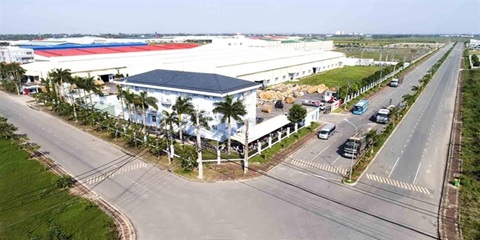
HCM City attracted US$5.7 billion in domestic and foreign investment into its export processing and industrial zones during the first nine months of 2026. The figure exceeded the city's full-year target by 31 per cent, highlighting strong momentum in high-quality industrial investment under Resolution No.10-NQ/TW. Total investment reached 131 per cent of the 2026 target of $4.25 billion and represented a 29 per cent increase compared with the same period in 2025, according to the city's Export Processing and Industrial Zones Authority (HEPZA).
INFRASTRUCTURE / CONSTRUCTION / LOGISTIC / PORT
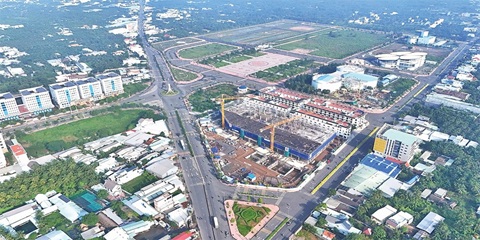
DONG THAP PROVINCE STEPS UP INDUSTRIAL EXPANSION AND INFRASTRUCTURE CONNECTIVITY
Accelerating public investment, strengthening inter-regional connectivity, and expanding industrial land are helping Dong Thap efficiently bolster competitiveness and drive economic growth. Following the 2025 merger of the former Dong Thap and Tien Giang provinces, the expanded Dong Thap province in the Mekong Delta faces mounting pressure to accelerate infrastructure development and strengthen connectivity among local economic zones, urban areas, industrial parks (IPs), and production centres.
Events Sponsors






















