Want to be in the loop?
subscribe to
our notification
Business News
VIETNAM PROJECTS STABLE ECONOMIC OUTLOOK
According to the International Monetary Fund (IMF), Vietnam's economy is likely to grow by 6.1% in 2024, underpinned by continued strong external demand, stable foreign direct investment and easing policies.
Foreign agencies forecast good outlook
Vietnam's economy grew by 5% in a challenging 2023 thanks to the Government's policies, according to the IMF. Property turmoil, financial stress and sharp decline in exports hurt the economy. Recovery started in late 2023 on reviving exports and tourism, as well as the support of appropriate expansionary fiscal and monetary policies. Inflation rose in 2024 mainly due to rising food prices although core inflation remained relatively low and stable.
According to the IMF, domestic demand growth will recover gradually as businesses are struggling with high debt levels while the real estate market will only fully recover in the medium term. Inflation is forecast to hover around the State Bank of Vietnam’s target range of 4-4.5% this year.
In its latest economic update on Vietnam in October, Standard Chartered Bank raised its 2024 GDP growth forecast for Vietnam to 6.8% (from 6%) thanks to higher-than-expected GDP performance in the third quarter. Standard Chartered forecasted Vietnam’s growth at 6.9% in the fourth quarter and 6.7% in 2025.
According to Standard Chartered Bank’s economists, Vietnam’s economic growth momentum is relatively strong, with better improvements in many sectors, including import and export, retail, real estate, tourism, construction and manufacturing. The recovery in trade and increased business activity, along with foreign direct investment, will be the main growth drivers in 2025 and beyond.
Previously, the Asian Development Bank (ADB) forecast Vietnam's economic growth at 6% in 2024 and 6.2% in 2025.
The World Bank (WB) also anticipated Vietnam's GDP growth at 6.1% in 2024 and 6.5% in 2025, respectively higher than its 5.5% and 6% forecasts in April 2024. As a result, Vietnam's GDP growth is higher than eight countries in the ASEAN region and China.
Lingering risks
Although Vietnam’s economic growth is forecast to be quite high, according to the IMF, there are still many negative risks. Exports, the main driver of the Vietnamese economy, may weaken if global growth is not as expected, global geopolitical tensions persist or trade disputes increase. With loose monetary conditions, if exchange rate pressure continues for a longer time, this will lead to a greater pass-through to domestic inflation.
Moreover, persistent weaknesses in the real estate market and corporate bond market may result in a stronger-than-expected impact on banks’ ability to expand credit, undercutting economic growth as well as undermining financial stability.
“Risks remain high, further efforts are needed to ensure macro-financial stability and carry out extensive reforms to address weaknesses, achieve green, strong and inclusive growth in the medium term. Continued capacity building will be important to support reforms. Given the large fiscal space amid limited room for monetary policy easing, fiscal policy should take the lead in supporting economic activity if needed,” the IMF stressed.
The IMF welcomed the authorities’ plans to accelerate public investment, which would require addressing bottlenecks, and underscored the importance of expanding social safety nets to support the most vulnerable groups. It also recommended strengthening the fiscal framework, budgeting processes, and increasing budget revenue mobilization over the medium term to support the ambitious development plan.
In addition, the IMF believed that the authorities have effectively contained inflation risks, but monetary policy needs to remain cautious amid complex circumstances and limited policy space. The IMF welcomed the moves toward greater exchange rate flexibility and recommended continued progress in this area, along with modernizing the monetary policy framework.
The IMF underlined the importance of strengthening financial system resilience by strengthening capital buffers, phasing out regulations on debt rescheduling while maintaining the same debt group and addressing rising non-performing loans; necessarily having continued efforts to reinforce the management and supervision of banks; and taking decisive steps to address remaining risks, including strengthening the legal framework on insolvency, building up institutions and enhancing transparency in the corporate bond market.
Furthermore, structural reforms and climate policy reforms to achieve sustainable, green and inclusive growth need to be focused on, according to the IMF. Accelerating the transition to an upper-middle-income economy will require further efforts to improve the business environment, strengthen critical infrastructure and invest in human capital.
During his meeting with Managing Director of the International Monetary Fund (IMF) Kristalina Georgieva in New York in late September 2024, General Secretary and President To Lam called on the IMF to support Vietnam in restructuring its economy for a new era. He emphasized the need to reform the growth model, pursue green transformation, and develop new technologies, including artificial intelligence, while ensuring social security.
IMF Managing Director Kristalina Georgieva said that Vietnam and ASEAN are bright spots in global economic growth. She commented that Vietnam's resilient, adaptable and sustained growth has been backed by two solid pillars, namely strong institutions that have been increasingly completed and an approach that prioritizes growth while ensuring inclusiveness in penning macroeconomic policy.
She pledged continued support for Vietnam to realize its development goals by promoting reform and risk management, to become a developed, high-income country by 2045.
Source: VCCI
Related News
BANKING / FINANCE / INSURANCE / TAX
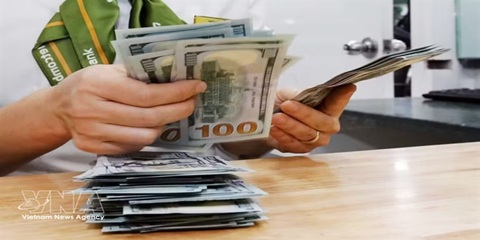
REMITTANCES TO HCM CITY RISE NEARLY 40% IN Q3
Remittances to HCM City reached more than US$2.83 billion in the third quarter of this year, up 39.5 per cent from the previous quarter and 3.6 per cent year-on-year. This was the first quarter showing positive annual growth this year, helping narrow the decline in remittance inflows over the first nine months. According to the State Bank of Vietnam (SBV)’s Regional Branch 2, remittances transferred to HCM City through credit institutions and economic organisations totalled $2.835 billion in Q3, an increase of more than $802 million from the previous quarter.
TECHNOLOGY
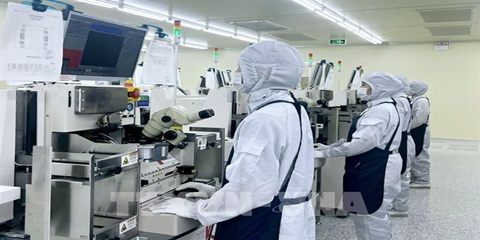
TECH SECTOR GROWTH OPENS UP OPPORTUNITIES FOR VIỆT NAM TO GO GLOBAL
The growth of the electronics, semiconductor and high-tech sectors worldwide is opening up a variety of opportunities for Vietnamese enterprises to integrate more deeply into the global supply chain. However, to become suppliers for these corporations, domestic enterprises must meet rigorous standards regarding quality, technology, productivity and order fulfilment capabilities.
VIETNAM ECONOMY INVESTMENT
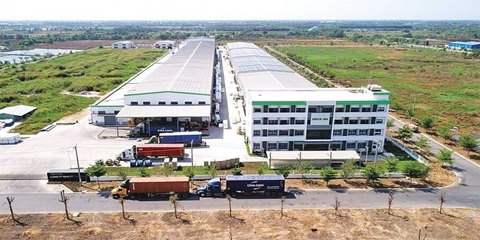
FOREIGN INVESTORS SEEKING A SYNCHRONISED MANUFACTURING ECOSYSTEM
Instead of focusing only on land costs and incentives as usual, foreign investors are seeking a synchronised manufacturing ecosystem, from stable power supply and logistics to shared infrastructure and the convenience of completing residence procedures for experts to serve their long-term investment in the country.
MEMBER CORNER / PROMOTIONS
SENTRYSAFE FHW40200 – PROTECT YOUR VALUABLES, ENJOY PEACE OF MIND!
Looking for a reliable solution to protect your important documents, cash, and valuables from fire and water damage? Genuine SENTRYSAFE - Reliable protection for your valuables and peace of mind! Contact Sen Wai Vietnam for more information and personalized product recommendations.
PROPERTY / INDUSTRIAL ZONE
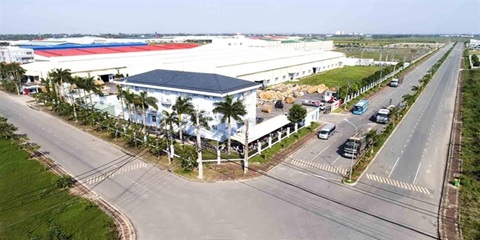
HCM CITY ATTRACTS US$5.7 BILLION INTO EXPORT PROCESSING AND INDUSTRIAL ZONES
HCM City attracted US$5.7 billion in domestic and foreign investment into its export processing and industrial zones during the first nine months of 2026. The figure exceeded the city's full-year target by 31 per cent, highlighting strong momentum in high-quality industrial investment under Resolution No.10-NQ/TW. Total investment reached 131 per cent of the 2026 target of $4.25 billion and represented a 29 per cent increase compared with the same period in 2025, according to the city's Export Processing and Industrial Zones Authority (HEPZA).
INFRASTRUCTURE / CONSTRUCTION / LOGISTIC / PORT
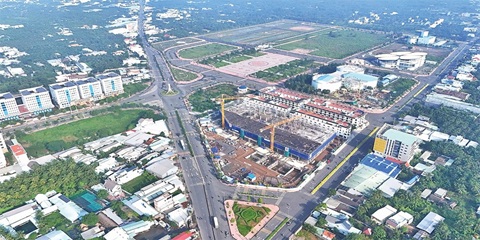
DONG THAP PROVINCE STEPS UP INDUSTRIAL EXPANSION AND INFRASTRUCTURE CONNECTIVITY
Accelerating public investment, strengthening inter-regional connectivity, and expanding industrial land are helping Dong Thap efficiently bolster competitiveness and drive economic growth. Following the 2025 merger of the former Dong Thap and Tien Giang provinces, the expanded Dong Thap province in the Mekong Delta faces mounting pressure to accelerate infrastructure development and strengthen connectivity among local economic zones, urban areas, industrial parks (IPs), and production centres.
Events Sponsors