Want to be in the loop?
subscribe to
our notification
Business News
DIGITAL TRANSFORMATION CATALYST FOR COMPREHENSIVE DEVELOPMENT
Vietnam is entering a period of strong transformation, led by the ongoing digital transformation revolution. The rapid booming of the Fourth Industrial Revolution has leveraged e-government, digital economy and digital society, and motivated comprehensive and sustainable development.
Pioneers in digital transformation
Digital transformation is not only a vital trend but also an existential requirement in the current context of deepening globalization. The Fourth Industrial Revolution is reshaping every industry, from manufacturing and services to education and healthcare, leading to changes in consumer behaviors, business models and management methods. The COVID-19 pandemic is a strong catalyst that motivates businesses and organizations to accelerate digital transformation to adapt to the new normal.

In 2024, Vietnam's e-commerce market exceeded US$25 billion, up 20% from 2023, or 9% of total retail sales and consumer services. E-commerce made up two-thirds of the country's digital economy value, according to the Ministry of Industry and Trade.
Digital transformation really exploded when Technology 4.0 took the throne. Digital transformation is not simply applying new technology but a total change, including corporate culture, operating processes and development strategies. In Vietnam, the digital transformation wave is taking place strongly in all fields, from finance-banking, retail and logistics to education and healthcare. Pioneering businesses such as Viettel, Vingroup and FPT are making efforts to utilize core technologies such as artificial intelligence (AI), big data, internet of things (IoT) and cloud computing to enhance productivity, reduce costs and create innovative products and services.
In fact, digital transformation is critical to helping many businesses not only increase revenue but also expand market share and promote sustainable development. Specifically, Vingroup, through VinFast, has applied digital technology to entire production and customer care processes, typically the VinFast App that helps track vehicles and maintenance remotely. Viettel is known as a tech leader, notable for its Telehealth remote medical examination and treatment system, providing quality medical services. FPT not only consults but also deploys extensive digital transformation solutions internally, with the FPT.AI platform that enables automation processes and big data analysis.
Consistent solutions for stronger digital transformation
Vietnam is focusing on building and developing digital transformation based on three main pillars: Digital government, digital economy and digital society. This is an important foundation to realize the vision of turning Vietnam into a digital nation by 2030.
Developing a digital government helps improve administration, enhance transparency and modernize public services. Online public administrative services are broadened to reduce paperwork, time and costs for people and businesses. An assessment of 63 public service portals in 2024 revealed improvements in online public service delivery compared to 2023. Many portals received a 'good' rating in two key areas: "Providing support information" and "Ease of use of search tools."
The digital economy is poised to be a key driver of future growth in Vietnam. The country aims for the digital economy to contribute 30% of GDP by 2030, focusing on areas like e-commerce, fintech, creative industries, and the sharing economy. Vietnam is currently ranked 41st in terms of digital economy share. In 2024, its digital economy accounted for nearly 19%, with expectations to surpass 20% in 2025.
Building a digital society aims to narrow the digital divide, improve digital skills for people and ensure equitable access to digital services and utilities. Universalizing the internet, especially in remote areas, plays a key role in bolstering the comprehensive development of society.
General Secretary
To Lam, in his article titled “Digital transformation - An important driving force for developing productive forces, perfecting production relations to lead the country into a new era”, emphasized “Digital transformation needs to be implemented comprehensively and synchronously, taking into account the dialectical relationship between infrastructure and superstructure.”
To realize digital transformation goals, Vietnam is carrying out a series of consistent solutions to create a solid foundation for this process. The first focus is on developing digital infrastructure, with projects to upgrade and expand telecommunications networks, improve internet connectivity and build national data centers.
The government has invested in 5G networks and new technologies such as cloud computing, AI and IoT to facilitate businesses and people to access modern technologies.
In addition, speeding up digital human resource training is considered a decisive factor enabling Vietnam to achieve its digital transformation goals. Professional training and development programs for digital workers are encouraging universities to expand information technology training programs. In addition, digital skills courses for workers are also widely organized.
Building a suitable legal environment, with innovation incentivization and support policies for small and medium-sized enterprises (SMEs), plays an important role in digital transformation. The Government also focuses on international cooperation and attracts investment funds and technology to help Vietnam access advanced technology and sharpen competitiveness.
Digital transformation requires the joint efforts of the Government, businesses and society. With political determination, young and creative human resources will create a foundation for Vietnam to develop strongly in the digital age and deeply integrate into the global digital economy.
Source: VCCI
Related News

BANKING / FINANCE / INSURANCE / TAX
REMITTANCES TO HCM CITY RISE NEARLY 40% IN Q3
Remittances to HCM City reached more than US$2.83 billion in the third quarter of this year, up 39.5 per cent from the previous quarter and 3.6 per cent year-on-year. This was the first quarter showing positive annual growth this year, helping narrow the decline in remittance inflows over the first nine months. According to the State Bank of Vietnam (SBV)’s Regional Branch 2, remittances transferred to HCM City through credit institutions and economic organisations totalled $2.835 billion in Q3, an increase of more than $802 million from the previous quarter.

TECHNOLOGY
TECH SECTOR GROWTH OPENS UP OPPORTUNITIES FOR VIỆT NAM TO GO GLOBAL
The growth of the electronics, semiconductor and high-tech sectors worldwide is opening up a variety of opportunities for Vietnamese enterprises to integrate more deeply into the global supply chain. However, to become suppliers for these corporations, domestic enterprises must meet rigorous standards regarding quality, technology, productivity and order fulfilment capabilities.
VIETNAM ECONOMY INVESTMENT
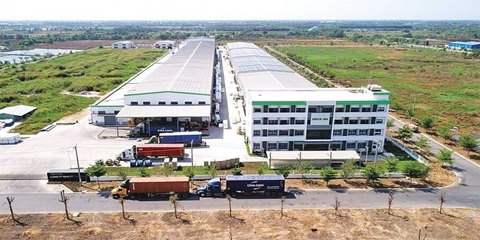
FOREIGN INVESTORS SEEKING A SYNCHRONISED MANUFACTURING ECOSYSTEM
Instead of focusing only on land costs and incentives as usual, foreign investors are seeking a synchronised manufacturing ecosystem, from stable power supply and logistics to shared infrastructure and the convenience of completing residence procedures for experts to serve their long-term investment in the country.

MEMBER CORNER / PROMOTIONS
SENTRYSAFE FHW40200 – PROTECT YOUR VALUABLES, ENJOY PEACE OF MIND!
Looking for a reliable solution to protect your important documents, cash, and valuables from fire and water damage? Genuine SENTRYSAFE - Reliable protection for your valuables and peace of mind! Contact Sen Wai Vietnam for more information and personalized product recommendations.
PROPERTY / INDUSTRIAL ZONE
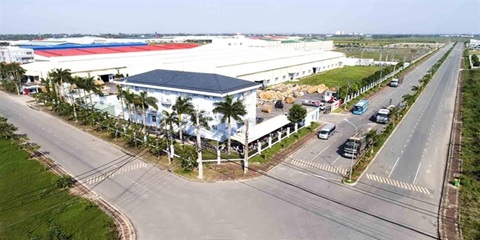
HCM CITY ATTRACTS US$5.7 BILLION INTO EXPORT PROCESSING AND INDUSTRIAL ZONES
HCM City attracted US$5.7 billion in domestic and foreign investment into its export processing and industrial zones during the first nine months of 2026. The figure exceeded the city's full-year target by 31 per cent, highlighting strong momentum in high-quality industrial investment under Resolution No.10-NQ/TW. Total investment reached 131 per cent of the 2026 target of $4.25 billion and represented a 29 per cent increase compared with the same period in 2025, according to the city's Export Processing and Industrial Zones Authority (HEPZA).
INFRASTRUCTURE / CONSTRUCTION / LOGISTIC / PORT
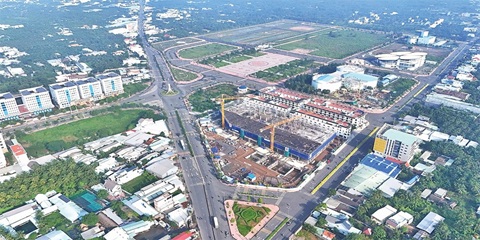
DONG THAP PROVINCE STEPS UP INDUSTRIAL EXPANSION AND INFRASTRUCTURE CONNECTIVITY
Accelerating public investment, strengthening inter-regional connectivity, and expanding industrial land are helping Dong Thap efficiently bolster competitiveness and drive economic growth. Following the 2025 merger of the former Dong Thap and Tien Giang provinces, the expanded Dong Thap province in the Mekong Delta faces mounting pressure to accelerate infrastructure development and strengthen connectivity among local economic zones, urban areas, industrial parks (IPs), and production centres.
Events Sponsors






















