Want to be in the loop?
subscribe to
our notification
Business News
VIETNAM EXPORTS MAINTAIN ROBUST GROWTH
Vietnam’s export-import sector remains a key economic pillar in early 2025. Aiming for a 12-14% increase in export turnover compared to 2024 and a trade surplus of US$30 billion as outlined in Resolution 25/NQ-CP, Vietnam sets its sights on a promising growth path, requiring trong government-business cooperation.
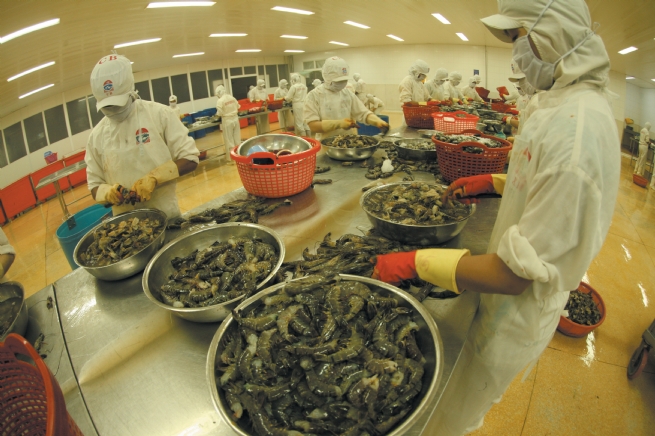
Shrimp exports are expected to sustain high prices throughout 2025
Export highlights
Statistics from the Ministry of Industry and Trade (MoIT) revealed that total export-import turnover for the first two months of 2025 reached approximately US$126.7 billion. Exports hit US$64.3 billion, up 8.4% from the same period in 2024. The trade balance maintained a surplus of US$1.9 billion, lower than the US$5.13 billion recorded a year earlier, but still a positive signal amid a fluctuating global trade environment.
The domestic economic sector achieved a 12.8% export growth rate, outpacing the FDI sector’s 6.7%. This shift reflects a dynamic evolution in Vietnam’s economic structure and the growing strength of local enterprises. Key export categories, including textiles (up 9.3%), footwear (up 10.3%), and notably computers, electronics, and components (up 25.3%), remain vital drivers bringing Vietnamese brands closer to global consumers.
The agriculture, forestry and fisheries sector also made a strong mark, with February 2025 exports estimated at US$4.4 billion, a 37.2% surge year-on-year, according to the Ministry of Agriculture and Environment. This success reflects the allure of Vietnamese agricultural products and opens significant opportunities to diversify export offerings moving forward.
Vietnam boasts an extensive free trade network, with 19 signed free trade agreements (FTAs), 17 of which are in effect. These agreements provide a solid foundation for accessing major markets like the EU, US, Japan, South Korea and ASEAN with attractive tariff benefits. Experts urge businesses to enhance product quality, streamline logistics and tap into underexplored markets such as the Middle East, India and Africa to fully capitalize on FTA advantages.
Nguyen Anh Son, Director General of the Import-Export Department at the MoIT, said: “To hit the 12-14% export growth target, Vietnam needs to achieve monthly exports of around US$38 billion, an increase of over US$4 billion from 2024. This is entirely feasible by leveraging FTAs effectively and harnessing domestic business potential.” He expressed confidence that business agility, paired with government support, will propel Vietnam’s export ambitions forward.
Adapting flexibly to global trade war
The year 2025 promises a vibrant global trade scene, with economic recovery in certain regions and shifting supply chains. Despite uncertainties like protectionist policies and geopolitical tensions, Vietnam holds a strategic position to seize emerging opportunities. Trade expert Vu Vinh Phu noted: “Rather than relying solely on traditional markets like the US, EU and China, Vietnamese firms can explore new regions with rising consumer demand. Investing in modern logistics will also cut costs and boost product competitiveness.”
The return of US President Donald Trump for a second term brings both prospects and hurdles for Vietnam’s exports. His focus on domestic manufacturing and high tariffs on imports from rivals like China could accelerate production shifts to countries like Vietnam, which offers competitive labor costs and a broad FTA network. This positions Vietnam to ramp up exports to the US, particularly in electronics, textiles and footwear.
Yet, Trump’s trade war agenda carries risks. US protectionism may intensify trade defense measures, such as anti-dumping duties or origin fraud probes, targeting Vietnamese goods if perceived as a conduit for Chinese products evading tariffs. Vietnam's reliance on the US market exposes it to trade risks. Businesses must diversify and ensure compliance with US standards.
Another critical angle is the indirect fallout from the US-China trade conflict. As China grapples with US tariffs, its goods may flood alternative markets, including Vietnam, intensifying competition for local firms striving to retain export market share. This pressures Vietnam to swiftly enhance product value, steering clear of a price-cutting race with competitors.
Efforts to achieve export goals
To realize export targets, the MoIT is rolling out robust support measures. Deputy Minister Phan Thi Thang affirmed that regular briefings with Vietnam’s overseas trade offices will keep market insights current, while flexible response strategies address global shifts. “We are committed to partnering with businesses, resolving export-import bottlenecks, and expanding access to promising markets,” she emphasized.
Nguyen Anh Son advised industry associations and firms to proactively analyze market demand and absorption capacity to craft tailored export strategies. The ministry is also working with trade defense units to shield businesses from anti-dumping lawsuits and origin fraud risks, safeguarding Vietnam’s goods reputation.
Vu Vinh Phu highlighted logistics as the “lifeblood” of export activities. “Investing in logistics infrastructure, shortening transit times and lowering costs will elevate Vietnamese goods against international rivals. Firms should also leverage technology to streamline operations and reach customers,” he recommended.
Source: VCCI
Related News

BANKING / FINANCE / INSURANCE / TAX
REMITTANCES TO HCM CITY RISE NEARLY 40% IN Q3
Remittances to HCM City reached more than US$2.83 billion in the third quarter of this year, up 39.5 per cent from the previous quarter and 3.6 per cent year-on-year. This was the first quarter showing positive annual growth this year, helping narrow the decline in remittance inflows over the first nine months. According to the State Bank of Vietnam (SBV)’s Regional Branch 2, remittances transferred to HCM City through credit institutions and economic organisations totalled $2.835 billion in Q3, an increase of more than $802 million from the previous quarter.

TECHNOLOGY
TECH SECTOR GROWTH OPENS UP OPPORTUNITIES FOR VIỆT NAM TO GO GLOBAL
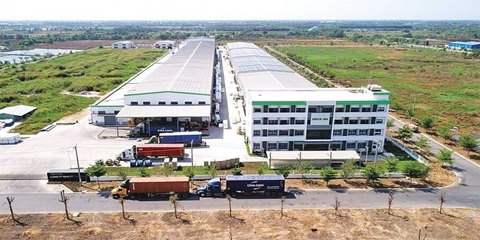
The growth of the electronics, semiconductor and high-tech sectors worldwide is opening up a variety of opportunities for Vietnamese enterprises to integrate more deeply into the global supply chain. However, to become suppliers for these corporations, domestic enterprises must meet rigorous standards regarding quality, technology, productivity and order fulfilment capabilities.
VIETNAM ECONOMY INVESTMENT
FOREIGN INVESTORS SEEKING A SYNCHRONISED MANUFACTURING ECOSYSTEM
Instead of focusing only on land costs and incentives as usual, foreign investors are seeking a synchronised manufacturing ecosystem, from stable power supply and logistics to shared infrastructure and the convenience of completing residence procedures for experts to serve their long-term investment in the country.
MEMBER CORNER / PROMOTIONS
SENTRYSAFE FHW40200 – PROTECT YOUR VALUABLES, ENJOY PEACE OF MIND!
Looking for a reliable solution to protect your important documents, cash, and valuables from fire and water damage? Genuine SENTRYSAFE - Reliable protection for your valuables and peace of mind! Contact Sen Wai Vietnam for more information and personalized product recommendations.
PROPERTY / INDUSTRIAL ZONE
HCM CITY ATTRACTS US$5.7 BILLION INTO EXPORT PROCESSING AND INDUSTRIAL ZONES
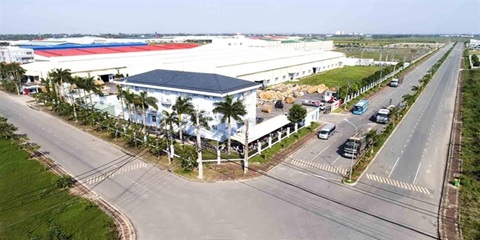
HCM City attracted US$5.7 billion in domestic and foreign investment into its export processing and industrial zones during the first nine months of 2026. The figure exceeded the city's full-year target by 31 per cent, highlighting strong momentum in high-quality industrial investment under Resolution No.10-NQ/TW. Total investment reached 131 per cent of the 2026 target of $4.25 billion and represented a 29 per cent increase compared with the same period in 2025, according to the city's Export Processing and Industrial Zones Authority (HEPZA).
INFRASTRUCTURE / CONSTRUCTION / LOGISTIC / PORT
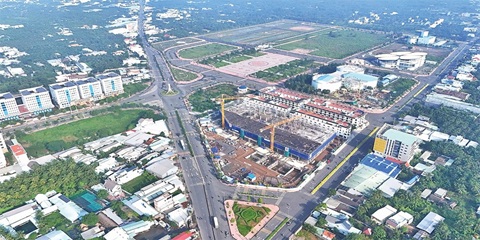
DONG THAP PROVINCE STEPS UP INDUSTRIAL EXPANSION AND INFRASTRUCTURE CONNECTIVITY
Accelerating public investment, strengthening inter-regional connectivity, and expanding industrial land are helping Dong Thap efficiently bolster competitiveness and drive economic growth. Following the 2025 merger of the former Dong Thap and Tien Giang provinces, the expanded Dong Thap province in the Mekong Delta faces mounting pressure to accelerate infrastructure development and strengthen connectivity among local economic zones, urban areas, industrial parks (IPs), and production centres.
Events Sponsors






















