Want to be in the loop?
subscribe to
our notification
Business News
VIỆT NAM’S REAL ESTATE MARKET POISED FOR SIGNIFICANT GROWTH IN 2025
The Vietnamese real estate market is on the brink of substantial growth this year, driven by a new legal framework, increased foreign direct investment (FDI), improved infrastructure, and a welcoming investment climate.
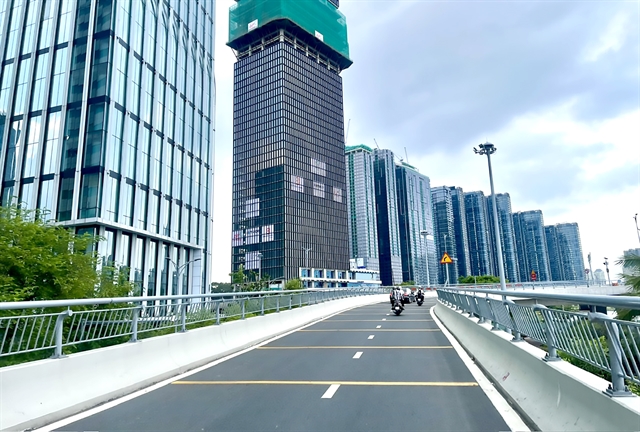
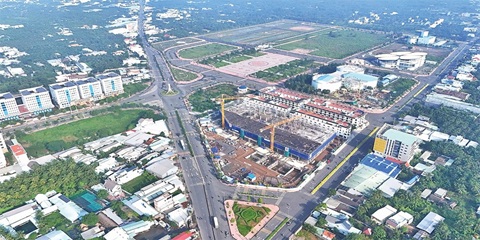
New real estate developments in downtown HCM City. — VNS Photo Bồ Xuân Hiệp
HCM CITY — The Vietnamese real estate market is on the brink of substantial growth this year, driven by a new legal framework, increased foreign direct investment (FDI), improved infrastructure, and a welcoming investment climate.
Experts believe these factors will create a "more attractive landscape" for both domestic and international investors.
This optimistic outlook follows the introduction of several reforms aimed at streamlining property transactions and enhancing transparency within the sector.
The new legal framework, enacted earlier this year, addresses long-standing issues related to land use rights and ownership regulations, which have hindered investment.
It allows for greater clarity and security for investors, fostering confidence in the market.
Recent developments have provided the market with supportive elements such as economic growth, macroeconomic stability, effective legal frameworks, strategic planning, and favourable supply and demand dynamics.
Among these elements, the legal framework is particularly significant, as it progressively addresses longstanding regulatory challenges.
A number of new laws pertinent to the real estate market are set to take effect, accompanied by various decrees and policies that have already been implemented.
Three key laws aimed at streamlining and modernising the sector such as the 2024 Land Law, the Housing Law, and the 2023 Real Estate Business Law have already been in effect since August last year.
The 2024 Land Law is particularly noteworthy, as it introduces new regulations that abolish outdated land price structures and facilitates annual updates to pricing tables.
By empowering local authorities to make determinations regarding land prices, this law seeks to enhance land utilisation and allocation, thereby increasing government revenue.
These new regulations are intended to stabilise the market and mitigate issues such as real estate “bubbles”, speculation, and price manipulation.
Cấn Văn Lực, a noted economic expert, said: “The market has already navigated its most challenging period.”
Võ Hồng Thắng, deputy general director of DKRA Group, said, “We will begin to observe the genuine impact of these laws in 2025."
While they have been in effect for several months, their influence across various market segments has been somewhat limited due to ongoing global economic uncertainties.
Nguyễn Quốc Anh, deputy general director of PropertyGuru Vietnam, said: “Beginning in 2024, the housing market has experienced increased liquidity from both new and secondary projects.
“Interest in real estate has surged, and confidence in the market has improved. From the second quarter of 2025, the market is likely to enter a phase of prosperity," he said.
FDI influx
A key factor contributing to the anticipated growth in the sector is the increase in foreign direct investment (FDI), experts said.
Việt Nam has seen a significant uptick in foreign direct investment (FDI) over the past few years. Last year, the real estate sector attracted $6.3 billion in registered FDI.
This accounted for 16.5 per cent of total investment capital and represented a surge of over 35 per cent from 2023.
The influx comprises new capital exceeding $3.7 billion, with substantial contributions from investors in Singapore, Japan, South Korea, the US, and the EU.
Analysts have attributed this surge to Việt Nam’s robust economic growth and its strategic position as a manufacturing hub in Southeast Asia.
In addition, the landscape for mergers and acquisitions (M&A) is also flourishing, with real estate continuing to be a dominant sector.
Việt Nam ranked second in Southeast Asia for M&A transaction growth in real estate last year, experiencing an impressive year-on-year increase of nearly 46 per cent, second only to Indonesia.
According to the Vietnam Association of Real Estate Brokers (VARS), a total of 13 major M&A transactions exceeded $1.8 billion last year, involving both foreign investors and prominent domestic firms.
In addition, infrastructure development also plays a crucial role in the anticipated growth of the real estate market.
The Government has committed to investing heavily in transportation and urban infrastructure projects to enhance connectivity and accessibility, making various regions more attractive for real estate investment.
Moreover, the overall investment climate in Việt Nam is becoming increasingly favourable.
The Government is promoting policies to attract foreign capital, such as tax incentives and simplified business registration processes to encourage more investors to consider Việt Nam as a viable destination for real estate investment.
Market analysts said the combination of these factors will lead to increased demand for residential and commercial properties, particularly in major cities such as HCM City and Hà Nội.
However, while the outlook remains positive, experts have cautioned challenges remain.
Issues such as corporate bond debt pressure, land disputes, regulatory inconsistencies, and the global economic landscape could pose risks to the market’s momentum.
Võ Huỳnh Tấn Kiệt, director of CBRE Vietnam’s Housing Marketing Department, said the property market would require additional time to return to the vibrancy witnessed in 2018 and 2019. — VNS
Source: VNS
Related News

BANKING / FINANCE / INSURANCE / TAX
REMITTANCES TO HCM CITY RISE NEARLY 40% IN Q3
Remittances to HCM City reached more than US$2.83 billion in the third quarter of this year, up 39.5 per cent from the previous quarter and 3.6 per cent year-on-year. This was the first quarter showing positive annual growth this year, helping narrow the decline in remittance inflows over the first nine months. According to the State Bank of Vietnam (SBV)’s Regional Branch 2, remittances transferred to HCM City through credit institutions and economic organisations totalled $2.835 billion in Q3, an increase of more than $802 million from the previous quarter.

TECHNOLOGY
TECH SECTOR GROWTH OPENS UP OPPORTUNITIES FOR VIỆT NAM TO GO GLOBAL
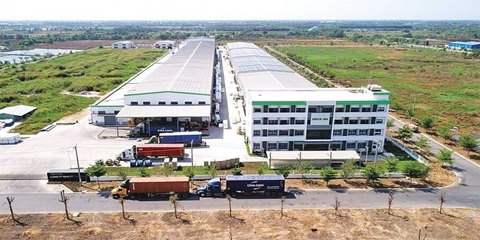
The growth of the electronics, semiconductor and high-tech sectors worldwide is opening up a variety of opportunities for Vietnamese enterprises to integrate more deeply into the global supply chain. However, to become suppliers for these corporations, domestic enterprises must meet rigorous standards regarding quality, technology, productivity and order fulfilment capabilities.
VIETNAM ECONOMY INVESTMENT
FOREIGN INVESTORS SEEKING A SYNCHRONISED MANUFACTURING ECOSYSTEM
Instead of focusing only on land costs and incentives as usual, foreign investors are seeking a synchronised manufacturing ecosystem, from stable power supply and logistics to shared infrastructure and the convenience of completing residence procedures for experts to serve their long-term investment in the country.
MEMBER CORNER / PROMOTIONS
SENTRYSAFE FHW40200 – PROTECT YOUR VALUABLES, ENJOY PEACE OF MIND!
Looking for a reliable solution to protect your important documents, cash, and valuables from fire and water damage? Genuine SENTRYSAFE - Reliable protection for your valuables and peace of mind! Contact Sen Wai Vietnam for more information and personalized product recommendations.
PROPERTY / INDUSTRIAL ZONE
HCM CITY ATTRACTS US$5.7 BILLION INTO EXPORT PROCESSING AND INDUSTRIAL ZONES
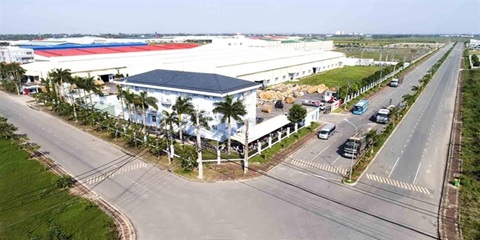
HCM City attracted US$5.7 billion in domestic and foreign investment into its export processing and industrial zones during the first nine months of 2026. The figure exceeded the city's full-year target by 31 per cent, highlighting strong momentum in high-quality industrial investment under Resolution No.10-NQ/TW. Total investment reached 131 per cent of the 2026 target of $4.25 billion and represented a 29 per cent increase compared with the same period in 2025, according to the city's Export Processing and Industrial Zones Authority (HEPZA).
INFRASTRUCTURE / CONSTRUCTION / LOGISTIC / PORT
DONG THAP PROVINCE STEPS UP INDUSTRIAL EXPANSION AND INFRASTRUCTURE CONNECTIVITY
Accelerating public investment, strengthening inter-regional connectivity, and expanding industrial land are helping Dong Thap efficiently bolster competitiveness and drive economic growth. Following the 2025 merger of the former Dong Thap and Tien Giang provinces, the expanded Dong Thap province in the Mekong Delta faces mounting pressure to accelerate infrastructure development and strengthen connectivity among local economic zones, urban areas, industrial parks (IPs), and production centres.
Events Sponsors






















