Want to be in the loop?
subscribe to
our notification
Business News
USEFUL FACTS ABOUT HONG KONG’S LATEST ECONOMIC DEVELOPMENT
1. Hong Kong as an International Financial Centre
• HK is an integral part of the international financial system: for example, the US securities supervisor has an enforcement agreement with Hong Kong; the territory is on the oversight board of CLS, a global currency-settlement platform backed by the Federal Reserve which deals in Hong Kong’s currency, among others. Most bank supervisors and risk officers treat a counterparty in Hong Kong like one in Heidelberg.
• Vital bridge between the global and Mainland China’s financial systems: through regulated systems such as Stock Connect and Bond Connect, Hong Kong is a vital platform to connect global capital with the world’s second largest economy; with insurance and wealth management being planned with the Greater Bay Area, the widened scope will offer more opportunities for international companies.
• Of 163 licensed banks in Hong Kong, 132 are foreign-incorporated (as of end-May 2020). Hong Kong is also home to over 70 of the world’s top 100 banks, according to the Hong Kong Monetary Authority (HKMA).
• According to a triennial global central banks survey conducted by the Bank for International Settlements in 2019, Hong Kong was the world’s fourth largest foreign exchange market in terms of turnover (accounting for 7.6% of global FX turnover), trailing the UK (43%), the US (17%) and Singapore (7.6%).
• As per latest update from HKMA in late May 2020, the HKD market has been functioning normally, with interest rates staying low and the HKD exchange rate remaining stable. There have not been any signs of significant fund outflows from either the HKD or the banking system.
• Capital adequacy ratio stands at about 20 percent as compared with global standard of 8 percent. The liquidity ratio is about 160 percent, whereas the global requirement is only 100 percent.
• HKMA started granting virtual bank licences in late March 2019, a major milestone in supporting Hong Kong’s entry into the smart banking era.
• As of 31 May 2020, HKMA has granted a total of 8 virtual banking licenses in Hong Kong, including Livi VB Limited, Mox Bank Limited, ZA Bank Limited, Welab Bank Limited, Ant Bank (Hong Kong) Limited, Fusion Bank Limited, Airstar Bank Limited and Ping An OneConnect Bank (Hong Kong) Limited.
26 June 2020
• As of May 2020, there were 2,482 companies listed on the Hong Kong Exchanges (HKEx), with a total market capitalisation of about US$4.4 trillion. As of December 2019, Hong Kong’s total market capitalisation was ranked fifth in the world and third in Asia.1
• As of June 2020, 234 Chinese companies have US exchanges as their major listing venue, of which 19 (with a total market cap of US$340 billion) are eligible for secondary listing in Hong Kong since the HKEX relaxed listing rules to allow weighted voting right structures (WVR) for international companies to enter Asia and Mainland China through a secondary listing.
• In terms of initial public offerings (IPO), Hong Kong raised US$36.7 billion in 2018, the highest in the world for the sixth time over the past decade. In 2019, Hong Kong remain as the world’s top IPO market, raising a total of HK$307.8 billion (US$39.5 billion) with its main board listings reaching a historical high of 145.²
• Over the past 23 years, the total market capitalisation of Hong Kong stock market has increased from HK$3,200 billion in 1997 to more than HK$36,000 billion currently. The growth in the stock market has opened up channels for state-owned enterprises, red-chips and private enterprises of the Mainland China to raise fund in Hong Kong. As a result, Hong Kong has become a hub for enterprises with growth potential and fundraising needs, as well as capital looking for returns.
• The establishment of the connection mechanism between Hong Kong and the Mainland stock markets has linked up the capital and market of the Mainland and the world. The stocks currently covered by the southbound and northbound transactions amount to 77% of the total market capitalisation of Hong Kong and the Mainland, giving rise to the development of the derivative products market.
2. HK-US Dollar Peg
• Hong Kong is the world’s third-largest USD forex trading centre. The 2019 Hong Kong Act authorises the US President to modify HK’s status as a ‘separate customs territory’, which was introduced in Hong Kong to stabilise our financial system in October 1983, much earlier than the US-Hong Kong Policy Act in 1992. This Linked Exchange Rate System (LERS) is currently sitting on one of its strongest defence positions in a decade, with the HKMA holding a foreign reserve of over US$440 billion, which is twice the size of its conversion commitment, the Hong Kong dollar monetary base. In addition, there is still exceptionally large liquidity of close to HK$95 billion in interbank closing balance.
(1) Securities and Futures Commission
(2) KPMG, Mainland China and Hong Kong 2019 IPO review
• Overall, the local financial market continues to operate in a smooth and orderly manner, reflecting strong market confidence in the LERS, a regime that is clear, transparent and proven to work well.
3. The US-Hong Kong Trade Relations
• US-HK trade relations have always been extensive. In 2019, there were 1,344 US companies in Hong Kong, next only to companies from Mainland China and Japan. Of which, 735 are regional headquarters and offices, the largest number among non-resident companies.
• US direct investment in Hong Kong totalled US$82.5 billion (stock) in 2018, ranked 5th among Asia and Pacific destinations. Hong Kong is the 7th largest foreign holder (US$243 billion as of April 2020, 3rd among Asia after Japan and mainland China) of US Treasury securities, as well as the 4th largest Asian holder (US$406 billion as of March 2020) of US long-term securities.
• In terms of trade, 98.8% of Hong Kong exports to the US are re-exports in 2019, i.e. products produced outside Hong Kong with non-HK country of origin. Hong Kong domestic exports (HK-made products) to the US only account for 0.1% of Hong Kong’s total exports. Impact of tariff increase in Hong Kong domestic export to the US is hence limited. In 2019, the US ran a US$26.0 billion trade surplus against Hong Kong, the largest among all US trade partners for more than 10 years.
4. Europe-Hong Kong Trade Relations
• Hong Kong’s total exports to the EU (excluding the UK) decreased by 22.8% to US$10.4 billion in the first four months of 2020, following a 7.5% decrease to US$39.3 billion in 2019. On the other hand, Hong Kong’s imports from the EU dropped by 25.6% to US$7.6 billion in the first four months of 2020, after decreasing by 5.2% to US$30.2 billion in 2019.
• Many EU companies have used their operations in Hong Kong as a springboard to other Asia-Pacific markets, especially mainland China. As of June 2019, there were 308 EU companies with regional headquarters in Hong Kong, while another 419 had regional offices.
• The EU is one of the major sources of foreign direct investment in Hong Kong. According to the latest available figures from the Census and Statistics Department, the total stock of direct investment from the EU (excluding the UK) amounted to US$6.2 billion (or HK$48.5 billion) as at the end of 2018.
• The EU is well represented in trading, finance, insurance, retailing, transportation and other sectors of the Hong Kong economy. Major companies with EU interests include the ABN AMRO, Air France, AXA, BASF, Banco Santander, Banco di Roma, Banco Bilbao Vizcaya Argentaria, Banca Monte Dei Paschi Di Siena, BNP Paribas, Commerzbank AG, Credit Agricole, Deutsche Bank, Ericsson Limited, ICI (China), Intesa Sanpaolo, L’Occitane, Lufthansa German Airlines, Siemens, LVMH Asia Pacific Ltd, Parfums Christian Dior Far East, Philips Hong Kong Ltd., Shell Hong Kong Ltd and TÜV Rheinland.
5. What did International Companies Say about Hong Kong
Uber
26 May: Uber proposes Hong Kong as it’s Asia Pacific headquarters:
https://www.uber.com/en-HK/newsroom/regulate-uber/
https://www.scmp.com/news/hong-kong/transport/article/3086959/uber-boss-hong-kong-doubles-down-commitment-city-despite
MSCI
27 May: MSCI decided to license to the HKEX the issuing of futures and options contracts based on a suite of MSCI indexes on Asia and emerging markets.
https://www.hkex.com.hk/News/NewsRelease/2020/200527news?sc_lang=en
On this subject, MSCI CEO Henry Fernandez speaking at the Bloomberg Invest Global conference on June 24:
“I’ve been going to Hong Kong, China and the rest of Asia for over 40 years. I have heard this story before many times, as to the demise and the relevance of Hong Kong,” Fernandez said during the virtual conference. “It hasn’t happened. Every time, Hong Kong comes back stronger, more resilient and reinvents itself…We believe that China now has a very strong interest in supporting and encouraging the development of Hong Kong as an international financial centre…”
Tara Joseph, President of the Hong Kong American Chamber of Commerce (1 June, 2020)
“We are already in tough times, but Hong Kong has always been a win-win for everybody at the end. And I don’t think we should really write off Hong Kong because when we get through this difficult period of disruption and geopolitical tensions, Hong Kong could well find a new place; it could find a [new] reason why it’s important.”
26 June 2020
Tara Joseph, president of the American Chamber of Commerce in Hong Kong,
6. Survey Insights
PwC, AmCham China and AmCham Shanghai
• April: Over 70% of respondents say their company has no plans to move production/supply chain operations or sourcing to other locations due to COVID-19
• 40% of respondence say their long-term supply chain (3-5 year) strategy for China will remain the same despite COVID-19; while 52% companies believe it is too soon to tell.
https://www.pwccn.com/en/consulting/supply-chain-strategies-under-impact-covid-19-large-american-companies-operating-china-1.pdf
The American Chamber of Commerce in Hong Kong
• June 3: The American Chamber of Commerce published a “temperature testing” survey of members and other businesses in Hong Kong. As details of the National Security Law and the US threat to remove Hong Kong’s special treatment are still unknown, respondents were understandably concerned and eager to know more. However, it is worth noting that over 70% had no plans to relocate their capital, assets or business operations. Also over 60% have not personally considered leaving Hong Kong.
https://amcham.org.hk/uploads/media/default/0001/08/e63cc524fe6b2d94c1b12b01c6249e144a394a9a.pdf Hong
Kong General Chamber of Commerce
Hong Kong General Chamber of Commerce
• June 4: In the Hong Kong General Chamber of Commerce’s survey on the impact of a National Security Law for Hong Kong, a majority of respondents (61%) believe that the law will either have a positive impact or no impact at all on their businesses over the long-term.
• The Chamber concludes that the business community in general is positive about the law in the long run.
• In terms of day-to-day operations, only 25% of respondents expected the law to have a negative impact, while up to 75% felt it will either have a positive impact or no impact at all.
https://www.chamber.org.hk/en/information/survey_details.aspx?ID=37
The European Chamber of Commerce in China
• June 10: The European Chamber of Commerce in China published the European Business in China - Business Confidence Survey 2020, conducted by leading German research firm Roland Berger.
• “Despite the difficult global environment and uncertainties caused by the COVID-19 pandemic, European companies overall remain strongly committed to China, which remains a top three investment destination for 63% of respondents," said Denis Depoux, Global Managing Director of Roland Berger.
• "European companies are increasingly in China for China, both to meet growing domestic demand and to tap into its innovative ecosystem."
https://www.europeanchamber.com.cn/en/press-releases/3230
Alternative Investment Management Association
• June 20: At least six hedge fund managers have set up shop in Hong Kong in 2020, according to the London-based industry group, whose 2,000 corporate members manage more than US$2 trillion in hedge and private credit funds.
• Thirty-two new funds started in Hong Kong in 2019, while the number of firms grew by a third from 2015 to 2020, boosting assets under management by 85 per cent. The association said it has 251 members in Hong Kong managing more than US$100 billion.
• Firms have good reasons to remain in Hong Kong, according to the association, citing the predominance of locals in the industry workforce and the proximity to China’s stock markets.
7. Hong Kong’s Latest Facts and Figures
• Hong Kong’s economy contracted sharply by 8.9% year-on-year in real terms in the first quarter of 2020, after a fall of 3.0% (yoy) in the preceding quarter. Considering the slowdown in global economic growth and the threat of novel coronavirus infection, the Government forecasts Hong Kong’s economy to grow by -4% to -7% in 2020, revised downward from -1.5% to 0.5% as in the previous round of review.
• Overall consumer prices rose by 1.9% in April 2020 over the same month a year earlier, lower than the corresponding increase of 2.3% in March 2020. Considering inflation rates in Hong Kong’s major import sources are likely to subside further, the Government forecasts Hong Kong’s underlying consumer price inflation at 2.2% in 2020, revised downward from 2.5% as in the previous round of review.
• The value of retail sales, in nominal terms, decreased by 42% year-on-year in March 2020 over the same month a year earlier, compared with a year-on-year decrease of 44% in February 2020.
• The labour market conditions deteriorated. The seasonally adjusted unemployment rate increased from 4.2% in January – March 2020 to 5.2% in February – April 2020.
• Merchandise exports decreased by 3.7% in April 2020 over the same month a year earlier, after a year-on-year decrease of 5.8% in March 2020.
(a) January – March 2020; (b) year-on-year change, January – March 2020; (c) year-on-year change, January – April 2020; d seasonally adjusted, February – April 2020.
Source: Census and Statistics Department, HKSAR
Related News

CHARITY / EXHIBITION / OTHER EVENTS
INVESTMENT OPPORTUNITIES IN CA MAU PROVINCE: 96 PROJECTS AND 20 STRATEGIC PROJECTS
We are pleased to share with you information on investment projects currently seeking investors in Ca Mau Province. Should your esteemed company or association be interested, we kindly invite you to review the project information and complete the registration form via the links provided. The Ho Chi Minh City Investment and Trade Promotion Centre (ITPC) will consolidate the expressions of interest and facilitate connections with the leadership of Ca Mau Province at a meeting tentatively scheduled for 13 November 2026 in Ho Chi Minh City.

MEMBER CORNER / PROMOTIONS
BẰNG KIỀU LIVESHOW - A SYMPHONY OF LOVE UNDER THE GOLDEN GLOW
A masterclass in live music that takes the audience on a soulful journey through immortal love songs, guided by the peerless artistry and emotive storytelling of renowned singer Bằng Kiều. The highlight of the night is his seamless musical chemistry with special guest Triệu Hồng Ngọc, promising passionate and deeply resonant duets inside the magnificent Grand Ballroom.
INFRASTRUCTURE / CONSTRUCTION / LOGISTIC / PORT
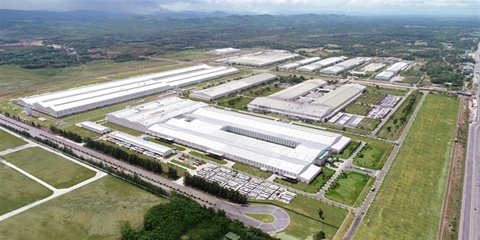
ĐÀ NẴNG GREEN-LIGHTS US$105 MILLION THAI DEVELOPMENT DEAL
The central city has approved an investment proposal by Thailand’s WHA Group to develop infrastructure for the 400ha WHA Đà Nẵng Industrial Park project on two communes of Thăng Bình and Đồng Dương, with an investment of more than VNĐ2.7 trillion (US$105 million). The city said it approved WHA Industrial Development International's status as an investor in the project, which is expected to take place between 2027 and 2034.
VIETNAM ECONOMY INVESTMENT
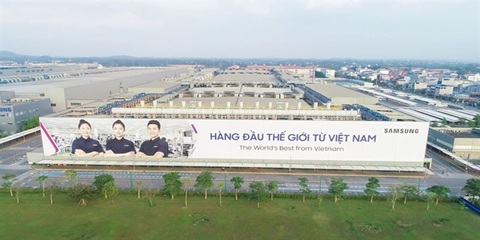
MOBILE PHONE EXPORTS RISE 20% TO $51.8 BILLION IN FIRST NINE MONTHS
Exports of mobile phones and components rose 20 per cent year-on-year to nearly US$51.8 billion in the first nine months of 2026, with China, the US and Republic of Korea accounting for more than half of the total. Shipments to the three markets reached a combined $26.18 billion, or 50.6 per cent of total exports of the product group during the period, according to data from the Vietnam Department of Customs under the Ministry of Finance.

INFRASTRUCTURE / CONSTRUCTION / LOGISTIC / PORT
VIỆT NAM-CAMBODIA TRADE GATHERS PACE TOWARDS $20 BILLION TARGET
Trade between Việt Nam and Cambodia continues to grow, remaining a bright spot and a key pillar of bilateral cooperation as the two countries aim to raise two-way trade to US$20 billion in the coming years. After setting a record of more than $11.3 billion last year, bilateral trade reached about $8.7 billion in the first eight months of this year, up 8.3 per cent year on year.
VIETNAM ECONOMY INVESTMENT
FRUIT AND VEGETABLE EXPORTS POISED TO HIT $10 BILLION IN 2026
Fruit and vegetable exports are on track to reach nearly US$10 billion in 2026, after rising 19.9 per cent year on year to nearly US$7.4 billion in the first nine months, driven by strong seasonal demand and abundant tropical fruit supplies. The Ministry of Agriculture and Environment said the growth reflected stronger international demand for fresh produce and processed agricultural products.
Events Sponsors