Want to be in the loop?
subscribe to
our notification
Business News
HCM CITY PRIORITISES LOGISTICS INFRASTRUCTURE TO RAISE DIRECT IMPORT-EXPORT THROUGHPUT ABOVE 80%
With measures revolving around investment in integrated logistics infrastructure, multimodal transport expansion and digital transformation acceleration, the strategy is intended to reduce logistics costs, enhance competitiveness and support sustainable growth in external trade.
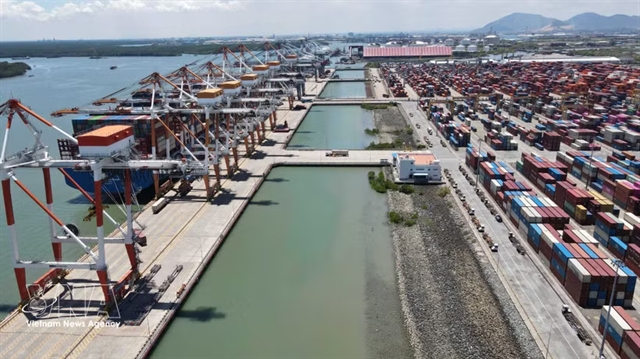
A view of Cái Mép International Terminal Port in HCM City. — VNA/VNS Photo
HCM CITY — HCM City aims to increase the proportion of imports and exports handled directly through its seaports, airports, railway terminals and inland container depots (ICDs) to more than 80 per cent during the 2026-30 period.
With measures revolving around investment in integrated logistics infrastructure, multimodal transport expansion and digital transformation acceleration, the strategy is intended to reduce logistics costs, enhance competitiveness and support sustainable growth in external trade.
Under its newly issued action plan for implementing the national import-export strategy for 2026-30, HCM City targets average annual export growth of 10-11 per cent and import growth of 9-10 per cent over the period. The plan also aims to keep the trade deficit under control while moving towards a sustainable trade surplus to better serve key manufacturing industries and export-oriented production.
In terms of logistics infrastructure and services, the southern economic hub expects more than 80 per cent of import-export cargo to be handled directly through its seaports, airports, railway terminals and ICDs once its major regional connectivity projects, including the Cái Mép–Thị Vải port complex, Long Thành International Airport and key ring roads and expressways, become operational as scheduled.
By 2030, the metropolis aims for annual revenue growth of 13-16 per cent in the logistics services sector, while increasing the sector's contribution to the city's Gross Regional Domestic Product (GRDP) to 8-10 per cent.
It also plans to reduce logistics costs to 11-14 per cent of GRDP, establish the Vietnam International Financial Centre, develop next-generation free trade zones linked with modern smart logistics hubs, international transshipment port clusters and dedicated air cargo facilities.
To achieve these goals, the municipal People's Committee has instructed departments and agencies to integrate priority projects supporting import-export activities, logistics, warehousing infrastructure, logistics centres, testing and laboratory facilities, information systems and digital transformation into the city's socio-economic development plans, as well as its medium-term and annual public investment programmes.
The city will also encourage major domestic and multinational corporations to invest in manufacturing and export projects, with priority given to those employing advanced technologies, producing highly competitive products and capable of integrating into global value chains.
In addition, HCM City plans to upgrade, reorganise and redefine the functions of its satellite port system, ports along the Saigon River and inland container depots to create an integrated regional logistics network. It will also promote logistics models tailored to cross-border e-commerce.
At the same time, the city will study the development of a network of logistics centres, inland container depots, freight terminals and key cargo transshipment hubs, while expanding multimodal transport, container transport and inland waterway shipping linked with the Southeast Region and the Mekong Delta to reduce transport costs and delivery times for businesses.
It also plans to step up the application of information technology and digital transformation in traffic management, vehicle operations, port administration and parking management. Smart transport solutions will be introduced, with priority freight corridors established at major gateways and transport hubs to ensure the smooth, safe and efficient movement of goods. — VNA/VNS
Source: VNS
Related News

BANKING / FINANCE / INSURANCE / TAX
REMITTANCES TO HCM CITY RISE NEARLY 40% IN Q3
Remittances to HCM City reached more than US$2.83 billion in the third quarter of this year, up 39.5 per cent from the previous quarter and 3.6 per cent year-on-year. This was the first quarter showing positive annual growth this year, helping narrow the decline in remittance inflows over the first nine months. According to the State Bank of Vietnam (SBV)’s Regional Branch 2, remittances transferred to HCM City through credit institutions and economic organisations totalled $2.835 billion in Q3, an increase of more than $802 million from the previous quarter.
TECHNOLOGY
TECH SECTOR GROWTH OPENS UP OPPORTUNITIES FOR VIỆT NAM TO GO GLOBAL
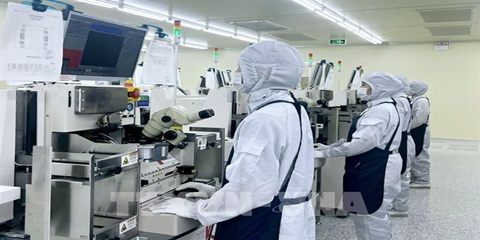
The growth of the electronics, semiconductor and high-tech sectors worldwide is opening up a variety of opportunities for Vietnamese enterprises to integrate more deeply into the global supply chain. However, to become suppliers for these corporations, domestic enterprises must meet rigorous standards regarding quality, technology, productivity and order fulfilment capabilities.
VIETNAM ECONOMY INVESTMENT
FOREIGN INVESTORS SEEKING A SYNCHRONISED MANUFACTURING ECOSYSTEM
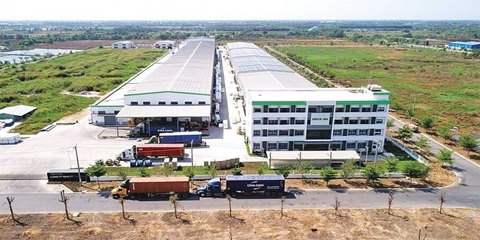
Instead of focusing only on land costs and incentives as usual, foreign investors are seeking a synchronised manufacturing ecosystem, from stable power supply and logistics to shared infrastructure and the convenience of completing residence procedures for experts to serve their long-term investment in the country.
MEMBER CORNER / PROMOTIONS
SENTRYSAFE FHW40200 – PROTECT YOUR VALUABLES, ENJOY PEACE OF MIND!
Looking for a reliable solution to protect your important documents, cash, and valuables from fire and water damage? Genuine SENTRYSAFE - Reliable protection for your valuables and peace of mind! Contact Sen Wai Vietnam for more information and personalized product recommendations.
PROPERTY / INDUSTRIAL ZONE
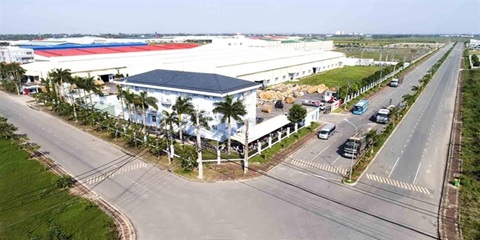
HCM CITY ATTRACTS US$5.7 BILLION INTO EXPORT PROCESSING AND INDUSTRIAL ZONES
HCM City attracted US$5.7 billion in domestic and foreign investment into its export processing and industrial zones during the first nine months of 2026. The figure exceeded the city's full-year target by 31 per cent, highlighting strong momentum in high-quality industrial investment under Resolution No.10-NQ/TW. Total investment reached 131 per cent of the 2026 target of $4.25 billion and represented a 29 per cent increase compared with the same period in 2025, according to the city's Export Processing and Industrial Zones Authority (HEPZA).
INFRASTRUCTURE / CONSTRUCTION / LOGISTIC / PORT
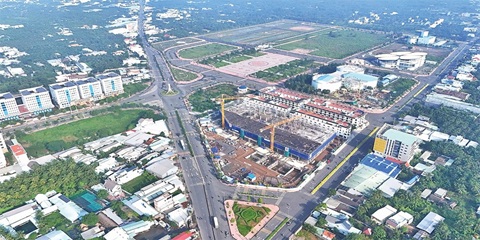
DONG THAP PROVINCE STEPS UP INDUSTRIAL EXPANSION AND INFRASTRUCTURE CONNECTIVITY
Accelerating public investment, strengthening inter-regional connectivity, and expanding industrial land are helping Dong Thap efficiently bolster competitiveness and drive economic growth. Following the 2025 merger of the former Dong Thap and Tien Giang provinces, the expanded Dong Thap province in the Mekong Delta faces mounting pressure to accelerate infrastructure development and strengthen connectivity among local economic zones, urban areas, industrial parks (IPs), and production centres.
Events Sponsors






















