Want to be in the loop?
subscribe to
our notification
Business News
TRADE BUDGET REVENUE NEARS VND265 TRILLION, DRIVEN BY CUSTOMS REFORM
Budget revenue from Vietnam's import-export activities reached VND264.795 trillion (US$10.59 billion) in the first six months of 2026, up 18.6% from the same period last year. The result reflects not only the strong recovery in trade but also progress in institutional reform, administrative simplification, and digital transformation across the customs sector, helping reduce compliance costs, improve competitiveness, and facilitate trade for businesses.
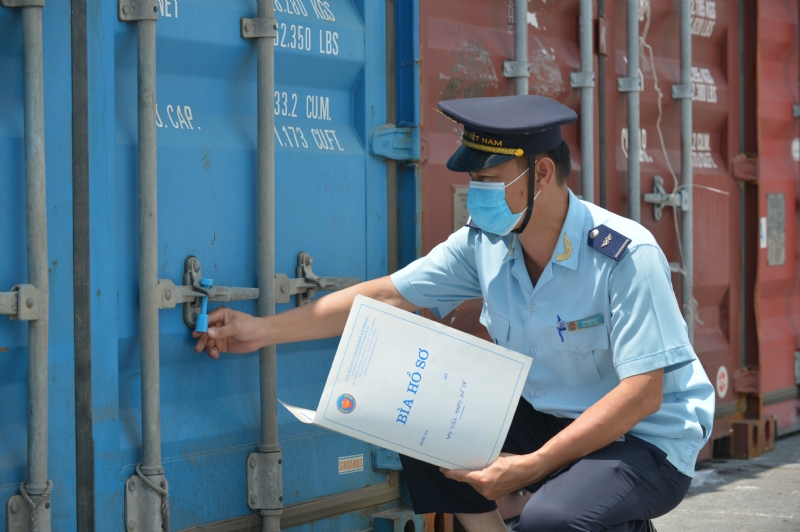
Administrative reforms help to accelerate cargo screening at import-export gateways
Reform drives revenue growth
According to the Customs Department, Vietnam's State budget revenue from import-export activities totaled VND264.795 trillion (US$10.59 billion) in the first half of 2026, reaching 58.7% of the assigned estimate, 51.2% of the annual target, and rising 18.6% from the same period in 2025.
The result came amid a recovery in global trade and continued growth in imports of raw materials and machinery for manufacturing. Beyond market factors, the Customs Department attributed the increase in part to administrative reform, management modernization, and digital transformation, which have accelerated customs clearance, improved transparency, and made customs procedures more business-friendly.
Several regional Customs Sub-Departments also reported strong revenue collection. Regional Customs Sub-Department VI collected 127.2% of its assigned target, while Regional Customs Sub-Department XIV reached 83.4% and Regional Customs Sub-Department XIII achieved 85.1%. Efforts to recover tax arrears were also strengthened, helping limit new overdue tax debt and improve budget revenue management.
Import-export activity also maintained strong growth. Vietnam's total trade turnover reached US$549.69 billion in the first six months of 2026, up 27.1% year on year. Exports totaled US$266.52 billion, up 21%, while imports reached US$283.17 billion, an increase of 33.4%.
These figures show that trade flows remained strong while also reflecting the effectiveness of the customs sector's trade facilitation measures.
Institutional improvements reduce administrative burdens
Alongside revenue collection, institutional reform and legal improvements remained among the customs sector's top priorities. During the first half of 2026, the Customs Department completed 13 proposals submitted to the Government, 38 submitted to the Ministry of Finance, and 72 at the departmental level to strengthen the legal framework for customs administration.
Among the key developments, the Government issued two decrees revising regulations on customs operating areas, anti-smuggling coordination, and administrative penalties in the customs sector. The Ministry of Finance also issued three circulars amending regulations on intellectual property rights protection, customs procedures, and customs brokerage services.
The Customs Department also continued consulting ministries, agencies, local authorities, and related organizations through workshops, seminars, and field surveys to finalize the draft law amending and supplementing the 2014 Customs Law.
Strengthening the legal framework not only meets the requirements of a changing regulatory environment but also helps create a transparent and stable business climate, giving companies greater confidence to expand production, business operations, and import-export activities.
At the same time, the customs sector continued implementing administrative reform programs under the direction of the Party and the Government.
To date, the sector has eliminated 39 administrative procedures, simplified 26 others, and removed two conditional business sectors and 14 business conditions. Reviewing and restructuring procedures through digital platforms has shortened processing times, reduced compliance costs for businesses, and improved the effectiveness of public administration. These efforts have also helped improve the investment and business environment and strengthen Vietnam's competitiveness.
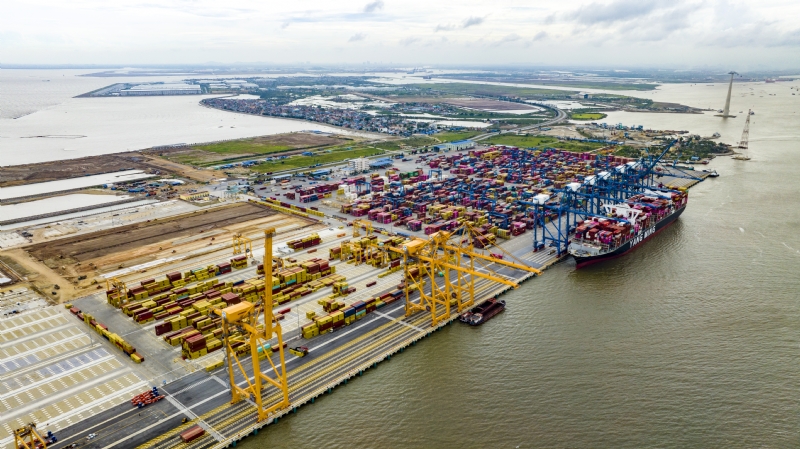
Vietnam's total trade turnover reached US$549.69 billion in the first six months of 2026
Digital transformation modernizes customs
During the first half of 2026, the Customs Department continued improving its management and supervision system to make it more modern, transparent, and consistent, while strengthening the management of product origin, intellectual property rights protection, and risk control in import-export activities.
A key initiative was the pilot launch of the centralized customs clearance model at Regional Customs Sub-Department III on June 1, 2026. After one month of operation, the Centralized Customs Clearance Team had processed 45,425 declarations. For yellow-channel declarations, customs clearance time was reduced by 12%–19% compared with the period before implementation. Initial results show that the centralized clearance model is helping standardize procedures, improve operational efficiency, and shorten customs clearance times for businesses.
The customs sector also continued developing digital and smart border gate models. Following directives from Party General Secretary and President To Lam on modernizing border gate management, the Customs Department advised the Ministry of Finance on preparing a proposal for the unified management of specialized inspections for import-export goods and cross-border transport vehicles for Government approval.
Information technology deployment also continued to support the transition to Digital Customs. The Vietnam Automated Cargo Clearance System/Vietnam Customs Intelligence Information System (VNACCS/VCIS) and its supporting platforms operated safely and continuously 24/7, ensuring uninterrupted customs clearance. Projects under Project 06, including the user registration system, connectivity with the National Population Database, and the administrative procedures processing system, have largely completed their key technical components.
During the first six months of 2026, the customs sector processed more than 11.8 million online applications. The use of artificial intelligence, particularly chatbot-based support tools, has begun improving assistance for customs officials and businesses in carrying out administrative procedures.
The results achieved in the first half of 2026 show that the customs sector is steadily moving toward a modern, transparent customs administration built on digital data. From institutional reform and administrative simplification to technology adoption and customs clearance modernization, these measures are aimed at reducing costs, shortening clearance times, and creating a more business-friendly environment. They also provide a solid foundation for meeting budget revenue targets while supporting production, business, and import-export activities during the second half of 2026.
For the second half of the year, Customs Department Director Nguyen Van Tho instructed the sector to focus on completing its priority tasks, including finalizing the amended 2014 Customs Law and accelerating the development of decrees and circulars on Digital Customs, cross-border e-commerce, specialized inspections, and smart border gates. The sector will also continue implementing measures to simplify administrative procedures and business conditions, facilitate trade, and reduce compliance costs for businesses.
Source: VCCI
Related News

BANKING / FINANCE / INSURANCE / TAX
REMITTANCES TO HCM CITY RISE NEARLY 40% IN Q3
Remittances to HCM City reached more than US$2.83 billion in the third quarter of this year, up 39.5 per cent from the previous quarter and 3.6 per cent year-on-year. This was the first quarter showing positive annual growth this year, helping narrow the decline in remittance inflows over the first nine months. According to the State Bank of Vietnam (SBV)’s Regional Branch 2, remittances transferred to HCM City through credit institutions and economic organisations totalled $2.835 billion in Q3, an increase of more than $802 million from the previous quarter.

TECHNOLOGY
TECH SECTOR GROWTH OPENS UP OPPORTUNITIES FOR VIỆT NAM TO GO GLOBAL
The growth of the electronics, semiconductor and high-tech sectors worldwide is opening up a variety of opportunities for Vietnamese enterprises to integrate more deeply into the global supply chain. However, to become suppliers for these corporations, domestic enterprises must meet rigorous standards regarding quality, technology, productivity and order fulfilment capabilities.
VIETNAM ECONOMY INVESTMENT
FOREIGN INVESTORS SEEKING A SYNCHRONISED MANUFACTURING ECOSYSTEM
Instead of focusing only on land costs and incentives as usual, foreign investors are seeking a synchronised manufacturing ecosystem, from stable power supply and logistics to shared infrastructure and the convenience of completing residence procedures for experts to serve their long-term investment in the country.

MEMBER CORNER / PROMOTIONS
SENTRYSAFE FHW40200 – PROTECT YOUR VALUABLES, ENJOY PEACE OF MIND!
Looking for a reliable solution to protect your important documents, cash, and valuables from fire and water damage? Genuine SENTRYSAFE - Reliable protection for your valuables and peace of mind! Contact Sen Wai Vietnam for more information and personalized product recommendations.
PROPERTY / INDUSTRIAL ZONE
HCM CITY ATTRACTS US$5.7 BILLION INTO EXPORT PROCESSING AND INDUSTRIAL ZONES
HCM City attracted US$5.7 billion in domestic and foreign investment into its export processing and industrial zones during the first nine months of 2026. The figure exceeded the city's full-year target by 31 per cent, highlighting strong momentum in high-quality industrial investment under Resolution No.10-NQ/TW. Total investment reached 131 per cent of the 2026 target of $4.25 billion and represented a 29 per cent increase compared with the same period in 2025, according to the city's Export Processing and Industrial Zones Authority (HEPZA).
INFRASTRUCTURE / CONSTRUCTION / LOGISTIC / PORT
DONG THAP PROVINCE STEPS UP INDUSTRIAL EXPANSION AND INFRASTRUCTURE CONNECTIVITY
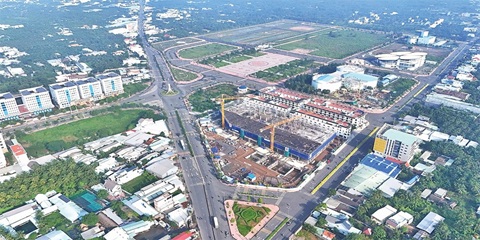
Accelerating public investment, strengthening inter-regional connectivity, and expanding industrial land are helping Dong Thap efficiently bolster competitiveness and drive economic growth. Following the 2025 merger of the former Dong Thap and Tien Giang provinces, the expanded Dong Thap province in the Mekong Delta faces mounting pressure to accelerate infrastructure development and strengthen connectivity among local economic zones, urban areas, industrial parks (IPs), and production centres.
Events Sponsors






















