Want to be in the loop?
subscribe to
our notification
Business News
HIRING OUTLOOK STRENGTHENS IN Q4 AS SKILLS SHORTAGES PERSIST
Việt Nam's hiring outlook was stronger than the Asia Pacific and Middle East (APME) regional average of 33 per cent and the global average of 29 per cent, ranking third in the region and 11th globally among 42 markets surveyed.
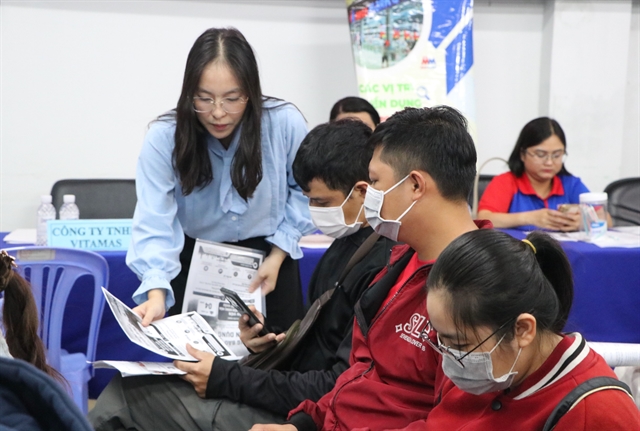
A job fair in HCM City. — VNA/VNS Photo
HÀ NỘI — Hiring intentions among employers in Việt Nam strengthened in the fourth quarter, with 52 per cent of surveyed companies planning to increase headcount between October and December, according to a ManpowerGroup survey released this week.
Việt Nam's hiring outlook was stronger than the Asia Pacific and Middle East (APME) regional average of 33 per cent and the global average of 29 per cent, ranking third in the region and 11th globally among 42 markets surveyed.
Of the employers surveyed, 16 per cent expected to reduce staffing in the fourth quarter, while 32 per cent planned to keep headcount unchanged.
Automation reshapes hiring decisions
Company expansion remained the leading reason cited by employers planning to increase staffing, with 52 per cent of such companies identifying it as a hiring driver, broadly unchanged from the previous quarter.
Among companies planning workforce reductions, however, automation was the main factor, with 52 per cent citing reduced demand for certain roles because of automation. That compared with 24 per cent in the APME region and 22 per cent globally.
About four in 10 employers said economic challenges were negatively affecting staffing decisions.
"Business expansion remains the leading driver of recruitment, automation is changing how work is organised and which skills are most valued," said Nguyễn Thu Trang, head of Manpower Brand at Manpower Vietnam.
Companies were increasingly focusing recruitment on positions that directly support productivity, innovation and longer-term growth rather than simply expanding headcount, she said.
Skills shortages slow recruitment
Despite the growing use of artificial intelligence in recruitment, employers remained divided over whether technology was speeding up hiring.
Some 42 per cent of employers said their hiring process was faster than in 2025, while 40 per cent said it was slower. Another 16 per cent reported no change.
Skills shortages remained a major obstacle. About half of employers cited a lack of candidates, either because of insufficient applicants with the required skills or a shortage of qualified workers in the market.
A mismatch between candidate expectations and job requirements was cited by 43 per cent of employers as another recruitment challenge. The growing volume of AI-generated resumes was also making it harder for employers to identify suitable candidates, the survey found.
"AI is helping improve recruitment efficiency, but it is also introducing new barriers for employers seeking qualified candidates," Trang said, adding that employers needed to balance technology with human judgment and improve the candidate experience.
Meanwhile, some 57 per cent of employers in Việt Nam said they had increased hiring of entry-level workers compared with 2025, with the strongest demand in the information sector, where 77 per cent of employers reported expanding early-career recruitment.
Engineering roles accounted for 48 per cent of the positions where employers were increasing early-career hiring, followed by AI model and application development at 37 per cent, and traditional IT and data roles at 37 per cent.
The survey was conducted from July 1 to 31 among nearly 40,000 employers across 42 countries and territories. — BIZHUB
Source: VNS
Related News

CHARITY / EXHIBITION / OTHER EVENTS
INVESTMENT OPPORTUNITIES IN CA MAU PROVINCE: 96 PROJECTS AND 20 STRATEGIC PROJECTS
We are pleased to share with you information on investment projects currently seeking investors in Ca Mau Province. Should your esteemed company or association be interested, we kindly invite you to review the project information and complete the registration form via the links provided. The Ho Chi Minh City Investment and Trade Promotion Centre (ITPC) will consolidate the expressions of interest and facilitate connections with the leadership of Ca Mau Province at a meeting tentatively scheduled for 13 November 2026 in Ho Chi Minh City.

MEMBER CORNER / PROMOTIONS
BẰNG KIỀU LIVESHOW - A SYMPHONY OF LOVE UNDER THE GOLDEN GLOW
A masterclass in live music that takes the audience on a soulful journey through immortal love songs, guided by the peerless artistry and emotive storytelling of renowned singer Bằng Kiều. The highlight of the night is his seamless musical chemistry with special guest Triệu Hồng Ngọc, promising passionate and deeply resonant duets inside the magnificent Grand Ballroom.
INFRASTRUCTURE / CONSTRUCTION / LOGISTIC / PORT
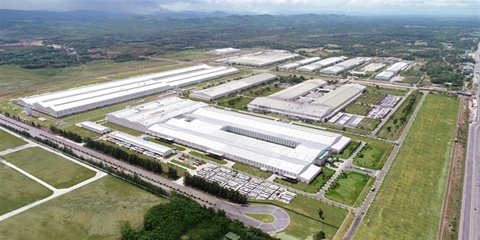
ĐÀ NẴNG GREEN-LIGHTS US$105 MILLION THAI DEVELOPMENT DEAL
The central city has approved an investment proposal by Thailand’s WHA Group to develop infrastructure for the 400ha WHA Đà Nẵng Industrial Park project on two communes of Thăng Bình and Đồng Dương, with an investment of more than VNĐ2.7 trillion (US$105 million). The city said it approved WHA Industrial Development International's status as an investor in the project, which is expected to take place between 2027 and 2034.
VIETNAM ECONOMY INVESTMENT
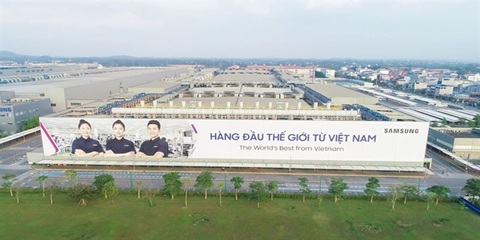
MOBILE PHONE EXPORTS RISE 20% TO $51.8 BILLION IN FIRST NINE MONTHS
Exports of mobile phones and components rose 20 per cent year-on-year to nearly US$51.8 billion in the first nine months of 2026, with China, the US and Republic of Korea accounting for more than half of the total. Shipments to the three markets reached a combined $26.18 billion, or 50.6 per cent of total exports of the product group during the period, according to data from the Vietnam Department of Customs under the Ministry of Finance.
INFRASTRUCTURE / CONSTRUCTION / LOGISTIC / PORT
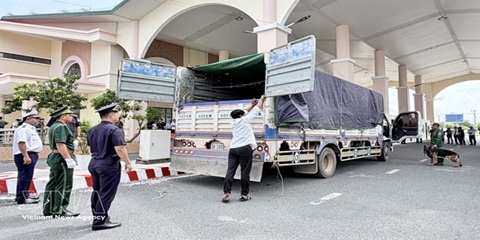
VIỆT NAM-CAMBODIA TRADE GATHERS PACE TOWARDS $20 BILLION TARGET
Trade between Việt Nam and Cambodia continues to grow, remaining a bright spot and a key pillar of bilateral cooperation as the two countries aim to raise two-way trade to US$20 billion in the coming years. After setting a record of more than $11.3 billion last year, bilateral trade reached about $8.7 billion in the first eight months of this year, up 8.3 per cent year on year.
VIETNAM ECONOMY INVESTMENT
FRUIT AND VEGETABLE EXPORTS POISED TO HIT $10 BILLION IN 2026
Fruit and vegetable exports are on track to reach nearly US$10 billion in 2026, after rising 19.9 per cent year on year to nearly US$7.4 billion in the first nine months, driven by strong seasonal demand and abundant tropical fruit supplies. The Ministry of Agriculture and Environment said the growth reflected stronger international demand for fresh produce and processed agricultural products.
Events Sponsors






















