Want to be in the loop?
subscribe to
our notification
Business News
TOP REVENUES NOT EASING JV PORT WOES
While recording high revenue growth in the first quarter of 2018, seaport joint ventures between Vietnam’s state-owned shipping giant Vinalines and its foreign partners are facing tremendous hitches as they try to keep their progress sustainable.
According to Vinalines, total container throughput shipped via the Cai Mep International Terminal (CMIT) reached 4.62 million tonnes during the first quarter, up more than 7.5 per cent on-year.
Located in the Cai Mep-Thi Vai port complex of the southern province of Ba Ria-Vung Tau, the seaport – a joint venture between Vinalines and Denmark’s APM Terminals – reached revenue of VND206.86 billion ($9.19 million), up 13.7 per cent on-year.
“The rise was lower than expected. We witnessed growth of 15 per cent in the first two months, but lower growth in March, thus resulting in an overall rise of 7.5 per cent in the first quarter,” Nguyen Xuan Ky, CMIT deputy director, told VIR.
“The market is performing well, thanks to the rising volume of goods shipments to the EU and the US, and the trend of preferring to call at the Cai Mep-Thi Vai port complex among mainliners, signalling an upward trend,” Ky added.
As the seaport reaches its designed capacity of 1.2 million twenty-foot equivalent units (TEUs), CMIT aims to achieve the same throughput as it did, last year when it handled 1.33 million TEUs.
Big improvements were also witnessed at the Cai Lan International Container Terminal (CICT) located in the northern province of Quang Ninh. This joint venture has US-based Carrix – the parent company of SSA Marine – as Vinalines’ partner.
Unlike in previous years, when CICT had to handle goods in bulk to survive, the port reported a throughput of over 1.55 million tonnes in this year’s first three months, an on-year rise of 29.4 per cent.
What is more, CICT’s revenue ascended by 15.9 per cent on-year to reach VND69.61 billion ($3.09 million), equivalent to 25.45 per cent of 2017’s full-year figure and 39.5 per cent of 2016’s.
SP-PSA and SSIT, the other two seaports located in the Cai Mep-Thi Vai port complex, also showed a good track record between January and March.
SP-PSA, a joint venture between Vinalines and Singapore-based PSA, reported an on-year increase of 18 per cent in the handled volume of goods to over 560,175 tonnes in the first quarter, while the figure was 1.54 million tonnes for the whole of 2016.
The seaport fetched revenue of VND27.12 billion ($1.2 million), up 16.3 per cent on-year, while the all-year total was $3.07 million in 2016, when revenues were already rising at 33.47 per cent on-year.
Always ranking lower than other jointly-invested seaports, SSIT – a joint venture between Vinalines and SSA Marine – witnessed strong growth in revenue in the first quarter.
SSIT reached revenue of VND38.85 billion ($1.73 million), jumping 40 per cent on-year, while total goods volume was 972,000 tonnes, up 5 per cent on-year.
In spite of the improved performance, the seaports in the Cai Mep-Thi Vai port complex are struggling with delays in channel dredging since mid-2017, as they still await approval from the Ministry of Natural Resources and Environment for procedures related to mud fills.
The channel is filling up with sand rapidly, reaching up to -13.3 metres and, in some shallow places, even -12.6 metres, thus preventing mainliners from the EU from entering the area.
Several local seaports, namely CMIT, TCIT, SSIT, Baria Serece, SITV, and TCTT, as well as shipping lines like MOL and Maersk Lines, have lamented the delays in dredging as a major obstacle for their activities many times.
“Many mainliners had to cut back their shipments of cargo as the channel at the seaports is not deep enough. If the situation remains unchanged, shipping lines may leave Cai Mep and move to other seaports in the region. Goods will then be transhipped to Singapore, Malaysia, and other countries instead,” they said in a statement.
Source: VIR
Related News
MEMBER CORNER / PROMOTIONS
SENTRYSAFE CHW20201 - EFFECTIVE WATER RESISTANCE, MAXIMUM PROTECTION
In unexpected flooding situations, the most important thing is to keep your valuables dry and intact. SentrySafe CHW20201 is specially designed with superior water-resistant capabilities, helping protect documents, cash, and important belongings even when fully submerged. Proven in real testing: After water submersion, the documents inside remain dry - undamaged.

MEMBER CORNER / PROMOTIONS
AN ELECTRIFYING NIGHT WITH THE "QUEEN OF DANCE" THU MINH AT THE GRAND HO TRAM!
The stage at The Grand Ballroom is set to catch fire as Vietnam’s undisputed "Queen of Dance," Thu Minh, takes the spotlight. Renowned for her powerhouse vocals, magnetic stage presence, and sultry, high-energy performances, Thu Minh promises an evening of pure musical euphoria. The energy escalates with an exclusive appearance by special guest and The Voice champion, Vu Thao My.
HR / LABOUR/ EMPLOYMENT
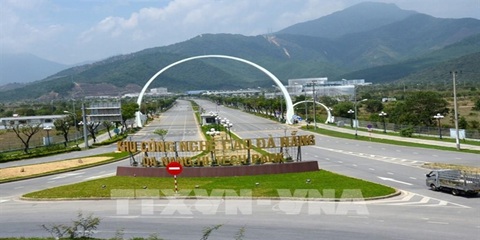
HIGH-QUALITY HUMAN RESOURCES NEEDED TO ATTRACT NEW TECH INVESTMENT CAPITAL
Besides infrastructure, Việt Nam must also rapidly develop a highly skilled workforce to attract investment in AI, semiconductors and advanced manufacturing, experts have said. Don Lam, CEO and co-founder of investment management company VinaCapital, said that global technology investors were increasingly looking at the readiness of the entire ecosystem, with high-quality human resources a decisive factor.
HR / LABOUR/ EMPLOYMENT
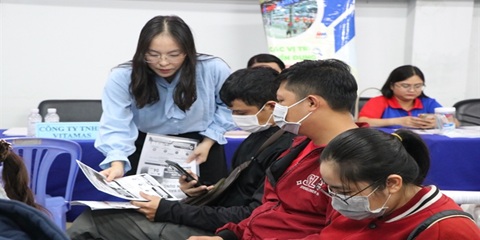
HIRING OUTLOOK STRENGTHENS IN Q4 AS SKILLS SHORTAGES PERSIST
Hiring intentions among employers in Việt Nam strengthened in the fourth quarter, with 52 per cent of surveyed companies planning to increase headcount between October and December, according to a ManpowerGroup survey released this week. Việt Nam's hiring outlook was stronger than the Asia Pacific and Middle East (APME) regional average of 33 per cent and the global average of 29 per cent, ranking third in the region and 11th globally among 42 markets surveyed.
BANKING / FINANCE / INSURANCE / TAX
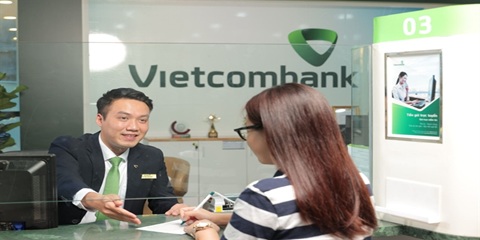
LARGE BANKS FORECAST TO GAIN HIGHER PROFITABILITY IN H2 2026
The return on average assets (ROAA) of the banking sector will likely remain stable at around 1.5 per cent in the second half of 2026, but profitability divergence among banks will increase, with large banks outperforming peers on stronger margins and diversified earnings, analysts forecast. In a recent report on the banking sector, analysts from the Vietnam Investors Service Rating said the sector’s ROAA rose by 10 basis points quarter-on-quarter to 1.51 per cent in the first half of this year, driven by net interest margin (NIM) improvements at some State-owned banks and large private banks.
GARMENT / TEXTILE
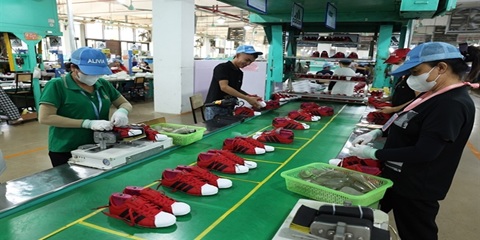
VIỆT NAM'S FOOTWEAR, BAG EXPORTS TO US TOP $8 BILLION IN EIGHT MONTHS
Việt Nam's exports of footwear and handbags to the US exceeded US$8 billion in the first eight months of 2026, as the US and EU remained the country's biggest markets despite sluggish growth in footwear shipments. Exports from Việt Nam's leather and footwear sector reached more than $2.45 billion in August, down 9 per cent from July but up 3 per cent from a year earlier, according to preliminary statistics.
Events Sponsors






















