Want to be in the loop?
subscribe to
our notification
Business News
IMPROVING THE EFFECTIVENESS OF SOCIAL POLICY CREDIT
Following a decade of implementation, social policy credit is expected to enter a new phase of development to achieve higher efficiency for the sake of society and the community.
On behalf of the Party Central Secretariat, on October 30, Standing Member of the Party Secretariat Tran Cam Tu signed a directive to improve the efficiency of social policy credit.
Over the 10 years of implementing a directive issued in November 2014 by the Secretariat of the 11th Party Central Committee on strengthening the Party's leadership over social policy credit, social policy credit has achieved many important results. This helps raise the awareness of Party organisations, authorities, the Vietnam Fatherland Front, socio-political organisations, cadres, Party members and people about the important role of social policy credit. It results in unity in action to create a synergy of strength for the whole political system in the implementation of social policy credit.
In addition, laws and policies on social policy credit have been completed in a more synchronous direction, creating more favourable conditions for social policy credit activities. In particular, the preferential credit policy has been delivered in a timely manner to support those facing difficulties due to the Covid-19 pandemic. Social policy credit has grown tremendously with a stable growth rate over the years. All provincial and district-level localities have paid attention to balancing and allocating a part of the local budget entrusted through Vietnam Bank for Social Policies (VBSP) to supplement loan capital.
At the same time, social policy capital is deployed to all communes, wards, and townships in the country. The quality of social policy credit has been improved, while the ratio of overdue and frozen debts has been maintained at a low level. The Vietnam Fatherland Front and socio-political organisations have strengthened propaganda, social supervision, and criticism in the implementation of social policy credit while implementing entrustment activities effectively. The operation and model of VBSP have been reinforced.
In particular, social policy credit has made significant contributions to socioeconomic development with rapid and sustainable poverty reduction, new rural construction, and job creation. At the same time, it also helps improve the quality of human resources, ensure social security, and narrow the gap between rich and poor across regions. Other important achievements include strengthening national defence, maintaining national security, ensuring socio-political stability, meeting the aspirations of the people, and enhancing the people's trust in the Party and the state. This is one of the pillars of the system of social security policies, demonstrating the superiority of the socialist regime.
Despite achievements, social policy credit still has numerous limitations, difficulties, and obstacles. There is a lack of diversity in capital sources to meet actual needs.
A small proportion of all capital sources come from philanthropic sources, entrusted capital in some localities, and other legal capital sources. Credit efficiency in some regions and localities is still low, while the rate of overdue debts is high. The investment scale is still modest, household-based, and unrelated to the model and chain-linked projects with a shortage of steady and long-term support for consumption. VBSP's digital transformation is still in its early stages.
Less attention was paid to the leadership and implementation among regulatory bodies. This is coupled with a lack of coordination in the formulation, dissemination, and implementation of policies. It has yet to link between goals and the ability to meet financial resources.
With the centralised administration mechanism, the integration of social policy credit into socioeconomic development programmes remains inconsistent. A number of national policies are not appropriate for every subject, area, and location. There are no specific regulations on the ratio and principles for determining the main source of capital, in accordance with the characteristics of social policy credit. Meanwhile, policies are not really suitable for VBSP to access official development assistance and concessional loans from the government.
Notably, many socioeconomic development goals must be implemented simultaneously against the backdrop of limited state resources. Challenges are heightened by the negative impacts of climate change, natural disasters, and the Covid-19 pandemic.
It is vital to improve the efficiency of social policy credit amidst the complex and unpredictable traditional and non-traditional security factors and the government’s goal to become a high-income country by 2045. The Secretariat requests all levels of Party committees, organisations, administrations, the Vietnam Fatherland Front, and socio-political organisations to seriously and effectively implement the following main tasks.
Firstly, to strengthen leadership, direct the dissemination of information, and implement the policies and laws on social policy credit, raising the awareness of the position and role of social policy credit.
Secondly, to enhance the role of Party committees, organisations, authorities, the Vietnam Fatherland Front, and socio-political organisations in social policy credit.
Thirdly, to complete social policy credit policies in the inclusive and sustainable direction in line with the 10-year socioeconomic development strategy 2021–2030, the 5-year socioeconomic development strategy 2026-2030, the national financial inclusion strategy through 2025, with orientations towards 2030, and the VBSP development strategy to 2030 and national target programmes.
Fourthly, to prioritise resources and diversify capital mobilisation channels to implement social policy credit programmes, ensure that operating capital is allocated in the medium term and annual public investment plans for VBSP.
Fifthly, to develop VBSP as a public financial institution with autonomy and non-profit operation. By implementing the State's socioeconomic policies, VBSP focuses on areas that other financial institutions operating according to market principles cannot meet or only partially meet.
Sixth, to research specific policies to promote the policy credit model, especially the participation of the community, social enterprises, and non-profit enterprises. To encourage the development of digital platforms for policy credit and effectively control black credit.
Source: VIR
Related News

BANKING / FINANCE / INSURANCE / TAX
REMITTANCES TO HCM CITY RISE NEARLY 40% IN Q3
Remittances to HCM City reached more than US$2.83 billion in the third quarter of this year, up 39.5 per cent from the previous quarter and 3.6 per cent year-on-year. This was the first quarter showing positive annual growth this year, helping narrow the decline in remittance inflows over the first nine months. According to the State Bank of Vietnam (SBV)’s Regional Branch 2, remittances transferred to HCM City through credit institutions and economic organisations totalled $2.835 billion in Q3, an increase of more than $802 million from the previous quarter.

TECHNOLOGY
TECH SECTOR GROWTH OPENS UP OPPORTUNITIES FOR VIỆT NAM TO GO GLOBAL
The growth of the electronics, semiconductor and high-tech sectors worldwide is opening up a variety of opportunities for Vietnamese enterprises to integrate more deeply into the global supply chain. However, to become suppliers for these corporations, domestic enterprises must meet rigorous standards regarding quality, technology, productivity and order fulfilment capabilities.
VIETNAM ECONOMY INVESTMENT
FOREIGN INVESTORS SEEKING A SYNCHRONISED MANUFACTURING ECOSYSTEM
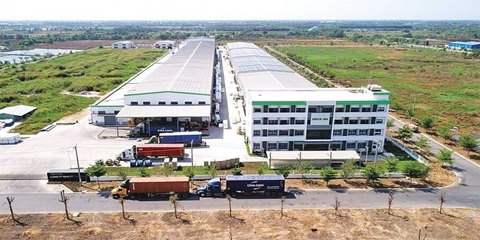
Instead of focusing only on land costs and incentives as usual, foreign investors are seeking a synchronised manufacturing ecosystem, from stable power supply and logistics to shared infrastructure and the convenience of completing residence procedures for experts to serve their long-term investment in the country.

MEMBER CORNER / PROMOTIONS
SENTRYSAFE FHW40200 – PROTECT YOUR VALUABLES, ENJOY PEACE OF MIND!
Looking for a reliable solution to protect your important documents, cash, and valuables from fire and water damage? Genuine SENTRYSAFE - Reliable protection for your valuables and peace of mind! Contact Sen Wai Vietnam for more information and personalized product recommendations.
PROPERTY / INDUSTRIAL ZONE
HCM CITY ATTRACTS US$5.7 BILLION INTO EXPORT PROCESSING AND INDUSTRIAL ZONES
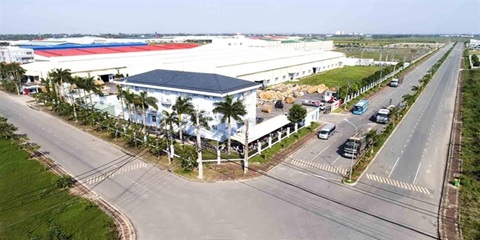
HCM City attracted US$5.7 billion in domestic and foreign investment into its export processing and industrial zones during the first nine months of 2026. The figure exceeded the city's full-year target by 31 per cent, highlighting strong momentum in high-quality industrial investment under Resolution No.10-NQ/TW. Total investment reached 131 per cent of the 2026 target of $4.25 billion and represented a 29 per cent increase compared with the same period in 2025, according to the city's Export Processing and Industrial Zones Authority (HEPZA).
INFRASTRUCTURE / CONSTRUCTION / LOGISTIC / PORT
DONG THAP PROVINCE STEPS UP INDUSTRIAL EXPANSION AND INFRASTRUCTURE CONNECTIVITY
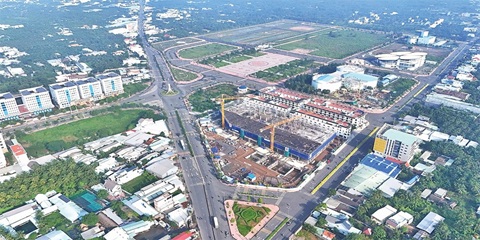
Accelerating public investment, strengthening inter-regional connectivity, and expanding industrial land are helping Dong Thap efficiently bolster competitiveness and drive economic growth. Following the 2025 merger of the former Dong Thap and Tien Giang provinces, the expanded Dong Thap province in the Mekong Delta faces mounting pressure to accelerate infrastructure development and strengthen connectivity among local economic zones, urban areas, industrial parks (IPs), and production centres.
Events Sponsors






















