Want to be in the loop?
subscribe to
our notification
Business News
VIETNAMESE ENTERPRISES GRAPPLE WITH CHALLENGES IN Q3
While some companies managed to adapt and find growth opportunities, others faced significant losses amid rising costs, slowing domestic consumption and increased competition.
In many sectors, businesses acknowledged that simply breaking even was an accomplishment this year. A prominent example is Nam Sông Hậu Trading Investment Petroleum JSC, once a leading fuel distributor in the Mekong Delta.
Despite an ambitious target of nearly VNĐ14.6 trillion (US$573.1 million) in revenue and VNĐ327 billion in net profit for 2024, the company fell short, reporting the third quarter (Q3) revenue of just VNĐ93.7 billion, a sharp 89.7 per cent drop year-over-year.
This resulted in a net loss of VNĐ182.5 billion, compared to a VNĐ11.2 billion profit in the same period last year.
Cumulative losses for the first nine months reached VNĐ556.3 billion, a clear contrast to VNĐ277.5 billion in profit during the same period in 2023.
The financial strain was exacerbated by mounting financial costs, which surged 20 per cent year-over-year to VNĐ348.2 billion, and a total debt burden exceeding VNĐ6.9 trillion, accounting for 71 per cent of liabilities.
Similar woes plagued Miền Đông JSC, which reported a 71.5 per cent revenue decline in the first nine months to VNĐ159.3 billion, alongside a VNĐ10.2 billion net loss.
Prolonged project handovers in construction and stone exploitation added to the financial strain, while a lingering bad debt of VNĐ36.3 billion, linked to LDG Investment JSC, remained unresolved.
Meanwhile, Seed Mộc Châu Dairy Cattle Corporation saw its earnings erode due to heightened competition in the dairy industry and declining financial income.
Q3 revenue fell 9.4 per cent year-over-year to VNĐ739.6 billion, with net profit dropping 55 per cent to VNĐ42.6 billion, the lowest in two years.
The company's nine-month performance revealed a 48.5 per cent plunge in net profit, achieving only 44.8 per cent of its yearly profit target.
These challenges led to significant management changes, with the company dismissing its deputy CEO in charge of sales and marketing.
Finding new markets and strategies
Despite the challenges, a few enterprises demonstrated resilience by exploring new markets and strategies.
Selex Motors, a Vietnamese electric motorcycle start-up, expanded its footprint by exporting its Selex Camel e-motorcycles and associated battery-swapping systems to the Philippines.
Similarly, Trường Thành Furniture Corporation secured investment certification for its subsidiary, Casadora Furniture Corporation, to enter the Dubai market, a strategic pivot to mitigate losses and tap into the Middle East’s growing demand for high-quality furniture.
Trường Thành incurred a cumulative loss of nearly VNĐ27 billion in the first nine months, with total losses now nearing VNĐ3.3 trillion.
The company cited disruptions in global logistics and shifting customer demand due to geopolitical conflicts as key hurdles. Nonetheless, its focus on market diversification in Europe, the US and Asia, alongside operational restructuring, offers a pathway toward recovery.
The broader economic landscape posed substantial challenges for businesses. More than 163,800 companies withdrew from the market in the first nine months, up 21.5 per cent over last year.
According to Nguyễn Quốc Việt, deputy director of the Institute for Economic and Policy Research, subdued domestic consumption and sluggish public investment disbursement further constrained growth.
To revive momentum, experts emphasised the need to balance export-driven growth with domestic market revitalisation. Supporting innovative sectors and ensuring macroeconomic stability will be crucial as businesses navigate these turbulent times.
Source: VNS
Related News

BANKING / FINANCE / INSURANCE / TAX
REMITTANCES TO HCM CITY RISE NEARLY 40% IN Q3
Remittances to HCM City reached more than US$2.83 billion in the third quarter of this year, up 39.5 per cent from the previous quarter and 3.6 per cent year-on-year. This was the first quarter showing positive annual growth this year, helping narrow the decline in remittance inflows over the first nine months. According to the State Bank of Vietnam (SBV)’s Regional Branch 2, remittances transferred to HCM City through credit institutions and economic organisations totalled $2.835 billion in Q3, an increase of more than $802 million from the previous quarter.

TECHNOLOGY
TECH SECTOR GROWTH OPENS UP OPPORTUNITIES FOR VIỆT NAM TO GO GLOBAL
The growth of the electronics, semiconductor and high-tech sectors worldwide is opening up a variety of opportunities for Vietnamese enterprises to integrate more deeply into the global supply chain. However, to become suppliers for these corporations, domestic enterprises must meet rigorous standards regarding quality, technology, productivity and order fulfilment capabilities.
VIETNAM ECONOMY INVESTMENT
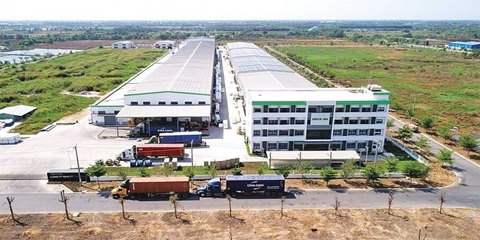
FOREIGN INVESTORS SEEKING A SYNCHRONISED MANUFACTURING ECOSYSTEM
Instead of focusing only on land costs and incentives as usual, foreign investors are seeking a synchronised manufacturing ecosystem, from stable power supply and logistics to shared infrastructure and the convenience of completing residence procedures for experts to serve their long-term investment in the country.
MEMBER CORNER / PROMOTIONS
SENTRYSAFE FHW40200 – PROTECT YOUR VALUABLES, ENJOY PEACE OF MIND!
Looking for a reliable solution to protect your important documents, cash, and valuables from fire and water damage? Genuine SENTRYSAFE - Reliable protection for your valuables and peace of mind! Contact Sen Wai Vietnam for more information and personalized product recommendations.
PROPERTY / INDUSTRIAL ZONE
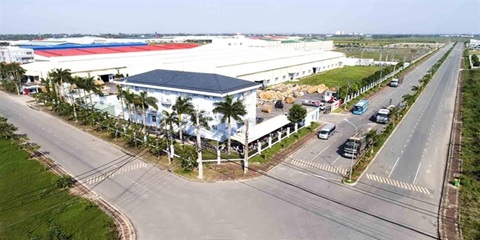
HCM CITY ATTRACTS US$5.7 BILLION INTO EXPORT PROCESSING AND INDUSTRIAL ZONES
HCM City attracted US$5.7 billion in domestic and foreign investment into its export processing and industrial zones during the first nine months of 2026. The figure exceeded the city's full-year target by 31 per cent, highlighting strong momentum in high-quality industrial investment under Resolution No.10-NQ/TW. Total investment reached 131 per cent of the 2026 target of $4.25 billion and represented a 29 per cent increase compared with the same period in 2025, according to the city's Export Processing and Industrial Zones Authority (HEPZA).
INFRASTRUCTURE / CONSTRUCTION / LOGISTIC / PORT
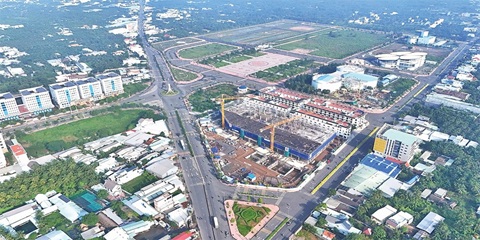
DONG THAP PROVINCE STEPS UP INDUSTRIAL EXPANSION AND INFRASTRUCTURE CONNECTIVITY
Accelerating public investment, strengthening inter-regional connectivity, and expanding industrial land are helping Dong Thap efficiently bolster competitiveness and drive economic growth. Following the 2025 merger of the former Dong Thap and Tien Giang provinces, the expanded Dong Thap province in the Mekong Delta faces mounting pressure to accelerate infrastructure development and strengthen connectivity among local economic zones, urban areas, industrial parks (IPs), and production centres.
Events Sponsors






















