Want to be in the loop?
subscribe to
our notification
Business News
TAX INCREASES ON ALCOHOLIC BEVERAGES SHOULD STRIKE A BALANCE: ECONOMISTS
The tax increases on alcoholic beverages should strike a balance between curbing consumption to protect the public's health and hindering the beverage industry, said industry experts and policymakers.
Three tax laws, including the Corporate Income Tax Law, the Value-Added Tax Law, and the Special Consumption Tax Law, have been under review and are expected to be amended in a direction that will significantly raise taxes for the industry.
Among these, a draft amendment to the Special Consumption Tax Law is expected to be presented to the National Assembly next month and can be approved as early as May next year. The tax has been reported to take an upward trajectory, taxing alcoholic beverages starting from 2026, reaching as high as 100 per cent by 2030.
The amendment proposed two scenarios, with the Ministry of Finance preferring alcoholic beverages with alcohol content of 20 per cent or higher having their taxes increased by 80 per cent by 2030. Meanwhile, alcoholic beverages with an alcohol content of 19 per cent or lower will have their taxes increased by 50-70 per cent. Beers will also see a gradual tax increase from 80 per cent to 100 per cent.
Head of the Department of Business Environment and Competitiveness at the Central Institute for Economic Management Nguyễn Minh Thảo, said the government must raise the tax to curb consumption of alcoholic beverages, which are harmful to public health if consumed irresponsibly.
On the other hand, excessive taxes could result in increased smuggling and counterfeiting activities, possibly leading to the formation of illegal markets, which may cause significant harm.
She said the amended taxes could have a far reaching negative impact on as many as 24 industries and sectors, including hospitality and food, potentially hurting the Southeast Asian economy's position as an attractive foreign investment destination.
"Fair competition can only be assured in a fair and transparent market, which has clear and well-established standards and regulations to limit counterfeiting," she said.
VP and secretary-general of the Vietnam Beer, Alcohol, and Beverage Association, Chu Thị Vân Anh, said the new regulations, once passed, could pose major challenges to the industry.
"As it is, many large players in the industry have had to lay off workers and scale down production. A tax hike as high as 100 per cent by 2030 is significant and businesses should have more time to assess the impact of a change of this magnitude," Anh said.
Economists and industry insiders have called for extra time to allow for smoother transition and allow business operations to adapt. They also proposed the tax hike should be delayed for beers and exemptions granted to non-alcoholic beers.
They said the tax hikes should not be implemented every single year, but, instead, every other year to allow businesses more time to plan and adapt to the new taxes. They called for a more scientific approach to determining the tax increases and the appropriate time for implementation to ensure a supportive environment for the industry.
Source: VNS
Related News

BANKING / FINANCE / INSURANCE / TAX
REMITTANCES TO HCM CITY RISE NEARLY 40% IN Q3
Remittances to HCM City reached more than US$2.83 billion in the third quarter of this year, up 39.5 per cent from the previous quarter and 3.6 per cent year-on-year. This was the first quarter showing positive annual growth this year, helping narrow the decline in remittance inflows over the first nine months. According to the State Bank of Vietnam (SBV)’s Regional Branch 2, remittances transferred to HCM City through credit institutions and economic organisations totalled $2.835 billion in Q3, an increase of more than $802 million from the previous quarter.
TECHNOLOGY
TECH SECTOR GROWTH OPENS UP OPPORTUNITIES FOR VIỆT NAM TO GO GLOBAL
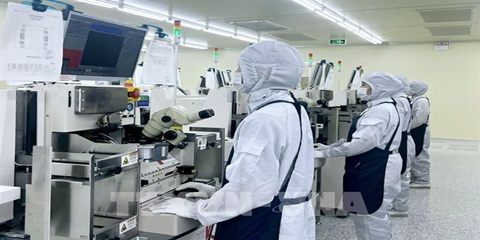
The growth of the electronics, semiconductor and high-tech sectors worldwide is opening up a variety of opportunities for Vietnamese enterprises to integrate more deeply into the global supply chain. However, to become suppliers for these corporations, domestic enterprises must meet rigorous standards regarding quality, technology, productivity and order fulfilment capabilities.
VIETNAM ECONOMY INVESTMENT
FOREIGN INVESTORS SEEKING A SYNCHRONISED MANUFACTURING ECOSYSTEM
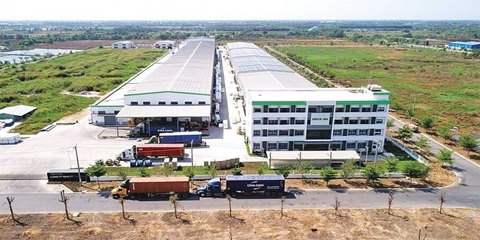
Instead of focusing only on land costs and incentives as usual, foreign investors are seeking a synchronised manufacturing ecosystem, from stable power supply and logistics to shared infrastructure and the convenience of completing residence procedures for experts to serve their long-term investment in the country.
MEMBER CORNER / PROMOTIONS
SENTRYSAFE FHW40200 – PROTECT YOUR VALUABLES, ENJOY PEACE OF MIND!
Looking for a reliable solution to protect your important documents, cash, and valuables from fire and water damage? Genuine SENTRYSAFE - Reliable protection for your valuables and peace of mind! Contact Sen Wai Vietnam for more information and personalized product recommendations.
PROPERTY / INDUSTRIAL ZONE
HCM CITY ATTRACTS US$5.7 BILLION INTO EXPORT PROCESSING AND INDUSTRIAL ZONES
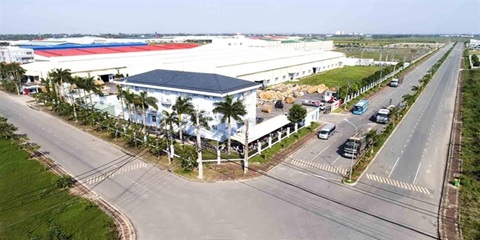
HCM City attracted US$5.7 billion in domestic and foreign investment into its export processing and industrial zones during the first nine months of 2026. The figure exceeded the city's full-year target by 31 per cent, highlighting strong momentum in high-quality industrial investment under Resolution No.10-NQ/TW. Total investment reached 131 per cent of the 2026 target of $4.25 billion and represented a 29 per cent increase compared with the same period in 2025, according to the city's Export Processing and Industrial Zones Authority (HEPZA).
INFRASTRUCTURE / CONSTRUCTION / LOGISTIC / PORT
DONG THAP PROVINCE STEPS UP INDUSTRIAL EXPANSION AND INFRASTRUCTURE CONNECTIVITY
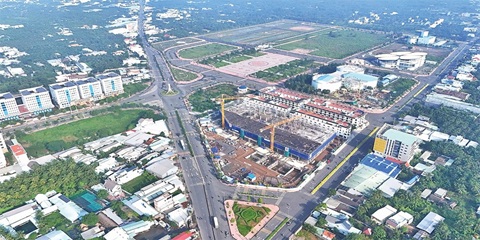
Accelerating public investment, strengthening inter-regional connectivity, and expanding industrial land are helping Dong Thap efficiently bolster competitiveness and drive economic growth. Following the 2025 merger of the former Dong Thap and Tien Giang provinces, the expanded Dong Thap province in the Mekong Delta faces mounting pressure to accelerate infrastructure development and strengthen connectivity among local economic zones, urban areas, industrial parks (IPs), and production centres.
Events Sponsors






















