Want to be in the loop?
subscribe to
our notification
Business News
TECH GIANTS BET BIG ON VIETNAM'S FUTURE
As global tech giants like NVIDIA and Google mark their strategic expansion in Vietnam, the country is embracing a technological transformation that could reshape its economic landscape and innovation ecosystem.
NVIDIA’s landmark announcement
NVIDIA announced during CEO Jensen Huang’s trip to Vietnam last week that they will cooperate with the Vietnamese government to establish an AI research and development (R&D) centre and an AI data centre in the country.
As the world’s most valuable company, NVIDIA is set to support the whole tech industry with its investment, according to Dr Jeff Nijsse, a senior lecturer of Software Engineering at RMIT University. “NVIDIA is not the first big tech company to enter Vietnam, but they are the biggest AI company,” he emphasised.
The proposed Vietnam R&D centre has an ambitious vision: developing platforms that will enable NVIDIA and its partners to nurture AI innovation. Researchers and startups will be able to use this infrastructure to develop AI applications for key industries such as healthcare, education, transportation, and finance.
Dr Nijsse provides critical insight into the data dynamics driving this investment: “AI models get trained on graphics processing units (GPUs), which are NVIDIA’s main product, but they need to ingest a lot of data to produce useful software. Such data are becoming more and more valuable.
“Vietnam’s large population is attractive from a data perspective, but we must be cautious about how data is collected, used, and compensated. NVIDIA’s acquisition of VinBrain gives them a head start in health data, and they will be looking to build products for other industries.”
Furthermore, though the data centre itself may not generate numerous jobs, the positions it does create are high-skilled. And the R&D centre will require research scientists with advanced degrees.
“A data centre is a long-term investment, which means NVIDIA will be looking to support talent pipelining in conjunction with their research centre, and hopefully other initiatives that involve universities such as scholarships and partnerships,” Dr Nijsse said.
Vietnam - a growing tech magnet
The NVIDIA announcement is part of a broader trend. Recently, Google confirmed the establishment of Google Vietnam, a local entity dedicated to supporting the country’s digital transformation. The company is reportedly hiring for several positions related to Google Cloud, applications, and gaming.
In November, Apple’s supplier Foxconn announced an US$80 million investment in chip manufacturing in Bac Giang province. Meanwhile, Meta plans to expand its virtual reality device production, and SpaceX has expressed interest to invest US$1.5 billion in the country.
Dr Sam Goundar, Senior Lecturer of IT at RMIT University, sees these investments as major milestones. "Vietnam is quickly becoming an important part of the global tech world. These moves show that Vietnam is more than just a low-cost manufacturing destination,” he said.
The country's appeal is multifaceted – a young, tech-savvy population, supportive government policies, and a strategic geographical location.
"Many companies want to move some work out of China," Dr Goundar explained. "Vietnam offers a good mix – proximity to China, affordable costs, and a growing pool of skilled workers. Overall, it is a win for Vietnam, attracting more global investment and strengthening its tech sector."
The broader vision
These investments are also potential catalysts for comprehensive innovation. Dr Sreenivas Tirumala, Senior Lecturer of IT at RMIT University views them as “opportunities for social and economic growth” and an aid in “designing and developing a futuristic approach for Vietnam's youth”.
More efforts are still needed to uplift the quality of education, as Vietnam currently faces a big gap in highly skilled tech workers. However, the big tech investments promise more exposure to cutting-edge technologies and international corporate environments. There will be more opportunities for young professionals to work in research and innovation, particularly in AI, as these companies are always craving for new technological advancement.
“Though big tech companies have their own in-house IT services, there are quite a few services that they outsource. Reputable and high-value tech-giants like NVIDIA and Google will not just provide employment opportunities but will encourage young people to create their own startups to provide services to the big tech companies,” Dr Tirumala added.
The investments can also prompt Vietnam to create its own identity in the tech scene in Southeast Asia.
“Tech giants coming to Vietnam is exciting, but we need to make sure this really helps the country. Vietnam should work on its own tech scene, not just be a place for big companies,” Dr Sam Goundar commented.
“This means helping local startups, getting schools to team up with businesses, and making rules that help new ideas grow. The goal is for Vietnam to lead in AI and tech, not just follow. If we do this right, these investments could kick off something amazing for the country.”
Source: VCCI
Related News

BANKING / FINANCE / INSURANCE / TAX
REMITTANCES TO HCM CITY RISE NEARLY 40% IN Q3
Remittances to HCM City reached more than US$2.83 billion in the third quarter of this year, up 39.5 per cent from the previous quarter and 3.6 per cent year-on-year. This was the first quarter showing positive annual growth this year, helping narrow the decline in remittance inflows over the first nine months. According to the State Bank of Vietnam (SBV)’s Regional Branch 2, remittances transferred to HCM City through credit institutions and economic organisations totalled $2.835 billion in Q3, an increase of more than $802 million from the previous quarter.
TECHNOLOGY
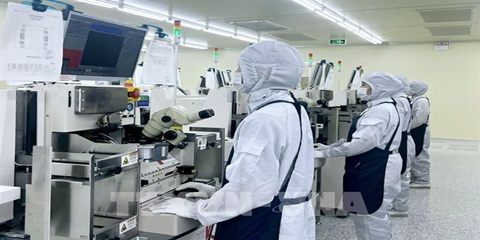
TECH SECTOR GROWTH OPENS UP OPPORTUNITIES FOR VIỆT NAM TO GO GLOBAL
The growth of the electronics, semiconductor and high-tech sectors worldwide is opening up a variety of opportunities for Vietnamese enterprises to integrate more deeply into the global supply chain. However, to become suppliers for these corporations, domestic enterprises must meet rigorous standards regarding quality, technology, productivity and order fulfilment capabilities.
VIETNAM ECONOMY INVESTMENT
FOREIGN INVESTORS SEEKING A SYNCHRONISED MANUFACTURING ECOSYSTEM
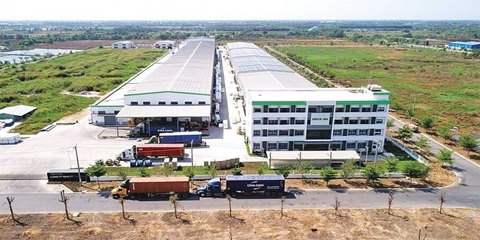
Instead of focusing only on land costs and incentives as usual, foreign investors are seeking a synchronised manufacturing ecosystem, from stable power supply and logistics to shared infrastructure and the convenience of completing residence procedures for experts to serve their long-term investment in the country.
MEMBER CORNER / PROMOTIONS
SENTRYSAFE FHW40200 – PROTECT YOUR VALUABLES, ENJOY PEACE OF MIND!
Looking for a reliable solution to protect your important documents, cash, and valuables from fire and water damage? Genuine SENTRYSAFE - Reliable protection for your valuables and peace of mind! Contact Sen Wai Vietnam for more information and personalized product recommendations.
PROPERTY / INDUSTRIAL ZONE
HCM CITY ATTRACTS US$5.7 BILLION INTO EXPORT PROCESSING AND INDUSTRIAL ZONES
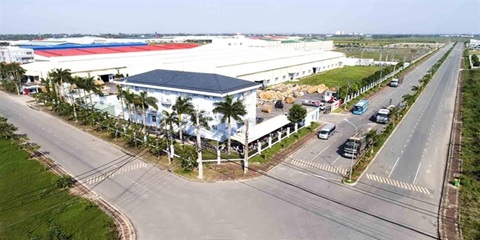
HCM City attracted US$5.7 billion in domestic and foreign investment into its export processing and industrial zones during the first nine months of 2026. The figure exceeded the city's full-year target by 31 per cent, highlighting strong momentum in high-quality industrial investment under Resolution No.10-NQ/TW. Total investment reached 131 per cent of the 2026 target of $4.25 billion and represented a 29 per cent increase compared with the same period in 2025, according to the city's Export Processing and Industrial Zones Authority (HEPZA).
INFRASTRUCTURE / CONSTRUCTION / LOGISTIC / PORT
DONG THAP PROVINCE STEPS UP INDUSTRIAL EXPANSION AND INFRASTRUCTURE CONNECTIVITY
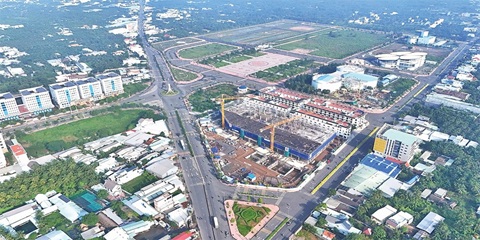
Accelerating public investment, strengthening inter-regional connectivity, and expanding industrial land are helping Dong Thap efficiently bolster competitiveness and drive economic growth. Following the 2025 merger of the former Dong Thap and Tien Giang provinces, the expanded Dong Thap province in the Mekong Delta faces mounting pressure to accelerate infrastructure development and strengthen connectivity among local economic zones, urban areas, industrial parks (IPs), and production centres.
Events Sponsors