Want to be in the loop?
subscribe to
our notification
Business News
TAX AND FEE SUPPORT HINGES ON MPI PROPOSAL APPROVAL
Lingering woes in domestic production have sparked a need for new or extended policies to fuel enterprises, regardless of state budget revenue dents.
The Ministry of Planning and Investment (MPI) has sent a proposal to the government to continue applying initiatives on taxes, fees, and charges, as well as rental for land and water surfaces as it did last year, though this will lead to decreases in state budget revenues.
This also covers maintaining the current VAT rate and a 50 per cent decrease in registration fees for domestically produced and assembled automobiles.
“Business and production activities of enterprises remain in big difficulties. Domestic purchasing power has reduced and people are tightening their belts,” the MPI stated. “Demands in the domestic market are still standing at a low level, while manufacturing and processing enterprises have low competition. These are among the biggest difficulties.”
Figures from the General Statistics Office showed that in the first four months of this year, almost 61,000 businesses suspended operations – up 22 per cent as compared to the same period last year; over 19,000 enterprises stopped operations and waited for dissolution procedures; and 6,400 businesses completed such procedures. On average, 21,600 enterprises were kicked out of the market every month.
Notably, in April, more than 7,600 enterprises halted operations – up 84.1 per cent on-month and 6.4 per cent on-year; 4,660 businesses stopped operations and awaited dissolution procedures; and over 1,340 enterprises completed such procedures.
Last year, 89,100 businesses suspended performance nationwide – up 20.7 per cent as compared to the previous year; 65,500 enterprises stopped operations and awaited dissolution procedures – up 28.9 per cent; and 14,400 enterprises completed such procedures.
“Enterprises are in big difficulties now and in critical need for bigger support,” stated Prime Minister Pham Minh Chinh at last week’s government meeting on Vietnam’s socioeconomic situation.
The Ministry of Finance (MoF) reported that in 2023, the total values of all policies on exempting, reducing, and extending payment of assorted taxes and other fees reached about $8.33 billion, including exemption and reductions of $3.3 billion and extensions of $5.04 billion.
Last year, extending payment of VAT, corporate income tax, and personal income tax, as well as land rental led to a reduction in the state budget revenue of an estimated sum of $4.58 billion. It is calculated that the policy to keep VAT at 8 per cent on various goods and services in recent times has led to a reduction in the state budget revenue of $833.3 million in the second half of 2023 and $1.04 billion in the first half of 2024.
The existing initiative of application of a 8 per cent VAT rate, valid from January 1, 2024 to June 20, 2024, will not apply to the following goods and services: telecommunications, IT, financial activities, banking activities, securities, insurance, trading of real estate, metals, precast metal products, mining products (excluding coal mining), coke mining, refined oil, chemical products, and goods and services subject to excise taxes. This initiative is estimated to cause a loss of $1.04 billion to the state budget revenue in the first half of 2024.
A continued 8 per cent VAT rate for the second half of this year will be discussed and voted on at the NA session taking place from May 20 to June 28.
The MoF also submitted a proposal to the National Assembly Standing Committee to release a resolution on reducing the environmental protection tax for petrol, oil, and lubricants for the whole of 2024. It is estimated that this policy will make a reduction of $1.77 billion in the state budget revenue for the year.
It is also estimated that the total value of money from exempting and reducing assorted taxes and fees in the first three months of this year will hit $858.3 million.
Source: VIR
Related News

MEMBER CORNER / PROMOTIONS
AN ELECTRIFYING NIGHT WITH THE "QUEEN OF DANCE" THU MINH AT THE GRAND HO TRAM!
The stage at The Grand Ballroom is set to catch fire as Vietnam’s undisputed "Queen of Dance," Thu Minh, takes the spotlight. Renowned for her powerhouse vocals, magnetic stage presence, and sultry, high-energy performances, Thu Minh promises an evening of pure musical euphoria. The energy escalates with an exclusive appearance by special guest and The Voice champion, Vu Thao My.

HR / LABOUR/ EMPLOYMENT
HIGH-QUALITY HUMAN RESOURCES NEEDED TO ATTRACT NEW TECH INVESTMENT CAPITAL
Besides infrastructure, Việt Nam must also rapidly develop a highly skilled workforce to attract investment in AI, semiconductors and advanced manufacturing, experts have said. Don Lam, CEO and co-founder of investment management company VinaCapital, said that global technology investors were increasingly looking at the readiness of the entire ecosystem, with high-quality human resources a decisive factor.

HR / LABOUR/ EMPLOYMENT
HIRING OUTLOOK STRENGTHENS IN Q4 AS SKILLS SHORTAGES PERSIST
Hiring intentions among employers in Việt Nam strengthened in the fourth quarter, with 52 per cent of surveyed companies planning to increase headcount between October and December, according to a ManpowerGroup survey released this week. Việt Nam's hiring outlook was stronger than the Asia Pacific and Middle East (APME) regional average of 33 per cent and the global average of 29 per cent, ranking third in the region and 11th globally among 42 markets surveyed.

BANKING / FINANCE / INSURANCE / TAX
LARGE BANKS FORECAST TO GAIN HIGHER PROFITABILITY IN H2 2026
The return on average assets (ROAA) of the banking sector will likely remain stable at around 1.5 per cent in the second half of 2026, but profitability divergence among banks will increase, with large banks outperforming peers on stronger margins and diversified earnings, analysts forecast. In a recent report on the banking sector, analysts from the Vietnam Investors Service Rating said the sector’s ROAA rose by 10 basis points quarter-on-quarter to 1.51 per cent in the first half of this year, driven by net interest margin (NIM) improvements at some State-owned banks and large private banks.
GARMENT / TEXTILE
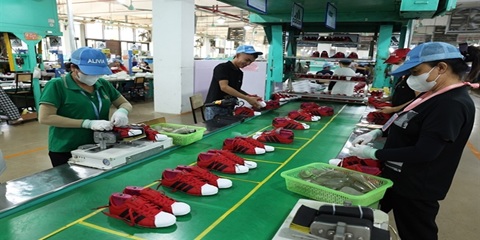
VIỆT NAM'S FOOTWEAR, BAG EXPORTS TO US TOP $8 BILLION IN EIGHT MONTHS
Việt Nam's exports of footwear and handbags to the US exceeded US$8 billion in the first eight months of 2026, as the US and EU remained the country's biggest markets despite sluggish growth in footwear shipments. Exports from Việt Nam's leather and footwear sector reached more than $2.45 billion in August, down 9 per cent from July but up 3 per cent from a year earlier, according to preliminary statistics.
VIETNAM ECONOMY INVESTMENT
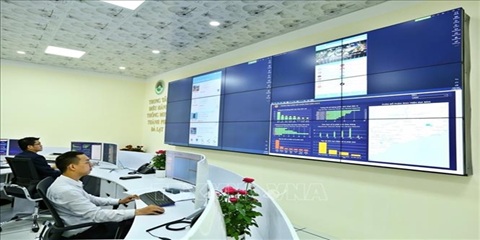
LÂM ĐỒNG TARGETS DIGITAL ECONOMY TO ACCOUNT FOR 30 PER CENT OF GRDP BY 2030
Lâm Đồng Province aims to raise the digital economy’s contribution to around 30 per cent of its gross regional domestic product (GRDP) by 2030, as part of a five-year plan to develop digital economy and society issued recently. Under Plan No. 15358/KH-UBND, the province targets more than 60 per cent of small- and medium-sized enterprises (SMEs) to adopt digital technologies by 2030 while increasing the value of cashless payments to 30 times its GRDP.
Events Sponsors






















