Want to be in the loop?
subscribe to
our notification
Business News
PM GIVES DIRECTIONS ON KEY MEASURES TO BOOST ECONOMIC GROWTH THIS YEAR
To meet this year's ambitious goals, the PM stressed boosting growth, stabilising the economy, controlling inflation and ensuring key economic balances.
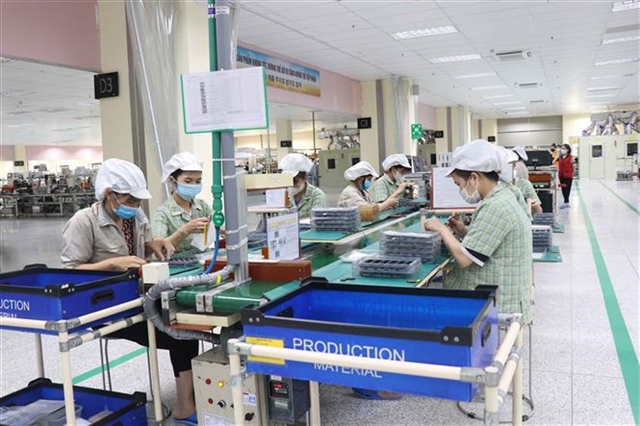
Workers produce electronic components. — VNA/VNS Photo
HÀ NỘI — Prime Minister Phạm Minh Chính signed an official dispatch on April 22, outlining key tasks and solutions aimed at driving Việt Nam’s economic growth throughout the year.
The document comes amid a backdrop of increasingly complex and unpredictable global developments. It said heightened strategic competition among major powers, widespread trade wars and a deteriorating global economic outlook are posing significant challenges.
Domestically, in light of evolving realities and development demand, as proposed by the Government, the Party Central Committee and the Politburo have raised the national growth target to a minimum of 8 per cent for 2025 and to double-digit growth for subsequent years. Basing on this, the National Assembly and the Government have issued resolutions to support this revised goal.
To achieve these ambitious targets, the PM has highlighted the priorities of boosting economic growth, maintaining macroeconomic stability, controlling inflation and guaranteeing major economic balances.
He urged ministries, agencies, and localities to closely monitor international and regional developments in order to deliver timely, appropriate, and effective policy responses, while proactively developing scenarios and preparing counter-measures.
In particular, they need to quickly take flexible and efficient actions for immediate and long-term adaptation to the new US tariff policy.
The Ministry of Finance is tasked with coordinating closely with other ministries and localities to urgently finalise and submit a new draft resolution to replace the Government’s Resolution 01/NQ-CP by April 25. The new document is set to adjust GDP growth scenarios for Q2 and the rest of the year to ensure this year's GDP growth target of at least 8 per cent is achieved.
The ministry must also assess the impact of the US’s reciprocal tariff policy on Việt Nam and develop fiscal support packages for enterprises and workers in the affected sectors.
The State Bank of Vietnam is directed to monitor global and regional developments, particularly policy shifts in major economies. It must employ monetary policy tools effectively to appropriately regulate exchange rates and interest rates, ensure adequate capital supply for the economy, and maintain the stability of the monetary, foreign exchange, and gold markets as well as the safety of the credit institution system.
Special attention is to be given to cutting lending interest rates and providing short-term loans for businesses affected by the US tariff policy. The preferential credit package should be expanded to cover the timber, fishery, and forestry sectors, which are considerably impacted by the new US tariff.
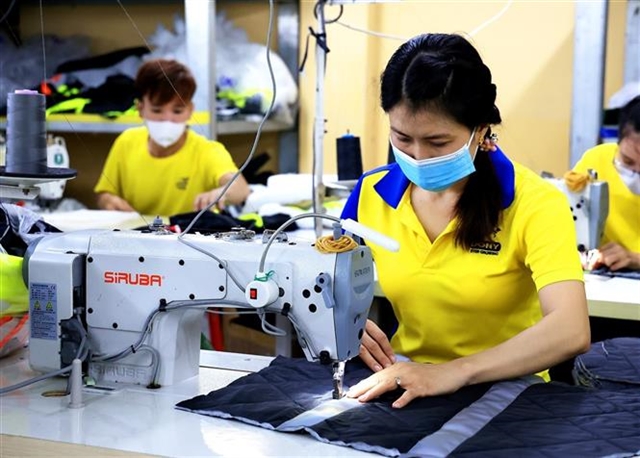
Making garment products for export. — VNA/VNS Photo
According to the dispatch, traditional growth drivers must continue to be renewed and promoted.
In particular, public investment disbursement ought to be accelerated toward achieving 100 per cent of the target set for this year. Preparations for the 2026–30 medium-term public investment plan must also begin, limiting the number of centrally funded projects to no more than 3,000.
Meanwhile, more large-scaled FDI projects that apply high technology and are environmentally friendly should be attracted, and obstacles to FDI firms, especially administrative procedures, be addressed in a timely manner to accelerate their projects in Việt Nam.
In terms of consumption, the PM asked for stepping up measures to connect supply and demand, encourage e-marketplaces to stimulate the consumption of domestically produced goods, launch promotional programmes nationwide, and distribute more goods to rural, border and insular areas.
Export promotion is another critical area.
The Ministry of Industry and Trade and relevant authorities are instructed to fully exploit Việt Nam’s 17 existing free trade agreements, expedite ongoing negotiations, and initiate talks on new free trade agreements (FTAs) with potential markets such as the Middle East, Africa, Latin America, Central Asia, Eastern Europe, India, Brazil, Pakistan and Egypt.
Urgent talks are also to be held with US agencies to negotiate a reciprocal trade agreement that is mutually beneficial.
The directive also includes guidance on tapping into new growth drivers; making breakthroughs on science and technology development, innovation, and digital transformation; building free trade zones and international financial centres; developing the private sector; and boosting the labour market, among many others.
It is necessary to fully mobilise all available social resources to drive national development, the Government leader affirmed. — VNS
Source: VNS
Related News
BANKING / FINANCE / INSURANCE / TAX
REMITTANCES TO HCM CITY RISE NEARLY 40% IN Q3
Remittances to HCM City reached more than US$2.83 billion in the third quarter of this year, up 39.5 per cent from the previous quarter and 3.6 per cent year-on-year. This was the first quarter showing positive annual growth this year, helping narrow the decline in remittance inflows over the first nine months. According to the State Bank of Vietnam (SBV)’s Regional Branch 2, remittances transferred to HCM City through credit institutions and economic organisations totalled $2.835 billion in Q3, an increase of more than $802 million from the previous quarter.
TECHNOLOGY
TECH SECTOR GROWTH OPENS UP OPPORTUNITIES FOR VIỆT NAM TO GO GLOBAL
The growth of the electronics, semiconductor and high-tech sectors worldwide is opening up a variety of opportunities for Vietnamese enterprises to integrate more deeply into the global supply chain. However, to become suppliers for these corporations, domestic enterprises must meet rigorous standards regarding quality, technology, productivity and order fulfilment capabilities.
VIETNAM ECONOMY INVESTMENT
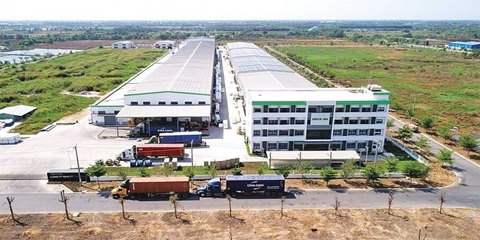
FOREIGN INVESTORS SEEKING A SYNCHRONISED MANUFACTURING ECOSYSTEM
Instead of focusing only on land costs and incentives as usual, foreign investors are seeking a synchronised manufacturing ecosystem, from stable power supply and logistics to shared infrastructure and the convenience of completing residence procedures for experts to serve their long-term investment in the country.
MEMBER CORNER / PROMOTIONS
SENTRYSAFE FHW40200 – PROTECT YOUR VALUABLES, ENJOY PEACE OF MIND!
Looking for a reliable solution to protect your important documents, cash, and valuables from fire and water damage? Genuine SENTRYSAFE - Reliable protection for your valuables and peace of mind! Contact Sen Wai Vietnam for more information and personalized product recommendations.
PROPERTY / INDUSTRIAL ZONE
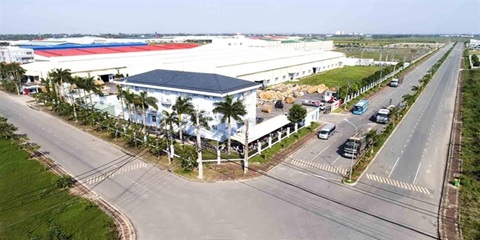
HCM CITY ATTRACTS US$5.7 BILLION INTO EXPORT PROCESSING AND INDUSTRIAL ZONES
HCM City attracted US$5.7 billion in domestic and foreign investment into its export processing and industrial zones during the first nine months of 2026. The figure exceeded the city's full-year target by 31 per cent, highlighting strong momentum in high-quality industrial investment under Resolution No.10-NQ/TW. Total investment reached 131 per cent of the 2026 target of $4.25 billion and represented a 29 per cent increase compared with the same period in 2025, according to the city's Export Processing and Industrial Zones Authority (HEPZA).
INFRASTRUCTURE / CONSTRUCTION / LOGISTIC / PORT
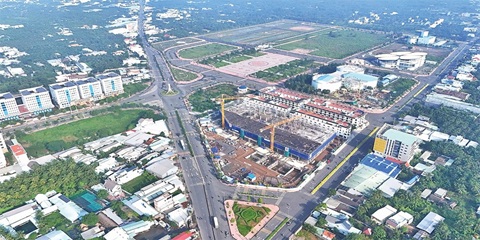
DONG THAP PROVINCE STEPS UP INDUSTRIAL EXPANSION AND INFRASTRUCTURE CONNECTIVITY
Accelerating public investment, strengthening inter-regional connectivity, and expanding industrial land are helping Dong Thap efficiently bolster competitiveness and drive economic growth. Following the 2025 merger of the former Dong Thap and Tien Giang provinces, the expanded Dong Thap province in the Mekong Delta faces mounting pressure to accelerate infrastructure development and strengthen connectivity among local economic zones, urban areas, industrial parks (IPs), and production centres.
Events Sponsors






















