Want to be in the loop?
subscribe to
our notification
Business News
PUBLIC-PRIVATE PARTNERSHIPS A LEVER FOR GREENER INNOVATION
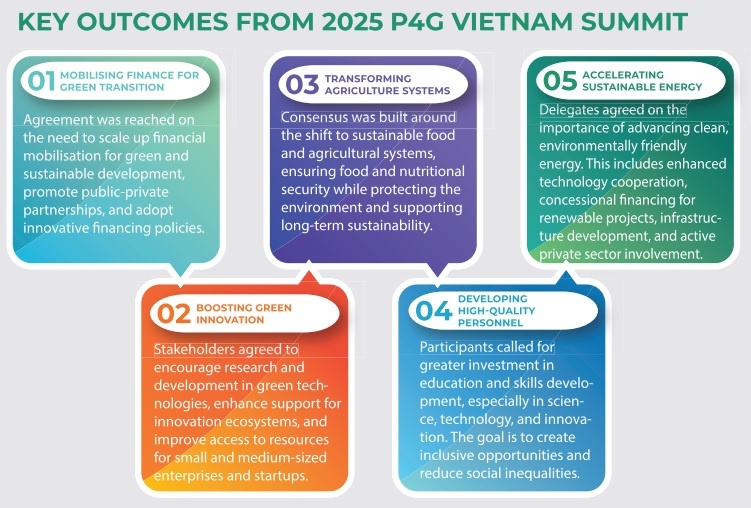
Public-private partnerships are no longer a supporting mechanism, but a strategic pillar in the global pursuit of the green transition.
The high-level dialogue between government leaders and businesses at the 2025 P4G Vietnam Summit last week, chaired by Prime Minister Pham Minh Chinh, brought together senior officials, global experts, international organisations, and private sector leaders.
They recognised that the climate crisis, digital transformation, and resource depletion are converging in ways that demand not only innovation, but deep and long-term collaboration between the public and private sectors.
UN Deputy Secretary-General Amina J. Mohammed acknowledged Vietnam’s leadership in renewable energy, noting its potential to attract trillions in sustainable investment.
“Emerging economies must accelerate the adoption of new investment models, particularly those that align private capital with green infrastructure priorities. Governments must work with the private sector to expand ambition, strengthen accountability, and deliver real impact,” she said.
From Italy, Prime Minister’s Climate Envoy Francesco Corvaro stressed that public-private partnerships (PPPs) are indispensable in addressing climate finance gaps. Drawing from Italy’s experience, he underscored the importance of public investment as a risk mitigator, enabling private sector participation in clean energy and smart infrastructure projects.
“Public investment can unlock private capital, but local authorities must lead with clear priorities and long-term vision,” Corvaro noted. “You can’t talk about renewables, AI, or digital infrastructure without modern, resilient grids, and that requires strong public-private alignment.” he said
Alejandro Dorado, Spain’s High Commissioner for Circular Economy, argued that the case for stronger PPPs lies at the intersection of two accelerating forces: the environmental-climate crisis and a wave of disruptive technologies.
“In a world where AI, green technologies, and digitalisation are reshaping the global economy, the clock is ticking. According to the Intergovernmental Panel on Climate Change, we have less than a decade to prevent irreversible climate disaster. Meanwhile, the World Economic Forum has identified biodiversity loss as one of the most severe economic risks,” he said.
Dorado added that while multilateralism is being questioned or weakened in some quarters, the need for cooperation has never been more urgent – both to solve environmental challenges and to harness the transformative potential of innovation.
“No government or business can tackle these crises alone. Public authorities must provide the regulatory frameworks, fiscal incentives, and infrastructure deployment needed at scale to safeguard the common good,” he stressed.
From the business side, Stuart Livesey, country representative of Copenhagen Infrastructure Partners (CIP), provided a frank but optimistic outlook. Livesey stated CIP’s commitment to supporting Vietnam’s transition, but emphasised the need for enabling conditions.
“What we seek are clear, bankable projects underpinned by stable regulatory frameworks, collaborating with strong local partnerships. This is where public-private cooperation becomes not just helpful, but essential,” Livesey noted. “Over the next 10-15 years, the offshore wind sector and green energy consumers will trigger massive demand for new technologies, digital solutions, and skilled labour.”
To meet this demand, CIP is investing not only in infrastructure, but also in capacity building, research and development, and local supply chain development through partnerships with Vietnamese universities.
Still, he acknowledged barriers. “Technological application and innovation in green projects face challenges, from long-term financing constraints and skilled labour shortages to fragmented policy signals. These are not unique to Vietnam, but they require proactive, tailored local solutions,” he said. “Addressing issues such as grid availability, regulatory clarity, and inter-ministerial coordination will be critical.”
Tim Evans, CEO of HSBC Vietnam, stated that the banking sector is ready to facilitate green finance, particularly in sectors aligned with national climate targets.
“We see ourselves as a bridge between global capital and local sustainability goals. The clearer the pipeline of bankable, climate-aligned projects, the faster we can move capital,” he noted. “What’s crucial now is consistency in policy and coordination among stakeholders to ensure these projects reach maturity.”
Source: VIR
Related News
BANKING / FINANCE / INSURANCE / TAX
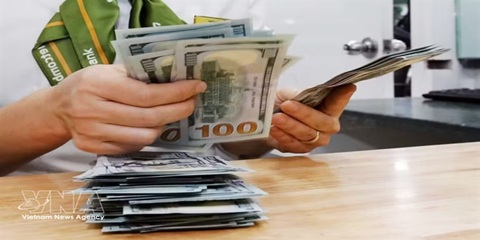
REMITTANCES TO HCM CITY RISE NEARLY 40% IN Q3
Remittances to HCM City reached more than US$2.83 billion in the third quarter of this year, up 39.5 per cent from the previous quarter and 3.6 per cent year-on-year. This was the first quarter showing positive annual growth this year, helping narrow the decline in remittance inflows over the first nine months. According to the State Bank of Vietnam (SBV)’s Regional Branch 2, remittances transferred to HCM City through credit institutions and economic organisations totalled $2.835 billion in Q3, an increase of more than $802 million from the previous quarter.
TECHNOLOGY
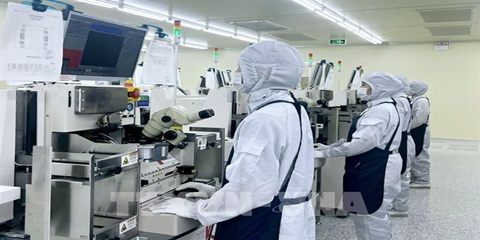
TECH SECTOR GROWTH OPENS UP OPPORTUNITIES FOR VIỆT NAM TO GO GLOBAL
The growth of the electronics, semiconductor and high-tech sectors worldwide is opening up a variety of opportunities for Vietnamese enterprises to integrate more deeply into the global supply chain. However, to become suppliers for these corporations, domestic enterprises must meet rigorous standards regarding quality, technology, productivity and order fulfilment capabilities.
VIETNAM ECONOMY INVESTMENT
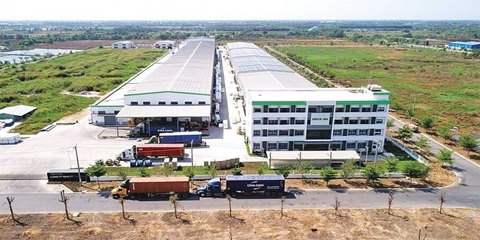
FOREIGN INVESTORS SEEKING A SYNCHRONISED MANUFACTURING ECOSYSTEM
Instead of focusing only on land costs and incentives as usual, foreign investors are seeking a synchronised manufacturing ecosystem, from stable power supply and logistics to shared infrastructure and the convenience of completing residence procedures for experts to serve their long-term investment in the country.
MEMBER CORNER / PROMOTIONS
SENTRYSAFE FHW40200 – PROTECT YOUR VALUABLES, ENJOY PEACE OF MIND!
Looking for a reliable solution to protect your important documents, cash, and valuables from fire and water damage? Genuine SENTRYSAFE - Reliable protection for your valuables and peace of mind! Contact Sen Wai Vietnam for more information and personalized product recommendations.
PROPERTY / INDUSTRIAL ZONE
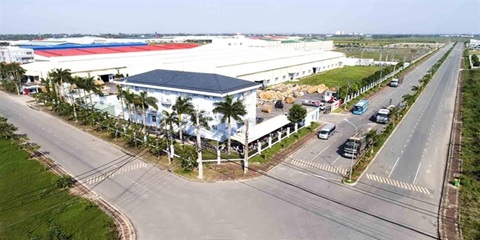
HCM CITY ATTRACTS US$5.7 BILLION INTO EXPORT PROCESSING AND INDUSTRIAL ZONES
HCM City attracted US$5.7 billion in domestic and foreign investment into its export processing and industrial zones during the first nine months of 2026. The figure exceeded the city's full-year target by 31 per cent, highlighting strong momentum in high-quality industrial investment under Resolution No.10-NQ/TW. Total investment reached 131 per cent of the 2026 target of $4.25 billion and represented a 29 per cent increase compared with the same period in 2025, according to the city's Export Processing and Industrial Zones Authority (HEPZA).
INFRASTRUCTURE / CONSTRUCTION / LOGISTIC / PORT
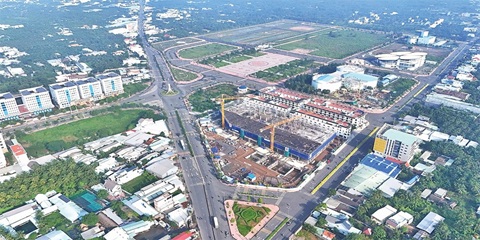
DONG THAP PROVINCE STEPS UP INDUSTRIAL EXPANSION AND INFRASTRUCTURE CONNECTIVITY
Accelerating public investment, strengthening inter-regional connectivity, and expanding industrial land are helping Dong Thap efficiently bolster competitiveness and drive economic growth. Following the 2025 merger of the former Dong Thap and Tien Giang provinces, the expanded Dong Thap province in the Mekong Delta faces mounting pressure to accelerate infrastructure development and strengthen connectivity among local economic zones, urban areas, industrial parks (IPs), and production centres.
Events Sponsors






















