Want to be in the loop?
subscribe to
our notification
Business News
SEAPORTS TO FOSTER SOUTH-CENTRAL REGION ECONOMIC DEVELOPMENT
The construction of a series of seaports in the south-central region is expected to drive its maritime economic development, according to local government leaders.
Lưu Xuân Vĩnh, Chairman of the Ninh Thuận Province People's Committee, said the VNĐ1.463 trillion (US$63.1 million), 108ha Cà Ná Sea Port Complex, whose construction began last month in Thuận Nam District, would play an important role for the locality and region, fostering economic development and attracting investment.
In phase 1, it was designed to handle 3.3 million tonnes of cargo a year. It would have two wharves capable of berthing ships of up to 70,000-100,000 DWT and another with 20,000DWT capacity.
One of the two former wharves would be completed by the end of 2022 and the other in October 2025.
The smaller wharf was scheduled to be completed in August 2026.
"The port will [help] merchandise exports, contribute to attracting investment and serve the needs of production and processing projects in industrial parks and industrial clusters in Ninh Thuận Province and the south-central and Tây Nguyên (Central Highlands) regions,” Vĩnh said.
“It will play an important role in supporting the transport of equipment for renewable energy projects such as wind and solar power projects in the province.”
Neighbouring Bình Thuận Province plans to build the Sơn Mỹ international port in the commune of the same name in Hàm Tân District.
It will have a specialised wharf for liquefied natural gas (LNG) that can handle ships of up to 100,000DWT, an international passenger wharf that can berth ships of up to 225,000 GRT and a general berth capable of handling ships of up to 50,000 DWT.
Bình Thuận Province also plans to build a specialised LNG port with a capacity of up to 170,000 DWT in Tân Thành Commune, Hàm Thuận Nam District, to serve the gas-fired power plant in Mũi Kê Gà.
Among the south-central provinces, Khánh Hòa has the largest number of ports: 16.
Hoàng Đình Phi, head of the management board of the province’s Văn Phong Economic Zone, said Nam Vân Phong Port in Ninh Hòa town opened recently to serve the south-central and Central Highlands regions.
It can dock ships of up to 70,000DWT now and 100,000DWT in the near future.
Meanwhile, Bắc Vân Phong Port is under construction in Đầm Môn, Vạn Ninh District. One wharf that can handle ships of up to 50,000 DWT has been completed.
Mai Đình Vũ, chairman of Vân Phong Port Company Limited, said though the port had yet to be completed, it had already received many foreign ships. With a rising number of cargo vessels of 50,000-70,000DWT registering to enter the port his company was seeking to increase the capacity of the remaining two wharves to improve the port’s efficiency.
According to the Ministry of Transport, the south-central region will have five key ports.
Quy Nhơn Port in Bình Định Province is a major national port with 18-20 million tonnes of goods passing through it annually. Vũng Rô Port in Phú Yên handles 5.8 - 6.3 million tonnes a year. Ninh Thuận Port has a cargo throughput of 15.8 -17.5 million tonnes.
Khánh Hòa Port handles 15.9 - 18.6 million tonnes of goods a year.
Source: VNS
Related News

MEMBER CORNER / PROMOTIONS
AN ELECTRIFYING NIGHT WITH THE "QUEEN OF DANCE" THU MINH AT THE GRAND HO TRAM!
The stage at The Grand Ballroom is set to catch fire as Vietnam’s undisputed "Queen of Dance," Thu Minh, takes the spotlight. Renowned for her powerhouse vocals, magnetic stage presence, and sultry, high-energy performances, Thu Minh promises an evening of pure musical euphoria. The energy escalates with an exclusive appearance by special guest and The Voice champion, Vu Thao My.

HR / LABOUR/ EMPLOYMENT
HIGH-QUALITY HUMAN RESOURCES NEEDED TO ATTRACT NEW TECH INVESTMENT CAPITAL
Besides infrastructure, Việt Nam must also rapidly develop a highly skilled workforce to attract investment in AI, semiconductors and advanced manufacturing, experts have said. Don Lam, CEO and co-founder of investment management company VinaCapital, said that global technology investors were increasingly looking at the readiness of the entire ecosystem, with high-quality human resources a decisive factor.

HR / LABOUR/ EMPLOYMENT
HIRING OUTLOOK STRENGTHENS IN Q4 AS SKILLS SHORTAGES PERSIST
Hiring intentions among employers in Việt Nam strengthened in the fourth quarter, with 52 per cent of surveyed companies planning to increase headcount between October and December, according to a ManpowerGroup survey released this week. Việt Nam's hiring outlook was stronger than the Asia Pacific and Middle East (APME) regional average of 33 per cent and the global average of 29 per cent, ranking third in the region and 11th globally among 42 markets surveyed.

BANKING / FINANCE / INSURANCE / TAX
LARGE BANKS FORECAST TO GAIN HIGHER PROFITABILITY IN H2 2026
The return on average assets (ROAA) of the banking sector will likely remain stable at around 1.5 per cent in the second half of 2026, but profitability divergence among banks will increase, with large banks outperforming peers on stronger margins and diversified earnings, analysts forecast. In a recent report on the banking sector, analysts from the Vietnam Investors Service Rating said the sector’s ROAA rose by 10 basis points quarter-on-quarter to 1.51 per cent in the first half of this year, driven by net interest margin (NIM) improvements at some State-owned banks and large private banks.
GARMENT / TEXTILE
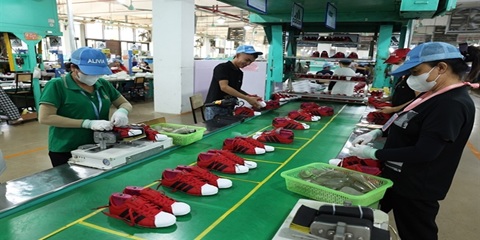
VIỆT NAM'S FOOTWEAR, BAG EXPORTS TO US TOP $8 BILLION IN EIGHT MONTHS
Việt Nam's exports of footwear and handbags to the US exceeded US$8 billion in the first eight months of 2026, as the US and EU remained the country's biggest markets despite sluggish growth in footwear shipments. Exports from Việt Nam's leather and footwear sector reached more than $2.45 billion in August, down 9 per cent from July but up 3 per cent from a year earlier, according to preliminary statistics.
VIETNAM ECONOMY INVESTMENT
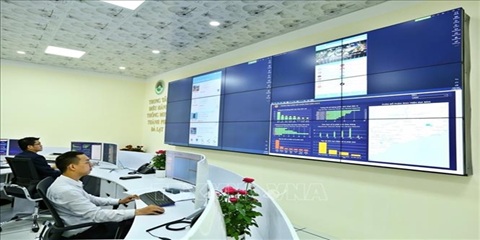
LÂM ĐỒNG TARGETS DIGITAL ECONOMY TO ACCOUNT FOR 30 PER CENT OF GRDP BY 2030
Lâm Đồng Province aims to raise the digital economy’s contribution to around 30 per cent of its gross regional domestic product (GRDP) by 2030, as part of a five-year plan to develop digital economy and society issued recently. Under Plan No. 15358/KH-UBND, the province targets more than 60 per cent of small- and medium-sized enterprises (SMEs) to adopt digital technologies by 2030 while increasing the value of cashless payments to 30 times its GRDP.
Events Sponsors






















