Want to be in the loop?
subscribe to
our notification
Business News
REAL ESTATE SEES A RISE OF M&A DEALS
The Vietnamese real estate market has seen large-scale investments over the year’s first four months, with a surge of substantial merger and acquisition deals and funding into projects.
Figures from JLL Vietnam show that in April, outstanding examples of mergers and acquisitions in real estate were seen, as Vingroup acquired Vietnam International University from Malaysia Berjaya, while Alpha King acquired both the Ngan Binh complex and Xuan Mai Investment and Construction JSC from Hoan Cau Corporation for their Eco-Green Saigon project.
Stephen Wyatt, country manager of JLL Vietnam, commented that Vietnam continues to attract significant interest from foreign investors in all sectors of the property market, and that the biggest challenge for the firm is finding quality opportunities.
“We have seen from five to 10 foreign investors a week, and whilst the economy continues at this pace, we expect to see another bumper year for foreign investment in Vietnam in 2018,” said Wyatt.
The country’s real estate sector attracted $455 million between January and April, accounting for 12.8 per cent of the country’s total foreign direct investment (FDI) capital during the period, according to the Ministry of Planning and Investment (MPI).
Last week South Korea’s Daewon Thu Duc House became the latest in a wave of foreign-backed developers investing in the property market.
Daewon Thu Duc House established a joint venture with the Vietnam Manufacturing and Export Processing Company to develop a $115 million office complex and trading centre, along with high-rise apartment buildings, townhouses, a supermarket, and other facilities, in Hadong district of Hanoi. The joint venture has charter capital of $23 million, of which Daewon Thu Duc House contributes 49 per cent.
Meanwhile, Singapore-based Frasers Property Ltd. (formerly known as Frasers Centrepoint Ltd.) recently announced that it was in the process of acquiring 75 per cent of the issued share capital of Phu An Khang Real Estate JSC, equivalent to 24 million ordinary shares and $18 million.
According to a statement released by Frasers Property, Phu An Khang is now developing a mixed-use residential and commercial project on a plot in Ho Chi Minh City’s District 2.
Frasers Property made its first foray into Vietnam in 1999 with the development of the 22-storey retail and office building Me Linh Point Tower in District 1, the central business district of Ho Chi Minh City.
According to reports from MPI, investment in real estate was focused on the southern market, Commercial Real Estate Services reported.
However, since early last year, foreign investors have been focusing their attention on Hanoi’s property market, with examples like Sumitomo Group’s deal on the northern side of the Red River.
The General Statistics Office reported that Vietnam lured 883 new FDI projects registered at $8.06 billion in this year’s first four months, down 23.9 per cent on-year.
However, FDI disbursement was estimated at $5.1 billion during this period, up 6.3 per cent. South Korea was the top foreign investor in Vietnam between January and April, followed by Japan.
Source: VIR
Related News

CHARITY / EXHIBITION / OTHER EVENTS
INVESTMENT OPPORTUNITIES IN CA MAU PROVINCE: 96 PROJECTS AND 20 STRATEGIC PROJECTS
We are pleased to share with you information on investment projects currently seeking investors in Ca Mau Province. Should your esteemed company or association be interested, we kindly invite you to review the project information and complete the registration form via the links provided. The Ho Chi Minh City Investment and Trade Promotion Centre (ITPC) will consolidate the expressions of interest and facilitate connections with the leadership of Ca Mau Province at a meeting tentatively scheduled for 13 November 2026 in Ho Chi Minh City.

MEMBER CORNER / PROMOTIONS
BẰNG KIỀU LIVESHOW - A SYMPHONY OF LOVE UNDER THE GOLDEN GLOW
A masterclass in live music that takes the audience on a soulful journey through immortal love songs, guided by the peerless artistry and emotive storytelling of renowned singer Bằng Kiều. The highlight of the night is his seamless musical chemistry with special guest Triệu Hồng Ngọc, promising passionate and deeply resonant duets inside the magnificent Grand Ballroom.
INFRASTRUCTURE / CONSTRUCTION / LOGISTIC / PORT
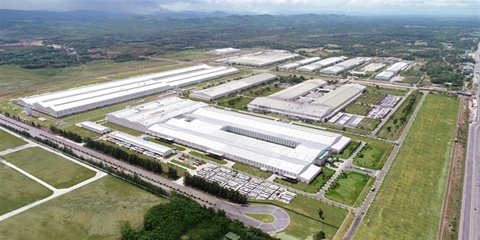
ĐÀ NẴNG GREEN-LIGHTS US$105 MILLION THAI DEVELOPMENT DEAL
The central city has approved an investment proposal by Thailand’s WHA Group to develop infrastructure for the 400ha WHA Đà Nẵng Industrial Park project on two communes of Thăng Bình and Đồng Dương, with an investment of more than VNĐ2.7 trillion (US$105 million). The city said it approved WHA Industrial Development International's status as an investor in the project, which is expected to take place between 2027 and 2034.
VIETNAM ECONOMY INVESTMENT
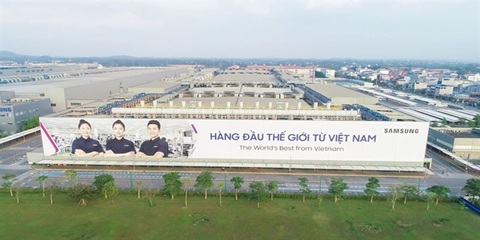
MOBILE PHONE EXPORTS RISE 20% TO $51.8 BILLION IN FIRST NINE MONTHS
Exports of mobile phones and components rose 20 per cent year-on-year to nearly US$51.8 billion in the first nine months of 2026, with China, the US and Republic of Korea accounting for more than half of the total. Shipments to the three markets reached a combined $26.18 billion, or 50.6 per cent of total exports of the product group during the period, according to data from the Vietnam Department of Customs under the Ministry of Finance.
INFRASTRUCTURE / CONSTRUCTION / LOGISTIC / PORT
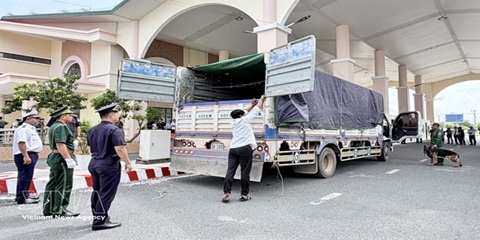
VIỆT NAM-CAMBODIA TRADE GATHERS PACE TOWARDS $20 BILLION TARGET
Trade between Việt Nam and Cambodia continues to grow, remaining a bright spot and a key pillar of bilateral cooperation as the two countries aim to raise two-way trade to US$20 billion in the coming years. After setting a record of more than $11.3 billion last year, bilateral trade reached about $8.7 billion in the first eight months of this year, up 8.3 per cent year on year.
VIETNAM ECONOMY INVESTMENT
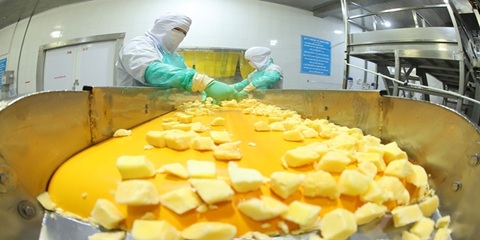
FRUIT AND VEGETABLE EXPORTS POISED TO HIT $10 BILLION IN 2026
Fruit and vegetable exports are on track to reach nearly US$10 billion in 2026, after rising 19.9 per cent year on year to nearly US$7.4 billion in the first nine months, driven by strong seasonal demand and abundant tropical fruit supplies. The Ministry of Agriculture and Environment said the growth reflected stronger international demand for fresh produce and processed agricultural products.
Events Sponsors






















