Want to be in the loop?
subscribe to
our notification
Business News
RAPID LAW IMPLEMENTATION MAY PROPEL MARKET FORTUNES
With quicker implementation of Vietnam’s new land law, the real estate market can resume normal operations and enter a more robust development cycle from the second half of this year.
Last week, Prime Minister Pham Minh Chinh issued urgent instructions on speeding up implementation of the upcoming Land Law.
The prime minister requested relevant authorities to quickly complete documents so that the law could move into effect on July 1 this year instead of the beginning of 2025.
According to Dr. Tran Xuan Luong, deputy director of the Market Data Research Institute, speedier implementation of the law will bring positive effects to the real estate market, especially housing supply.
“When supply increases, it will help reduce house prices, thereby increasing people’s opportunities to access housing,” Luong said.
“Investors and developers are looking forward to the implementation of the new law, which will remove obstacles for a range of projects that are struggling due to stalled procedures and lack of legality. For them, the earlier the better,” he said.
Le Hoang Chau, chairman of the Ho Chi Minh City Real Estate Association, said that the new law being applied from July 1 would help to remove bottlenecks for the market. “One of the most important points of the new Land Law is to remove the old land pricing system. Local authorities will now base the pricing on the purpose, land use term, and input information of a property to determine the land price according to the market. Parties have been waiting for that for a long time,” Chau said.
Besides this, the new law also allows for the expansion of limits on transfer of agricultural land use rights by individuals, and regulations on agricultural land concentration and accumulation. “This will promote large-scale agricultural development and draw in more business participation,” Chau added.
In addition, the law also provides a legal framework for tourism real estate, deemed a black spot of the current law, causing commercial housing projects to not be approved for long periods. The new law will help localities have a basis for approving such schemes.
Greater cash flows
Believing that large cash flows from the stock market or from savings could soon land in the real estate market, many investors have launched products in recent months with a series of incentives.
Last month Gamuda Land announced an attractive sales policy for Eaton Park in Thu Duc of Ho Chi Minh City. Accordingly, customers will only need to spend 5 per cent of the apartment value to sign a contract.
With a favourable payment schedule of up to five years, in the first three years buyers only need to pay 30 per cent, in six instalments, until receiving notice of handover of the apartment.
When receiving a home, the buyers then must pay an additional 35 per cent, and the remaining cost is divided into two instalments of 15 per cent each for the next year. In addition, the developer also offers a preferential discount rate, usually no less than 5 per cent, for early applications.
The Standard villa project in the southern province of Binh Duong, through An Gia Group, applies a payment policy of 10 per cent and buyers can move in immediately, with a sum of 20 per cent paid in the following 12 months. The buyers after that can pause payments for up to two years from the date of signing the sales contract before they have to pay another 65 per cent.
In addition, An Gia also issued a commitment policy to rent town houses and shophouse products with rental incentives of VND25-40 million ($1,000-1,600) per month, lasting up to 18 months.
“Buying a house that has been handed over, but dividing payments into smaller portions, will help customers get a home right away without needing a bank loan, and give people more time to balance and prepare cash flow,” an An Gia representative said.
Other groups such as Nam Long, Hung Thinh, and Vinhomes are all offering attractive discounts and payment policies.
“Observing the stock market recently with liquidity sometimes reaching up to VND35 trillion ($1.4 million) per day or savings interest rates falling sharply to less than 5 per cent per a year, investors believe that there will be cash flow in the near future. This is an opportunity to dominate the market and draw in customers for a new growth cycle,” said investor Nguyen Manh Cuong.
A peak time
According to Dr. Nguyen Huu Huan from Ho Chi Minh City University of Economics, the market can now thrive thanks to the government’s issuance of policies to remove obstacles for real estate businesses.
“One of the bright signs is that looser monetary policy has encouraged money to flow into investment channels instead of just savings. When the stock market gets better and real estate liquidity increases again, in a short time, cash flow will begin to move from stocks to real estate. Such a movement of cash will bring expectations for the property market to gradually recover by the end of 2024,” Huan said.
Economic expert Dr. Nguyen Tri Hieu said that when savings interest rates decrease, investors are no longer that interested in saving. Instead, they will aim for channels that bring higher profits, including putting money into real estate or in manufacturing and business.
“From Q3/2024, the market will welcome a large amount of cash flow into real estate with the expectation that this will be an investment channel that brings good, stable profits. Investors need to take advantage of this time to put down money with many incentives from developers,” Hieu said.
He added that the high increase demand of end-users, and not speculators, will be one of the decisive factors in forming products for real estate businesses in 2024 and beyond. In provinces and cities with diverse economic development, there is a need for more supply to meet demand.
In its residential industry report published in March, Mirae Asset Securities Company said that the most difficult period of the real estate market had passed and the recovery process was gradually taking place, with the main catalysts being rapid urbanisation, accelerated public investment, increasing demand for accommodation, and government determination.
Mirae Asset cited that the total number of new apartments launched in Ho Chi Minh City and surrounding areas this year are expected to have about 12,000-15,000 units.
“Although new supply is relatively limited in the first months of the year, there will be stronger growth in the second half of the year, thanks to legal policies starting to take effect,” the report said.
According to Savills Vietnam, the number of new apartments opened for sale in Ho Chi Minh City in 2024 will quadruple compared to the previous year. It is expected that by 2026, the market will receive about over 115 new projects, providing an additional 40,000 apartments to the current supply.
Source: VIR
Related News

BANKING / FINANCE / INSURANCE / TAX
REMITTANCES TO HCM CITY RISE NEARLY 40% IN Q3
Remittances to HCM City reached more than US$2.83 billion in the third quarter of this year, up 39.5 per cent from the previous quarter and 3.6 per cent year-on-year. This was the first quarter showing positive annual growth this year, helping narrow the decline in remittance inflows over the first nine months. According to the State Bank of Vietnam (SBV)’s Regional Branch 2, remittances transferred to HCM City through credit institutions and economic organisations totalled $2.835 billion in Q3, an increase of more than $802 million from the previous quarter.

TECHNOLOGY
TECH SECTOR GROWTH OPENS UP OPPORTUNITIES FOR VIỆT NAM TO GO GLOBAL
The growth of the electronics, semiconductor and high-tech sectors worldwide is opening up a variety of opportunities for Vietnamese enterprises to integrate more deeply into the global supply chain. However, to become suppliers for these corporations, domestic enterprises must meet rigorous standards regarding quality, technology, productivity and order fulfilment capabilities.
VIETNAM ECONOMY INVESTMENT
FOREIGN INVESTORS SEEKING A SYNCHRONISED MANUFACTURING ECOSYSTEM
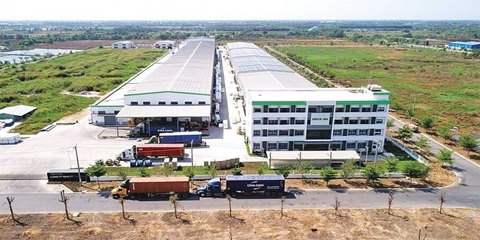
Instead of focusing only on land costs and incentives as usual, foreign investors are seeking a synchronised manufacturing ecosystem, from stable power supply and logistics to shared infrastructure and the convenience of completing residence procedures for experts to serve their long-term investment in the country.

MEMBER CORNER / PROMOTIONS
SENTRYSAFE FHW40200 – PROTECT YOUR VALUABLES, ENJOY PEACE OF MIND!
Looking for a reliable solution to protect your important documents, cash, and valuables from fire and water damage? Genuine SENTRYSAFE - Reliable protection for your valuables and peace of mind! Contact Sen Wai Vietnam for more information and personalized product recommendations.
PROPERTY / INDUSTRIAL ZONE
HCM CITY ATTRACTS US$5.7 BILLION INTO EXPORT PROCESSING AND INDUSTRIAL ZONES
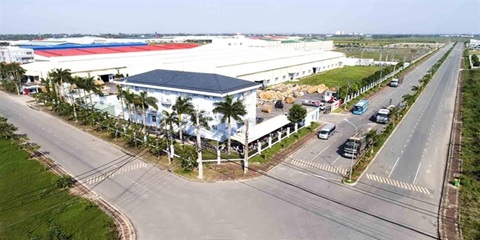
HCM City attracted US$5.7 billion in domestic and foreign investment into its export processing and industrial zones during the first nine months of 2026. The figure exceeded the city's full-year target by 31 per cent, highlighting strong momentum in high-quality industrial investment under Resolution No.10-NQ/TW. Total investment reached 131 per cent of the 2026 target of $4.25 billion and represented a 29 per cent increase compared with the same period in 2025, according to the city's Export Processing and Industrial Zones Authority (HEPZA).
INFRASTRUCTURE / CONSTRUCTION / LOGISTIC / PORT
DONG THAP PROVINCE STEPS UP INDUSTRIAL EXPANSION AND INFRASTRUCTURE CONNECTIVITY
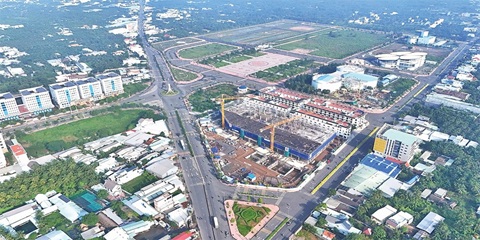
Accelerating public investment, strengthening inter-regional connectivity, and expanding industrial land are helping Dong Thap efficiently bolster competitiveness and drive economic growth. Following the 2025 merger of the former Dong Thap and Tien Giang provinces, the expanded Dong Thap province in the Mekong Delta faces mounting pressure to accelerate infrastructure development and strengthen connectivity among local economic zones, urban areas, industrial parks (IPs), and production centres.
Events Sponsors






















