Want to be in the loop?
subscribe to
our notification
Business News
POLICY KEY TO BOOSTING VIET NAM’S DIGITAL ECONOMY, SAY EXPERTS
The Ministry of Industry and Trade (MoIT)’s key task is to evaluate the building and adjustment of policies to support the development of the digital economy, according to Deputy Minister Cao Quốc Hưng.
Along with e-commerce, Hưng told Vietnamplus.vn that the digital economy is both a challenge and opportunity for Việt Nam to resolve major issues in economic development, including the issuance and revision of policies to make Việt Nam more competitive globally.
According to a report from the MoIT’s Vietnam eCommerce and Digital Economy Agency, Việt Nam’s digital economy has been developing in terms of infrastructure and markets in the last decade.
There are currently 64 millions internet users in the country, accounting for 57 per cent of the population. With the increasing penetration of the internet, mobile devices and social networks, more and more individuals are joining the e-commerce network.
The report shows a quarter of 1,000 surveyed people make transactions through Facebook or Zalo.
In 2018, the country’s e-commerce growth reached 30 per cent, marking total retail revenue of US$8 billion. This figure is expected to reach $13-15 billion by 2020.
The digital economy is expected to bring many opportunities to micro, small and medium-sized enterprises, including in foreign countries. However, with the rapid development speed of the digital economy and the opening of cyberspace, Việt Nam is facing difficulties because of limited awareness and low internet skills.
According to the report, the legal system and enforcement agencies are still weak. At the same time, popular forms of transactions including cash payment and cash-on-delivery payment are still major obstacles to increasing costs for society, businesses and consumers.
“Therefore, the development of digital economy and smart industry is an urgent task in Việt Nam today to help accelerate the process of industrialisation and modernisation,” the report said.
Deputy Director of the Ministry of Sciences and Technology’s Hi-tech Department Đào Ngọc Chiến told Vietnamplus.vn that enterprises need to integrate digital technology and promote solutions for production and business based on digitisation.
“Along with that, enterprises will have to optimise their business models, develop new skills for each individual and organisation and effectively use smart supply chains,” Chiến said.
"There must be an intellectual property management solution in the digital age suitable for new business models and cooperation models,” he added.
In science and technology, Chiến said it is necessary to have policies encouraging enterprises to transfer and apply new technologies. Meanwhile, it is important to complete a legal framework for the application of technology, promoting the development of digital infrastructure as well as boosting the application of information technology in the entire economy.
According to Ousmane Dione, country director of the World Bank in Việt Nam, to raise competitive capacity, Việt Nam must build a legal environment that encourages innovation and competition, while protecting customers through effective regulations and co-ordination among Government agencies.
He said Việt Nam also needs to focus on policies to access secure payment services and provide e-commerce payment opportunities for customers and domestic and foreign businesses.
Source: VNS
Related News

CHARITY / EXHIBITION / OTHER EVENTS
INVESTMENT OPPORTUNITIES IN CA MAU PROVINCE: 96 PROJECTS AND 20 STRATEGIC PROJECTS
We are pleased to share with you information on investment projects currently seeking investors in Ca Mau Province. Should your esteemed company or association be interested, we kindly invite you to review the project information and complete the registration form via the links provided. The Ho Chi Minh City Investment and Trade Promotion Centre (ITPC) will consolidate the expressions of interest and facilitate connections with the leadership of Ca Mau Province at a meeting tentatively scheduled for 13 November 2026 in Ho Chi Minh City.

MEMBER CORNER / PROMOTIONS
BẰNG KIỀU LIVESHOW - A SYMPHONY OF LOVE UNDER THE GOLDEN GLOW
A masterclass in live music that takes the audience on a soulful journey through immortal love songs, guided by the peerless artistry and emotive storytelling of renowned singer Bằng Kiều. The highlight of the night is his seamless musical chemistry with special guest Triệu Hồng Ngọc, promising passionate and deeply resonant duets inside the magnificent Grand Ballroom.
INFRASTRUCTURE / CONSTRUCTION / LOGISTIC / PORT
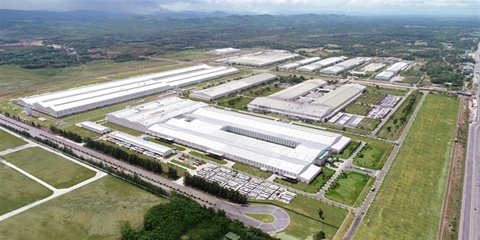
ĐÀ NẴNG GREEN-LIGHTS US$105 MILLION THAI DEVELOPMENT DEAL
The central city has approved an investment proposal by Thailand’s WHA Group to develop infrastructure for the 400ha WHA Đà Nẵng Industrial Park project on two communes of Thăng Bình and Đồng Dương, with an investment of more than VNĐ2.7 trillion (US$105 million). The city said it approved WHA Industrial Development International's status as an investor in the project, which is expected to take place between 2027 and 2034.
VIETNAM ECONOMY INVESTMENT
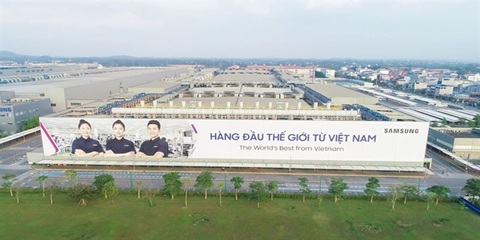
MOBILE PHONE EXPORTS RISE 20% TO $51.8 BILLION IN FIRST NINE MONTHS
Exports of mobile phones and components rose 20 per cent year-on-year to nearly US$51.8 billion in the first nine months of 2026, with China, the US and Republic of Korea accounting for more than half of the total. Shipments to the three markets reached a combined $26.18 billion, or 50.6 per cent of total exports of the product group during the period, according to data from the Vietnam Department of Customs under the Ministry of Finance.

INFRASTRUCTURE / CONSTRUCTION / LOGISTIC / PORT
VIỆT NAM-CAMBODIA TRADE GATHERS PACE TOWARDS $20 BILLION TARGET
Trade between Việt Nam and Cambodia continues to grow, remaining a bright spot and a key pillar of bilateral cooperation as the two countries aim to raise two-way trade to US$20 billion in the coming years. After setting a record of more than $11.3 billion last year, bilateral trade reached about $8.7 billion in the first eight months of this year, up 8.3 per cent year on year.
VIETNAM ECONOMY INVESTMENT
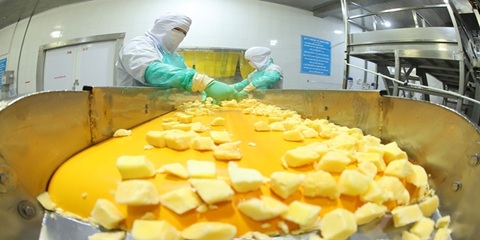
FRUIT AND VEGETABLE EXPORTS POISED TO HIT $10 BILLION IN 2026
Fruit and vegetable exports are on track to reach nearly US$10 billion in 2026, after rising 19.9 per cent year on year to nearly US$7.4 billion in the first nine months, driven by strong seasonal demand and abundant tropical fruit supplies. The Ministry of Agriculture and Environment said the growth reflected stronger international demand for fresh produce and processed agricultural products.
Events Sponsors






















