Want to be in the loop?
subscribe to
our notification
Business News
PM TELLS NORTHERN REGION TO OPTIMISE ADVANTAGES FOR STRONGER DEVELOPMENT
Cái Lân Port in the northern province of Quảng Ninh, one of the key ports connecting economic hubs in the region. VNA/VNS Photo Huy Hùng
HƯNG YÊN The northern economic region held advantages over other parts of the country to develop, especially in terms of infrastructure and human resources, Prime Minister Nguyễn Xuân Phúc said at a conference held in the northern province of Hưng Yên on Tuesday.
The Government leader highlighted the region’s strategic importance in terms of politics, society-economy and defence-security, adding that it was the second biggest economic region in the country and the only region where all localities contributed to the central budget.
Nearly 80 per cent of communes in the region had been recognised as new rural areas and the lowest rate of poor households at 2 per cent, Phúc said.
He asked localities to reform policies on investment, finance, land and human resources, as well as focus on institutional reforms and improve the regional co-ordination mechanism.
The PM also pointed to shortcomings in the region such as the unsustainable growth of the service sector, which used to be one of the region’s strong points but had fallen into decline.
Other shortcomings included small-scale agricultural production with outdated cultivation techniques and processing technology; weak connections in production and business; and environmental pollution in urban and rural areas, river basins, trade villages and industrial clusters.
Most foreign direct investment (FDI) projects focused on sectors and industries subject to investment incentives using low-cost labour. Industrial projects were mainly concentrated in Hà Nội, Hải Phòng and Bắc Ninh such as Samsung, LG, Microsoft and Canon, and just stopped at processing and assembling with low added value, the PM noted.
The region should maintain its role as the country’s centre of politics, economics, culture and science-technology, and strive to become one of the nation’s two biggest economic hubs besides the key southern economic region, he said.
The region must take the lead in science-technology and innovation as well as economic restructuring, the PM added.
He also urged the region to push ahead with building rural areas and reforming administrative procedures, improving the business environment, preventing corruption and wastefulness, and ensuring social safety.
Regional links were a focal point at the conference, with local leaders proposing several measures to promote regional connectivity.
Chairman of Hà Nội's People’s Committee Nguyễn Đức Chung submitted six key measures, emphasising the development of transport networks, industrial parks, clean water supplies, waste treatment, housing and environmental protection.
Chairman of Hưng Yên's People’s Committee Nguyễn Văn Phóng asked the Government to help Hà Nội and Hưng Yên implement transport projects, including connecting the Hà Nội – Hải Phòng and Cầu Giẽ – Ninh Bình expressways.
Leaders from Quảng Ninh Province suggested speeding up the construction of the Hà Nội-Cái Lân railway and building a high-speed rail route linking Hà Nội, Hải Phòng and Quảng Ninh.
The northern key economic region, comprising Hà Nội, Hải Phòng, Bắc Ninh, Quảng Ninh, Hải Dương, Hưng Yên and Vĩnh Phúc, covers nearly 16,000 sq.km, making up 4.7 per cent of the country’s total area. It has a population of over 16 million, accounting for 17 per cent of the nation’s population.
The region boasts a modern and synchronous transport infrastructure network linking regional localities such as the Hà Nội – Hải Phòng, Hà Nội – Cầu Giẽ – Ninh Bình, Hà Nội – Thái Nguyên, Hà Nội – Lào Cai, and Hạ Long – Hải Phòng highways, along with domestic and international airports such as Nội Bài, Cát Bi and Vân Đồn, and important seaports like Lạch Huyện and Cái Lân.
According to Minister of Planning and Investment Nguyễn Chí Dũng, the region’s average gross regional development product (GRDP) growth exceeded 9 per cent in 2016-18.
Last year, its total GRDP made up about 31.73 per cent of the country’s total, ranking second after the key southern economic region. The region contributed over 31 per cent to State budget revenue and accounted for over 30 per cent of national exports.
The total development investment in the region reached nearly VNĐ1.6 quadrillion (US$70 billion), making up 29.76 per cent of the country’s total investment.
Source: VIR
Related News
MEMBER CORNER / PROMOTIONS
SENTRYSAFE CHW20201 - EFFECTIVE WATER RESISTANCE, MAXIMUM PROTECTION
In unexpected flooding situations, the most important thing is to keep your valuables dry and intact. SentrySafe CHW20201 is specially designed with superior water-resistant capabilities, helping protect documents, cash, and important belongings even when fully submerged. Proven in real testing: After water submersion, the documents inside remain dry - undamaged.

MEMBER CORNER / PROMOTIONS
AN ELECTRIFYING NIGHT WITH THE "QUEEN OF DANCE" THU MINH AT THE GRAND HO TRAM!
The stage at The Grand Ballroom is set to catch fire as Vietnam’s undisputed "Queen of Dance," Thu Minh, takes the spotlight. Renowned for her powerhouse vocals, magnetic stage presence, and sultry, high-energy performances, Thu Minh promises an evening of pure musical euphoria. The energy escalates with an exclusive appearance by special guest and The Voice champion, Vu Thao My.
HR / LABOUR/ EMPLOYMENT
HIGH-QUALITY HUMAN RESOURCES NEEDED TO ATTRACT NEW TECH INVESTMENT CAPITAL
Besides infrastructure, Việt Nam must also rapidly develop a highly skilled workforce to attract investment in AI, semiconductors and advanced manufacturing, experts have said. Don Lam, CEO and co-founder of investment management company VinaCapital, said that global technology investors were increasingly looking at the readiness of the entire ecosystem, with high-quality human resources a decisive factor.

HR / LABOUR/ EMPLOYMENT
HIRING OUTLOOK STRENGTHENS IN Q4 AS SKILLS SHORTAGES PERSIST
Hiring intentions among employers in Việt Nam strengthened in the fourth quarter, with 52 per cent of surveyed companies planning to increase headcount between October and December, according to a ManpowerGroup survey released this week. Việt Nam's hiring outlook was stronger than the Asia Pacific and Middle East (APME) regional average of 33 per cent and the global average of 29 per cent, ranking third in the region and 11th globally among 42 markets surveyed.

BANKING / FINANCE / INSURANCE / TAX
LARGE BANKS FORECAST TO GAIN HIGHER PROFITABILITY IN H2 2026
The return on average assets (ROAA) of the banking sector will likely remain stable at around 1.5 per cent in the second half of 2026, but profitability divergence among banks will increase, with large banks outperforming peers on stronger margins and diversified earnings, analysts forecast. In a recent report on the banking sector, analysts from the Vietnam Investors Service Rating said the sector’s ROAA rose by 10 basis points quarter-on-quarter to 1.51 per cent in the first half of this year, driven by net interest margin (NIM) improvements at some State-owned banks and large private banks.
GARMENT / TEXTILE
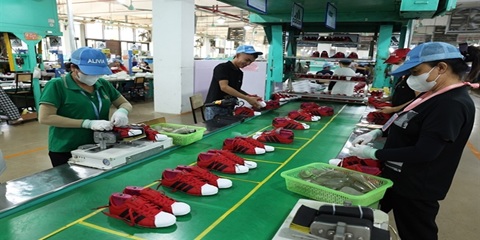
VIỆT NAM'S FOOTWEAR, BAG EXPORTS TO US TOP $8 BILLION IN EIGHT MONTHS
Việt Nam's exports of footwear and handbags to the US exceeded US$8 billion in the first eight months of 2026, as the US and EU remained the country's biggest markets despite sluggish growth in footwear shipments. Exports from Việt Nam's leather and footwear sector reached more than $2.45 billion in August, down 9 per cent from July but up 3 per cent from a year earlier, according to preliminary statistics.
Events Sponsors






















