Want to be in the loop?
subscribe to
our notification
Business News
NEW DEVELOPMENTS IN MANAGEMENT OF IMPORT-EXPORT ACTIVITIES
A draft decree detailing a number of articles of the Foreign Trade Management Law is currently being submitted to the Government of Vietnam, to replace Decree 187/2013/ND-CP. The draft decree will be applied in early 2019 with many new features that will directly affect the import and export of goods.
According to the representative of the Ministry of Industry and Trade, the draft decree stipulates a number of articles of the Foreign Trade Management Law including 8 chapters, 73 articles and 10 appendices. In particular, the main contents of the Decree include: Regulations on measures to manage export and import activities; management of temporary import for re-export, temporary export for re-import, border gate, transit; foreign trade activities (transiting, processing, buying and selling agents); and dispute resolution on the application of foreign trade management measures.
The remarkable point of the draft decree is the list of goods prohibited from export and import issued in the Decree; the ministries and ministerial-level agencies shall reach agreement with the Ministry of Industry and Trade before promulgating the detailed list and 100 per cent of the promulgated list will have HS code. The draft decree stipulates that in exceptional cases, the Prime Minister may issue a decision on allowing the import of goods specified in the List of goods prohibited for import or export, for example to serve scientific research.
For exported, imported goods under the license, the draft regulations stipulate that 100 per cent of the list issued with HS code. For dossiers, licensing procedures and draft decrees, general provisions on dossiers of permit granting and permit procedures, the licensing time limit is 10 working days, unless otherwise provided for by law. Ministries and ministerial-level agencies shall promulgate or submit to competent agencies for promulgation detailed regulations on permit dossiers; announce the agency, organization and address of the trader's dossier.
In addition, a number of exported and imported goods are under specific regulations such as goods for defence and security purposes shall comply with the Prime Minister's decisions and the regulations on export and import licensing. The draft decree has a new point, the regulation on the import of goods that directly affect defence and security but not for purposes of national defence and security. These products will be imported under license of the Ministry of Industry and Trade on the basis of the opinion of the Ministry of Defence, Ministry of Public Security.
The temporary export for re-import border gates include: main border gates, international border gates; auxiliary border gates and border crossings in border-gate economic zones; border gate, other places. For auxiliary border gates, the border opening in the border gate economic zones shall be re-exported only when the provincial People's Committees announce opening auxiliary border gates, the exit openings are eligible for re-export and the provincial People's Committees shall select authorized traders. This is a new solution to reduce the number of licensed businesses allowed to temporarily export for re-import. The selection of licensed goods merchants shall apply only to goods subject to temporary export for re-import license and conditional goods trading.
The draft decree excludes licensing for many cases of temporary export for re-import such as parts without contracts to serve replacement and repair of ships and foreign aircraft; means of transporting goods for export or import serving exhibitions and fairs; or telecommunication equipment for testing.
In addition, the draft also stipulates the temporary export for re-import cases must have the license of the Ministry of Industry and Trade, such as: Goods prohibited from export and import, goods suspended from export and import; Goods subject to export quota control, import quota, tariff quota, export and import license. The draft also stipulates cases where no license is required: temporary export for re-import goods still in warranty period for warranty, maintenance and repair purposes; temporary export for re-import goods abroad to attend trade fairs and exhibitions. Particularly for goods banned from export, they shall only be permitted to participate in overseas trade fairs and exhibitions with the approval of the Prime Minister.
In particular, the draft Decree distinguishes transit in the form of transshipment. According to the draft decree, in the case of goods subject to transit permits transported by sea from foreign countries into the transshipment area at seaports and then brought abroad from this transit area, or arriving at transshipment areas at ports or other seaports for international transfer, the transit procedures shall comply with the Finance Ministry's regulations, without permits of the Ministry of Industry and Trade.
In the field of processing goods subject to the import ban, the draft decree stipulates the competence of the Prime Minister to decide on the processing, repair and recycling of goods prohibited from import, Ministry of Industry and Trade in coordination with the Ministry of Construction will decide this. This is a new point compared with the current Decree 187/2013/ND-CP, during the transfer of circulars, the guidance of the relevant ministries will take effect until December 31, 2018.
Source: VCCI
Related News
MEMBER CORNER / PROMOTIONS
SENTRYSAFE CHW20201 - EFFECTIVE WATER RESISTANCE, MAXIMUM PROTECTION
In unexpected flooding situations, the most important thing is to keep your valuables dry and intact. SentrySafe CHW20201 is specially designed with superior water-resistant capabilities, helping protect documents, cash, and important belongings even when fully submerged. Proven in real testing: After water submersion, the documents inside remain dry - undamaged.

MEMBER CORNER / PROMOTIONS
AN ELECTRIFYING NIGHT WITH THE "QUEEN OF DANCE" THU MINH AT THE GRAND HO TRAM!
The stage at The Grand Ballroom is set to catch fire as Vietnam’s undisputed "Queen of Dance," Thu Minh, takes the spotlight. Renowned for her powerhouse vocals, magnetic stage presence, and sultry, high-energy performances, Thu Minh promises an evening of pure musical euphoria. The energy escalates with an exclusive appearance by special guest and The Voice champion, Vu Thao My.
HR / LABOUR/ EMPLOYMENT
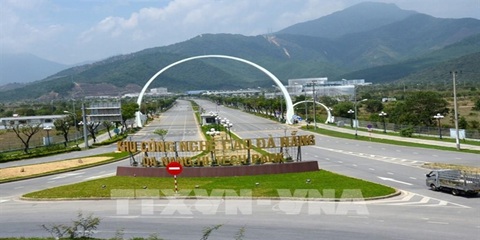
HIGH-QUALITY HUMAN RESOURCES NEEDED TO ATTRACT NEW TECH INVESTMENT CAPITAL
Besides infrastructure, Việt Nam must also rapidly develop a highly skilled workforce to attract investment in AI, semiconductors and advanced manufacturing, experts have said. Don Lam, CEO and co-founder of investment management company VinaCapital, said that global technology investors were increasingly looking at the readiness of the entire ecosystem, with high-quality human resources a decisive factor.
HR / LABOUR/ EMPLOYMENT
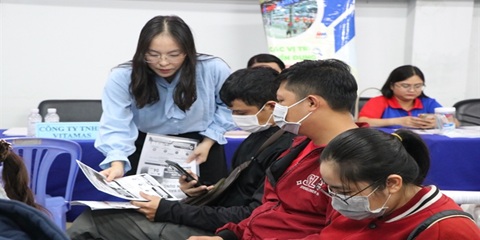
HIRING OUTLOOK STRENGTHENS IN Q4 AS SKILLS SHORTAGES PERSIST
Hiring intentions among employers in Việt Nam strengthened in the fourth quarter, with 52 per cent of surveyed companies planning to increase headcount between October and December, according to a ManpowerGroup survey released this week. Việt Nam's hiring outlook was stronger than the Asia Pacific and Middle East (APME) regional average of 33 per cent and the global average of 29 per cent, ranking third in the region and 11th globally among 42 markets surveyed.
BANKING / FINANCE / INSURANCE / TAX
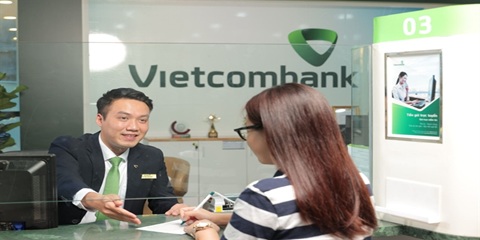
LARGE BANKS FORECAST TO GAIN HIGHER PROFITABILITY IN H2 2026
The return on average assets (ROAA) of the banking sector will likely remain stable at around 1.5 per cent in the second half of 2026, but profitability divergence among banks will increase, with large banks outperforming peers on stronger margins and diversified earnings, analysts forecast. In a recent report on the banking sector, analysts from the Vietnam Investors Service Rating said the sector’s ROAA rose by 10 basis points quarter-on-quarter to 1.51 per cent in the first half of this year, driven by net interest margin (NIM) improvements at some State-owned banks and large private banks.
GARMENT / TEXTILE
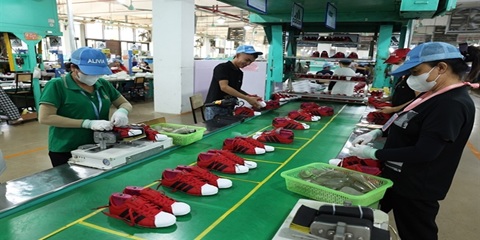
VIỆT NAM'S FOOTWEAR, BAG EXPORTS TO US TOP $8 BILLION IN EIGHT MONTHS
Việt Nam's exports of footwear and handbags to the US exceeded US$8 billion in the first eight months of 2026, as the US and EU remained the country's biggest markets despite sluggish growth in footwear shipments. Exports from Việt Nam's leather and footwear sector reached more than $2.45 billion in August, down 9 per cent from July but up 3 per cent from a year earlier, according to preliminary statistics.
Events Sponsors






















