Want to be in the loop?
subscribe to
our notification
Business News
MOST ANNOUNCES 21 KEY STRATEGIC TECHNOLOGY DEVELOPMENT PLANS
The Ministry of Science and Technology (MoST) announced a list on June 4 of 21 key strategic development plans on sci-tech, innovation, digital transformation to create opportunities for digital technology enterprises to take part in.
Decision No.1144/QD-BKHCN aims to enhance national competitiveness, boost digital transformation, innovation and develop advanced technologies. It also hopes to create a solid foundation for the country's sustainable development in the context of international integration.
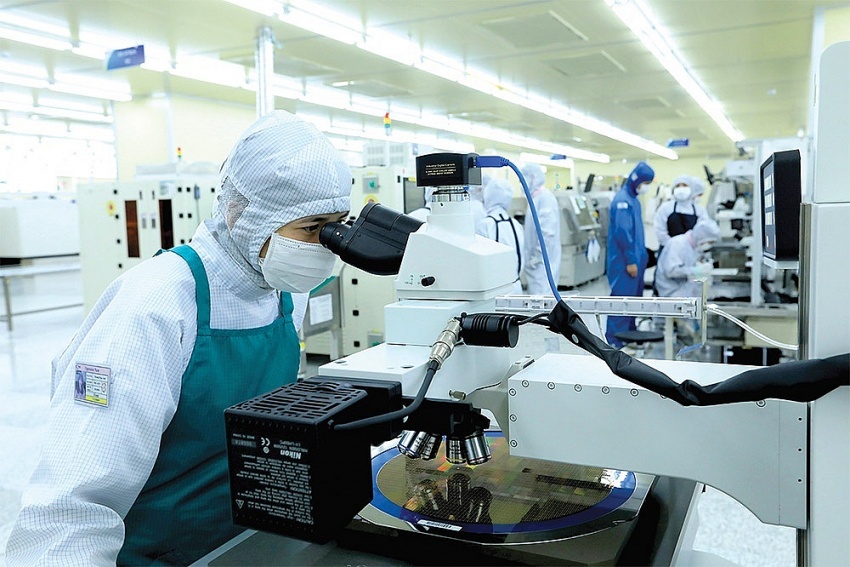
Photo: Le Toan
This is considered a key step of the ministry in its efforts to realise Resolution 57-NQ/TW of the Politburo on breakthroughs in science, technology, innovation and national digital transformation in the digital age.
The selected major issues focus on many important areas such as application of AI, Internet of Things (IoT), biotechnology and blockchain. In particular, they also include those on building a national biological data platform integrating AI, developing digital platforms and smart sensors for sustainable aquaculture, and researching and manufacturing advanced 5G equipment and 6G equipment.
The others focus on researching, manufacturing low-altitude satellites; developing Vietnamese-made AI models; building semiconductor chip manufacturing factories; building and deploying Vietnam's blockchain service network;and others.
These issues all originate from practical needs, having strategic implications for the country and with great potential for application in the future.
The decision clearly states that agencies and units under the ministry in charge of major issues actively coordinate, support Vietnamese digital technology enterprises to participate in effectively and practically.
"This is an open mechanism, demonstrating flexibility and high interaction between the state and enterprises. Enterprises are being provided with opportunities to contribute to the nation's development," according to one industry observer.
According to the MoST, science, technology, innovation and digital transformation are important driving forces helping Vietnam develop remarkably in the era of the fourth industrial revolution.
Developing strategic technology industries such as AI, biotechnology and renewable energy is not only important for Vietnam's sustainable development but also an opportunity for Vietnam to affirm its position on the global sci-tech map.
The list of 21 key strategic technology development plans
1. Building a national biological data platform integrating AI to serve research, development, and commercialisation of biotechnology products in Vietnam
2. Application of AI and IoT in animal health monitoring, disease tracing, and optimisation of livestock and veterinary chains in Vietnam
3. Developing digital platforms and smart sensors for sustainable aquaculture.
4. Building a national forest resources management and monitoring system based on digital platforms and remote sensing and AI technology.
5. Research on SNP Chip production, combining bioinformatics technology to enhance the economic value of crops, livestock and seafood through precision breeding.
6. Researching and developing AI and IoT digital platforms in long-term preservation technology for post-harvest agricultural products to stabilise the quality of agricultural products to meet export standards.
7. Research and development of biological additives and ecological concrete materials for coastal and island infrastructure projects, promoting sustainable development of marine ecosystems and contributing to the growth of the marine economy in Vietnam.
8. Developing smart equipment and systems for underground mining and strategic mineral processing, applying IoT, AI and clean technology, towards localisation and sustainable growth.
9. Building a comprehensive online management system for scientific and technological tasks funded by National Fund for sci-tech development in real time.
10. Researching and manufacturing advanced equipment, a core network ecosystem, and transmission network for 5G.
11. Researching and manufacturing 6G equipment.
12. Building a small-scale, high-tech semiconductor chip manufacturing plant for research, training, design, trial manufacturing, technology verification and production of specialised semiconductor chips in Vietnam.
13. Research and development of low-orbit satellites.
14. Building virtual assistants to support civil servants and public employees
15. Advancing domestic AI capabilities by developing homegrown models for language, image, sound, and data processing. This includes a large language model with at least 100 billion parameters, optimised for specialised domains like legal documents, finance, accounting, taxation, agriculture, and Vietnamese culture and history.
16. Developing city-scale digital twins and IoT systems featuring 3D maps of infrastructure, environment, transport, healthcare, industry and spatial data from underground to satellite levels.
17. Building an IoT connection and management platform to simulate, manage, monitor, and analyse data on maps to provide spatial management scenarios for digital transformation, green transformation, and smart cities.
18. Investing in an 80 MW cloud computing centre owned by Vietnam
19. Building and deploying a Vietnamese blockchain service network
20. Developing a 'blockchain as a service' platform to support businesses in applying blockchain to retrieve information on product and service management for production and business activities.
21. Building a system to exploit, analyse and industrial property map for national technology development and innovation
Source: VIR
Related News

CHARITY / EXHIBITION / OTHER EVENTS
INVESTMENT OPPORTUNITIES IN CA MAU PROVINCE: 96 PROJECTS AND 20 STRATEGIC PROJECTS
We are pleased to share with you information on investment projects currently seeking investors in Ca Mau Province. Should your esteemed company or association be interested, we kindly invite you to review the project information and complete the registration form via the links provided. The Ho Chi Minh City Investment and Trade Promotion Centre (ITPC) will consolidate the expressions of interest and facilitate connections with the leadership of Ca Mau Province at a meeting tentatively scheduled for 13 November 2026 in Ho Chi Minh City.
MEMBER CORNER / PROMOTIONS
BẰNG KIỀU LIVESHOW - A SYMPHONY OF LOVE UNDER THE GOLDEN GLOW
A masterclass in live music that takes the audience on a soulful journey through immortal love songs, guided by the peerless artistry and emotive storytelling of renowned singer Bằng Kiều. The highlight of the night is his seamless musical chemistry with special guest Triệu Hồng Ngọc, promising passionate and deeply resonant duets inside the magnificent Grand Ballroom.
INFRASTRUCTURE / CONSTRUCTION / LOGISTIC / PORT
ĐÀ NẴNG GREEN-LIGHTS US$105 MILLION THAI DEVELOPMENT DEAL
The central city has approved an investment proposal by Thailand’s WHA Group to develop infrastructure for the 400ha WHA Đà Nẵng Industrial Park project on two communes of Thăng Bình and Đồng Dương, with an investment of more than VNĐ2.7 trillion (US$105 million). The city said it approved WHA Industrial Development International's status as an investor in the project, which is expected to take place between 2027 and 2034.
VIETNAM ECONOMY INVESTMENT
MOBILE PHONE EXPORTS RISE 20% TO $51.8 BILLION IN FIRST NINE MONTHS
Exports of mobile phones and components rose 20 per cent year-on-year to nearly US$51.8 billion in the first nine months of 2026, with China, the US and Republic of Korea accounting for more than half of the total. Shipments to the three markets reached a combined $26.18 billion, or 50.6 per cent of total exports of the product group during the period, according to data from the Vietnam Department of Customs under the Ministry of Finance.
INFRASTRUCTURE / CONSTRUCTION / LOGISTIC / PORT
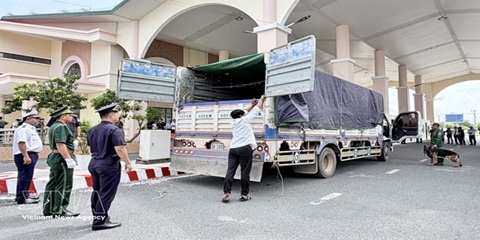
VIỆT NAM-CAMBODIA TRADE GATHERS PACE TOWARDS $20 BILLION TARGET
Trade between Việt Nam and Cambodia continues to grow, remaining a bright spot and a key pillar of bilateral cooperation as the two countries aim to raise two-way trade to US$20 billion in the coming years. After setting a record of more than $11.3 billion last year, bilateral trade reached about $8.7 billion in the first eight months of this year, up 8.3 per cent year on year.
VIETNAM ECONOMY INVESTMENT
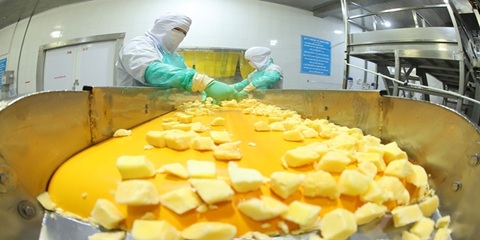
FRUIT AND VEGETABLE EXPORTS POISED TO HIT $10 BILLION IN 2026
Fruit and vegetable exports are on track to reach nearly US$10 billion in 2026, after rising 19.9 per cent year on year to nearly US$7.4 billion in the first nine months, driven by strong seasonal demand and abundant tropical fruit supplies. The Ministry of Agriculture and Environment said the growth reflected stronger international demand for fresh produce and processed agricultural products.
Events Sponsors






















