Want to be in the loop?
subscribe to
our notification
Business News
MORE CAPITAL FLOWS COME TO ECONOMIC, INDUSTRIAL PARKS IN 2021
Economic and industrial parks nationwide drew 539 foreign-invested and 615 domestic projects with a total registered capital of 12.8 billion USD last year despite COVID-19 pandemic, up 15 percent annually, reported the Ministry of Planning and Investment (MoPI).
The additional capital reached 236.2 trillion VND, equivalent to that in 2020.
The ministry’s Department of Economic Zones Department said as of late 2021, the country was home to 564 IPs under planning with a total area of 211,700ha, 398 established IPs covering 123,500ha, 292 of them have been put into operation and 108 under construction.
Among 292 IPs under operation, 265 have been equipped with concentrated wastewater treatment plants capable of processing a maximum of 1.24 million cu.m each day, or 91 percent – meeting the target assigned by the National Assembly. Occupancy rate at IPs reached 52.5 percent while that in the operational ones was nearly 71 percent.
At present, there are 18 coastal economic zones in 17 cities and provinces with a total land and water surface area of 871,500ha.
So far, IPs and economic zones have attracted 10,331 foreign and 10,288 domestic projects worth 231.6 billion USD and 2.54 quadrillion VND (11.04 billion USD), respectively. The disbursed capital reached around 69 percent and 46.5 percent of the total registered capital.
The department also reported that the Prime Minister approved the construction, expansion and adjustment of infrastructure in IPs with a total area of roughly 11,231ha last year. As many as 17 IPs in the northern provinces of Bac Giang, Vinh Phuc, Thai Binh, Hai Duong, Hung Yen and Thai Nguyen covering 4,151ha have been approved by the PM for additional planning.
Due to the pandemic, the total revenue of IPs and economic zones neared 182 billion USD last year, down 27 percent year-on-year. They earned some 132 billion USD from exports, or 59 percent of the country’s total, down 11 percent annually, and contributed approximately 121 trillion VND to the State budget, down 7.5 percent.
Deputy Minister of Planning and Investment Nguyen Thi Bich Ngoc said over the past time, the Government, ministries, agencies and localities have adopted measures to cut input costs incurred by firms in IPs while accelerating vaccination and taking flexible pandemic prevention and control measures.
A number of initiatives have been launched in IPs, hi-tech and industrial clusters, such as “three on-site”, “ one route – two destinations” to fill orders, seek the supply of materials and cut operating costs.
Former Director of the MoPI’s Foreign Investment Agency Phan Huu Thang suggested the Government issue policies to draw large-scale projects to IPs, thus forming large-scale production clusters with high connectivity between firms in IPs and economic zones, and between domestic and foreign enterprises.
In particular, further attention should be paid to ecological, industrial-urban-service, support, hi-tech agriculture IPs with synchronous infrastructure, making it easier to lure quality capital, he added.
Source: VIR
Related News

CHARITY / EXHIBITION / OTHER EVENTS
INVESTMENT OPPORTUNITIES IN CA MAU PROVINCE: 96 PROJECTS AND 20 STRATEGIC PROJECTS
We are pleased to share with you information on investment projects currently seeking investors in Ca Mau Province. Should your esteemed company or association be interested, we kindly invite you to review the project information and complete the registration form via the links provided. The Ho Chi Minh City Investment and Trade Promotion Centre (ITPC) will consolidate the expressions of interest and facilitate connections with the leadership of Ca Mau Province at a meeting tentatively scheduled for 13 November 2026 in Ho Chi Minh City.

MEMBER CORNER / PROMOTIONS
BẰNG KIỀU LIVESHOW - A SYMPHONY OF LOVE UNDER THE GOLDEN GLOW
A masterclass in live music that takes the audience on a soulful journey through immortal love songs, guided by the peerless artistry and emotive storytelling of renowned singer Bằng Kiều. The highlight of the night is his seamless musical chemistry with special guest Triệu Hồng Ngọc, promising passionate and deeply resonant duets inside the magnificent Grand Ballroom.
INFRASTRUCTURE / CONSTRUCTION / LOGISTIC / PORT
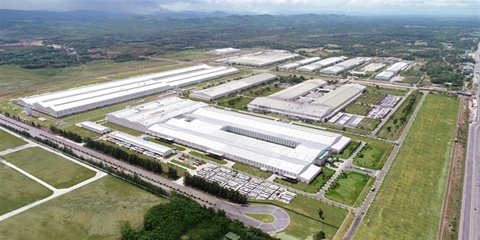
ĐÀ NẴNG GREEN-LIGHTS US$105 MILLION THAI DEVELOPMENT DEAL
The central city has approved an investment proposal by Thailand’s WHA Group to develop infrastructure for the 400ha WHA Đà Nẵng Industrial Park project on two communes of Thăng Bình and Đồng Dương, with an investment of more than VNĐ2.7 trillion (US$105 million). The city said it approved WHA Industrial Development International's status as an investor in the project, which is expected to take place between 2027 and 2034.
VIETNAM ECONOMY INVESTMENT
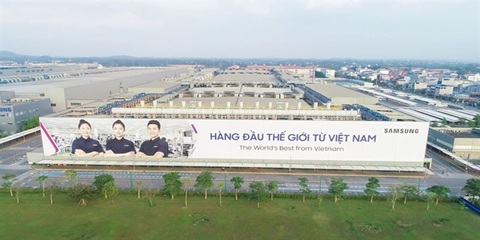
MOBILE PHONE EXPORTS RISE 20% TO $51.8 BILLION IN FIRST NINE MONTHS
Exports of mobile phones and components rose 20 per cent year-on-year to nearly US$51.8 billion in the first nine months of 2026, with China, the US and Republic of Korea accounting for more than half of the total. Shipments to the three markets reached a combined $26.18 billion, or 50.6 per cent of total exports of the product group during the period, according to data from the Vietnam Department of Customs under the Ministry of Finance.
INFRASTRUCTURE / CONSTRUCTION / LOGISTIC / PORT
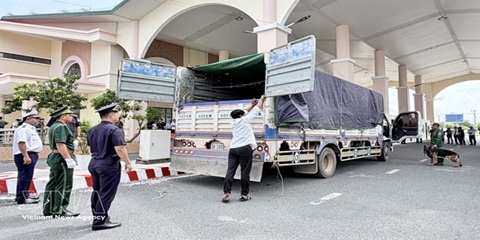
VIỆT NAM-CAMBODIA TRADE GATHERS PACE TOWARDS $20 BILLION TARGET
Trade between Việt Nam and Cambodia continues to grow, remaining a bright spot and a key pillar of bilateral cooperation as the two countries aim to raise two-way trade to US$20 billion in the coming years. After setting a record of more than $11.3 billion last year, bilateral trade reached about $8.7 billion in the first eight months of this year, up 8.3 per cent year on year.
VIETNAM ECONOMY INVESTMENT
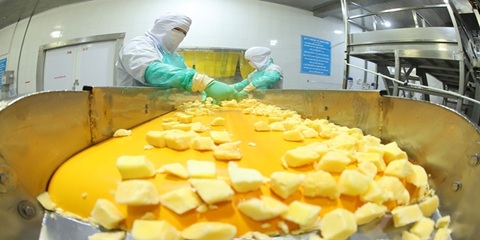
FRUIT AND VEGETABLE EXPORTS POISED TO HIT $10 BILLION IN 2026
Fruit and vegetable exports are on track to reach nearly US$10 billion in 2026, after rising 19.9 per cent year on year to nearly US$7.4 billion in the first nine months, driven by strong seasonal demand and abundant tropical fruit supplies. The Ministry of Agriculture and Environment said the growth reflected stronger international demand for fresh produce and processed agricultural products.
Events Sponsors






















