Want to be in the loop?
subscribe to
our notification
Business News
MORE BANKS ALLOWED TO HIKE REGISTERED CAPITAL
HCM City Development Joint Stock Commercial Bank (HDBank), Kien Long Commercial Joint Stock Bank (Kienlongbank) and Nam A Bank (NAB)recently obtained permission from the State Bank of Vietnam (SBV) for hiking their registered capital.
On August 8, 2022, the SBV gave a written statement on its permission for HDBank's capital increase in 2022. Accordingly, the SBV Governor allowed the lender to raise its registered capital by at most of VND5,030 billion, likely to lift its registered capital to VND25,503 billion, sourced from retained earnings, as approved by its shareholders.
HDBank will thus increase its registered capital by VND5,030 billion by issuing more than 503 million shares to pay a 25% dividend for the fiscal year of 2021 (a shareholder is entitled to receive 25 dividend shares for every 100 shares he/she holds). When the issuance plan is completed, expected in the third quarter of 2022, its share capital will rise from VND20,273 billion to VND25,303 billion. About VND3,000 billion of the added share capital is expected to be used to supplement medium and long-term loans and the rest will supplement working capital for other activities.
Previously, its 2022 General Meeting of Shareholders adopted a plan to issue 40 million ESOP shares. However, in 2021, the bank only issued 20 million shares under this program.
The share issuance is required to comply with regulations on ownership limits of shareholders and related persons by law.
Previously, on August 3, the SBV approved the share capital increase of Nam A Commercial Joint Stock Bank.
Specifically, the SBV allowed NAB to add a maximum of VND1,900 billion to its registered capital, including VND1,229.9 billion from stock dividends and VND670 billion from secondary equity offerings as per the resolution of its General Meeting of Shareholders.
The State Bank's document clearly states that Nam A Bank's capital increase must respect the law, including limits on ownership under the amended Law on Credit Institutions 2010 and instructions from the SBV. Nam A Bank is only allowed to raise its registered capital in accordance with the law.
On the same day, in Document 5360/NHNN-TTGSNH, the SBV approved the share capital increase of Kien Long Commercial Joint Stock Bank (Kienlongbank).
Accordingly, Kienlongbank will add its registered capital by a maximum of VND578.3 billion by issuing shares to pay dividends to the existing shareholders, sourced from retained earnings reported in the audited consolidated financial statements in line with the share capital increase plan ratified by the General Meeting of Shareholders. Kienlongbank was also required by the State Bank to respect the law in this aspect.
Thus, HDBank, Nam A Bank and Kienlongbank have extended the list of commercial banks approved by the central bank to hike their registered capital in the year to date, including SeABank, OCB, ACB and Techcombank.
SeABank, as approved in July, will issue 211.4 million shares (equivalent to 12.7%) to pay dividends and offer 109.7 million shares (equivalent to 6.6%) to increase the share capital from owner's equity to boost its registered capital to nearly VND19,809 billion.
Techcombank was recently allowed by the SBV to increase its registered capital by a maximum of VND63.2 billion by issuing ESOP shares.
In May, ACB was also licensed by the SBV to raise the share capital by at most VND6,754 billion from undistributed earnings.
Similarly, Viet Capital Bank (BVB) was also approved by the SBV to raise its registered capital by at most VND1,618 billion by offering shares to existing shareholders and selling ESOP shares.
OCB can boost its registered capital by a maximum of VND58.8 billion, including VND50 billion from ESOP share selling and VND8.8 billion by private share placement to Aozora Bank, a foreign bank.
Up to 20 banks will raise their registered capital after their capital raising plans were adopted by their shareholders during the AGM season 2022. If their plans are completed, VPBank will be the biggest bank by registered capital, up to VND79,334 billion. Other lenders will raise their share capital, including Vietcombank, VietinBank, MBBank, SHB, TPBank, VIB, MSB, BacA Bank, Vietbank and An Binh Bank.
This list does not include capital raising plans of Big 4 banks planned for a capital increase in 2021-2023 or zero-dong banks subject to mandatory mergers. Currently, Ocean Bank and CB Bank have found acquirers and followed a mandatory transfer without having financial statements consolidated with acquirers. These banks may need capital raising plans to enhance their competitiveness under the auspices of their parent banks. As there are zero-dong banks and banks subject to mandatory control, many experts predict that there will be next options for remainders to be put on the market sooner or later.
The rapid increase in registered capital of banks is also expected to continue, meaning that millions of new bank shares will land on the stock market. This will dilute the share prices of banks, which have fared well recently. However, this is still good news for investors in the context that stock growth in the market is not sustainable and investors are recommended to make buying and selling orders at the right time.
According to SSI Securities, capital increase plans by some banks have been successfully implemented, a supporting factor for their stock growth. This is also one of the efforts that banks are trying their best to meet conditions to have high scores according to the SBV’s criteria and enable them to expand the credit room. Recently, VNDirect Securities Company forecast that VPBank may be able to expand the credit room up to 23%, while BVSC thought that Vietcombank was planning to boost its credit room to 19%.
Source: VCCI
Related News

BANKING / FINANCE / INSURANCE / TAX
REMITTANCES TO HCM CITY RISE NEARLY 40% IN Q3
Remittances to HCM City reached more than US$2.83 billion in the third quarter of this year, up 39.5 per cent from the previous quarter and 3.6 per cent year-on-year. This was the first quarter showing positive annual growth this year, helping narrow the decline in remittance inflows over the first nine months. According to the State Bank of Vietnam (SBV)’s Regional Branch 2, remittances transferred to HCM City through credit institutions and economic organisations totalled $2.835 billion in Q3, an increase of more than $802 million from the previous quarter.

TECHNOLOGY
TECH SECTOR GROWTH OPENS UP OPPORTUNITIES FOR VIỆT NAM TO GO GLOBAL
The growth of the electronics, semiconductor and high-tech sectors worldwide is opening up a variety of opportunities for Vietnamese enterprises to integrate more deeply into the global supply chain. However, to become suppliers for these corporations, domestic enterprises must meet rigorous standards regarding quality, technology, productivity and order fulfilment capabilities.
VIETNAM ECONOMY INVESTMENT
FOREIGN INVESTORS SEEKING A SYNCHRONISED MANUFACTURING ECOSYSTEM
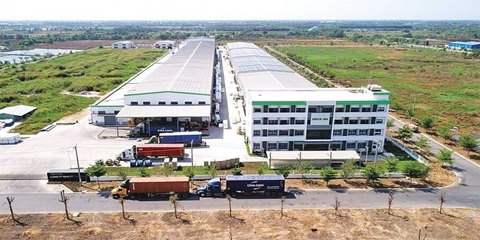
Instead of focusing only on land costs and incentives as usual, foreign investors are seeking a synchronised manufacturing ecosystem, from stable power supply and logistics to shared infrastructure and the convenience of completing residence procedures for experts to serve their long-term investment in the country.
MEMBER CORNER / PROMOTIONS
SENTRYSAFE FHW40200 – PROTECT YOUR VALUABLES, ENJOY PEACE OF MIND!
Looking for a reliable solution to protect your important documents, cash, and valuables from fire and water damage? Genuine SENTRYSAFE - Reliable protection for your valuables and peace of mind! Contact Sen Wai Vietnam for more information and personalized product recommendations.
PROPERTY / INDUSTRIAL ZONE
HCM CITY ATTRACTS US$5.7 BILLION INTO EXPORT PROCESSING AND INDUSTRIAL ZONES
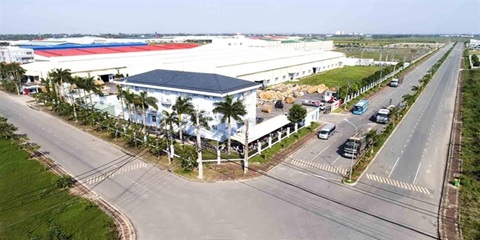
HCM City attracted US$5.7 billion in domestic and foreign investment into its export processing and industrial zones during the first nine months of 2026. The figure exceeded the city's full-year target by 31 per cent, highlighting strong momentum in high-quality industrial investment under Resolution No.10-NQ/TW. Total investment reached 131 per cent of the 2026 target of $4.25 billion and represented a 29 per cent increase compared with the same period in 2025, according to the city's Export Processing and Industrial Zones Authority (HEPZA).
INFRASTRUCTURE / CONSTRUCTION / LOGISTIC / PORT
DONG THAP PROVINCE STEPS UP INDUSTRIAL EXPANSION AND INFRASTRUCTURE CONNECTIVITY
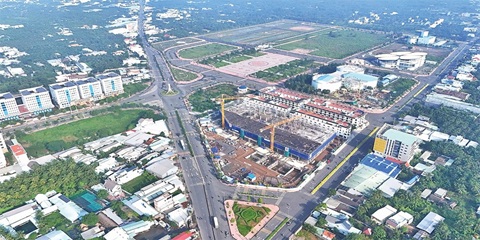
Accelerating public investment, strengthening inter-regional connectivity, and expanding industrial land are helping Dong Thap efficiently bolster competitiveness and drive economic growth. Following the 2025 merger of the former Dong Thap and Tien Giang provinces, the expanded Dong Thap province in the Mekong Delta faces mounting pressure to accelerate infrastructure development and strengthen connectivity among local economic zones, urban areas, industrial parks (IPs), and production centres.
Events Sponsors






















