Want to be in the loop?
subscribe to
our notification
Business News
MEETING DISCUSSES NEW REGULATIONS FOR REAL ESTATE BUSINESSES
Deputy Prime Minister Trần Hồng Hà chaired a meeting yesterday to discuss a draft decree guiding the implementation of the Law on Real Estate Business with leaders from ministries and 63 local governments across the country.
According to the Ministry of Natural Resources and Environment (MoNRE), new provisions will allow investors to implement construction works to prevent land erosion within their projects. The land created or reclaimed by such construction works would be given to the investors' use for a fee, without the need to go through auctions.
Local government bodies were tasked with submitting land use planning and management reports to the central government. In case no planning is required, they would have to follow an existing approved plan while ensuring sufficient land funds are dedicated to rice cultivation, protective forests, special-use forests, natural production forests, perennial crops and industrial parks.
Representatives of the Thái Bình Provincial People’s Committee and the Đồng Tháp Provincial People’s Committee said there should be policies to encourage localities to meet targets for land to cultivate rice.
In Hà Nội yesterday, Deputy Minister of Planning and Investment Nguyễn Thị Bích Ngọc said the amount of land allocated to industrial use should be based on each province's development plan and their current number of industrial parks.
Lê Hoàng Châu, Chairman of the HCM City Real Estate Association, proposed that regulations on leasing of small, narrow strips of interspersed land plots should be revised so that the state can put them up for auction after the construction phase of technical infrastructures.
The deputy PM requested lawmakers collaborate with the Ministry of Planning and Investment to study, revise, and seek opinions to standardise land allocation protocols, with priority given to major and complex projects.
Officetel and condotel
In a government meeting on Monday, also chaired by Hà, Deputy Minister of Construction Nguyễn Văn Sinh addressed issues related to real estate business investments such as transfers of land ownership to individuals and businesses, disclosure of project information and regulations for small businesses.
The deputy PM asked the government to come up with clear definitions of mixed-use buildings including officetels and condotels.
"There is a need to implement regulations for the existing officetel and condotel projects quickly," he said.
Prof. Hoàng Văn Cường, a National Assembly's deputy, said project managers must disclose project information on various platforms publicly, under the supervision of the Ministry of Construction (MoC), before they are allowed to put their products on sale.
The deputy PM requested that the MoC study and develop specific criteria for individual investors and traders.
The Ministry of Finance and the State Bank of Vietnam advised the MoC to tighten control over developers' risk and debt management activities, based on their financial performance, not just real estate projects.
Economists proposed several criteria for drafters to focus on including revenue from sales and rentals, total investments and the number of real estate transactions within one year.
They also offered views on how to make information regarding sales, leases, transfers and contracts more readily available to the public, as well as how to tighten regulations and training for real estate brokers.
Dr. Cấn Văn Lực said there was a need for the MoC to delegate the task to local governments with sufficient conditions to train and oversee brokers' activities and develop price indices and real estate inventory.
Dr Nguyễn Văn Khôi, chairman of the Vietnam Industrial Real Estate Association, suggested the government put social housing units under the new market regulations.
Meanwhile, Deputy Prime Minister Trần Hồng Hà requested the drafting agency to review existing real estate transfer procedures, based on digital platforms, without generating new procedures.
He said the new law should enhance decentralisation, digitalisation, integration and clarify the legal obligations of all involved parties. He tasked the MoC with developing a framework to organise, inspect and supervise training and issuing real estate broker licences.
Soure: VNS
Related News
PROPERTY / INDUSTRIAL ZONE
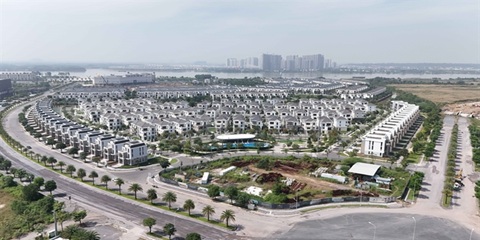
VIỆT NAM BREAKS INTO GLOBAL TOP 10 FOR REAL ESTATE TRANSPARENCY IMPROVEMENTS
Việt Nam has emerged among the world’s 10 most improved real estate markets in terms of transparency dủing the 2024-26 period, according to the 2026 Global Real Estate Transparency Index released by global real estate services firm JLL. Overall, Việt Nam ranked 50th among 88 countries and territories surveyed, with a transparency score of 3.15, remaining in the 'Semi-Transparent' category.

TECHNOLOGY
VIỆT NAM'S BUSINESSES MOVE TOWARDS AI AGENTS
Việt Nam’s AI landscape is entering a new phase as businesses move beyond generative AI (GenAI) tools designed to assist human users towards autonomous AI, agentic AI and AI agents that can take action with limited supervision, experts have said. The shift comes as Việt Nam seeks to accelerate science and technology, innovation and digital transformation under Politburo Resolution 57-NQ/TW, issued on December 22, 2024.
GARMENT / TEXTILE
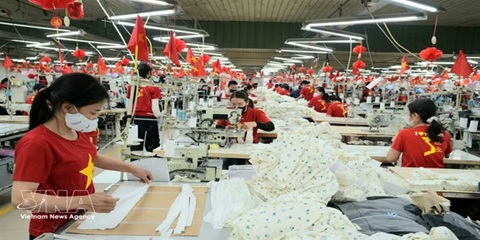
VIỆT NAM TARGETS $48 BILLION IN TEXTILE-GARMENT EXPORTS
Việt Nam’s textile and garment industry is facing both opportunities and challenges amid complex and unpredictable developments in the global market, prompting businesses to improve growth quality, optimise production costs and enhance adaptability in pursuit of an export turnover of about $48 billion this year. The target is considered an important milestone that requires concerted efforts from management agencies and the business community.

VIETNAM ECONOMY INVESTMENT
VIETNAM’S TRADE TOPS $825 BILLION BY MID-SEPTEMBER
Figures released on September 21 showed goods trade reached nearly $55 billion in the first 15 days of September alone, bringing cumulative turnover since the beginning of the year to more than $825 billion. The strong growth reflects robust trade flows, with demand for consumer goods and production inputs remaining high.
VIETNAM ECONOMY INVESTMENT
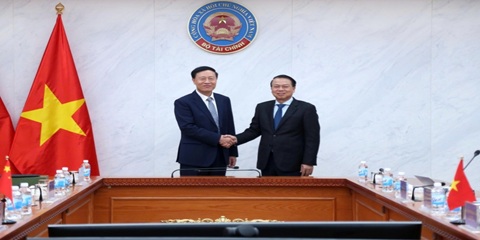
VIETNAM AND CHINA DISCUSS POLICIES TO SUPPORT PRIVATE-SECTOR GROWTH
On September 21, at the Ministry of Finance headquarters in Hanoi, Deputy Minister Nguyen Duc Chi held talks with a delegation from the Central Social Work Department of the Communist Party of China Central Committee, led by Zhao Shitang, Deputy Minister of the department. Deputy Minister Chi warmly welcomed the delegation and highlighted the significance of the visit in learning about Vietnam’s management of the non-state business sector, particularly the registration, management, and operation of private enterprises.
INFRASTRUCTURE / CONSTRUCTION / LOGISTIC / PORT
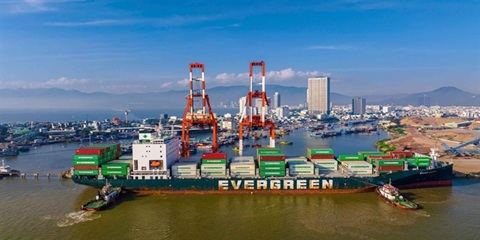
CUTTING LOGISTICS COSTS KEY TO BOOSTING EXPORTS
Reducing costs has become an increasingly urgent priority for import-export activities, particularly logistics costs, a conference in Hà Nội was told on Tuesday. According to Deputy General Director of the Ministry of Industry and Trade's Agency for Foreign Trade, Trần Thanh Hải, import-export activities has remained a bright spot for the economy in recent years, playing an important role and helping drive macroeconomic growth.
Events Sponsors






















