Want to be in the loop?
subscribe to
our notification
Business News
LOGISTICS FDI RISES IN THE FACE OF RETAIL EXPANSION
Vietnam’s appeal as a destination for foreign logistics providers is rising on the back of its expanding retail market. Several foreign players are entering the market this year, mostly in co-operation with major retailers they already work with in other markets, according to Julien Brun, managing partner of CEL Consulting.
For example, major French retailer AuChan, already very successful in the EU, Russia, and China, brought in FM logistics, a French third-party logistics firm that serves the company globally.
According to CEL Consulting, the wave of investment and expansion in the logistics business in Vietnam has just started. Customers are becoming more mature and demanding as the retail market grows, and competition is changing from being price-driven to more solutions-driven – with the advantage going to firms that can offer more integrated services. Legislation is slated to favour foreign direct investment (FDI) in logistics, and the volume of business has started to become more interesting to major players, which justifies investment in transport or construction.
In light of this trend, foreign logistics firms have strengthened their presence to capitalise on the growing demand and to serve local customers better. UPS has recently enhanced its services in 10 provinces across central and southern Vietnam, extending its service enhancement programme to 19 cities and provinces this year.
Daryl Tay, managing director of UPS Vietnam, said that UPS already covers all of Vietnam and is able to pick up and deliver shipments to every address in the country. UPS works directly in 95 per cent of cities and provinces, with the remaining 5 per cent covered by partnered agents.
According to Tay, the 19 cities and provinces in which UPS announced service enhancements this year are the locations that see high demand, such as Ba Ria-Vung Tau, Binh Duong, Dong Nai, Quang Ngai, and the surrounding areas of Vietnam’s two biggest cities, Hanoi and Ho Chi Minh City.
With new service enhancements, UPS has reduced transit times for export and import shipments moving within Asia from two days to one, and improved shipment times from Europe from three days to two, he went on to say.
In addition, the cut-off times for pick-up have been extended by up to three hours. This service enhancement is part of UPS’ long-term strategy to provide local small and medium-sized businesses with greater access to global trade.
“The Vietnamese government has expressed a commitment to pursue the 6.7 per cent GDP growth target. Positive discussions are taking place around easing inter- and intra-regional trade with the Regional Comprehensive Economic Partnership (RCEP) and the European Union-Vietnam Free Trade Agreement (EVFTA). We remain confident that trade will continue to flourish with Vietnam’s growing middle class and shifts in manufacturing,” Tay added.
Meanwhile, FedEx Trade Network has launched its first wholly-owned freight forwarding office in Ho Chi Minh City. Udo Lange, the firm’s executive vice president and COO, said that freight forwarding is on the rise in Vietnam, expected to grow to a $1.4 billion business by 2019. “This projected growth provides tremendous opportunity for FedEx Trade Networks and our customers seeking to conduct business in Vietnam,” he said.
CJ Logistics has recently announced its acquisition of two shipping and logistics subsidiaries under Gemadept Corp. The logistics arm of CJ Group said in a regulatory filing that it has bought a 50.9 percent stake each in Gemadept Logistics Holding and Gemadept Shipping Holding.
Meanwhile, Thailand’s JWD Infologistics Pcl is looking to enter Vietnam by acquiring a majority stake in a local freight forwarding company early next year. The move is part of its plans to expand in the region, to capitalise on growing demand and to stimulate growth.
Source: VIR
Related News
MEMBER CORNER / PROMOTIONS
SENTRYSAFE CHW20201 - EFFECTIVE WATER RESISTANCE, MAXIMUM PROTECTION
In unexpected flooding situations, the most important thing is to keep your valuables dry and intact. SentrySafe CHW20201 is specially designed with superior water-resistant capabilities, helping protect documents, cash, and important belongings even when fully submerged. Proven in real testing: After water submersion, the documents inside remain dry - undamaged.

MEMBER CORNER / PROMOTIONS
AN ELECTRIFYING NIGHT WITH THE "QUEEN OF DANCE" THU MINH AT THE GRAND HO TRAM!
The stage at The Grand Ballroom is set to catch fire as Vietnam’s undisputed "Queen of Dance," Thu Minh, takes the spotlight. Renowned for her powerhouse vocals, magnetic stage presence, and sultry, high-energy performances, Thu Minh promises an evening of pure musical euphoria. The energy escalates with an exclusive appearance by special guest and The Voice champion, Vu Thao My.

HR / LABOUR/ EMPLOYMENT
HIGH-QUALITY HUMAN RESOURCES NEEDED TO ATTRACT NEW TECH INVESTMENT CAPITAL
Besides infrastructure, Việt Nam must also rapidly develop a highly skilled workforce to attract investment in AI, semiconductors and advanced manufacturing, experts have said. Don Lam, CEO and co-founder of investment management company VinaCapital, said that global technology investors were increasingly looking at the readiness of the entire ecosystem, with high-quality human resources a decisive factor.

HR / LABOUR/ EMPLOYMENT
HIRING OUTLOOK STRENGTHENS IN Q4 AS SKILLS SHORTAGES PERSIST
Hiring intentions among employers in Việt Nam strengthened in the fourth quarter, with 52 per cent of surveyed companies planning to increase headcount between October and December, according to a ManpowerGroup survey released this week. Việt Nam's hiring outlook was stronger than the Asia Pacific and Middle East (APME) regional average of 33 per cent and the global average of 29 per cent, ranking third in the region and 11th globally among 42 markets surveyed.
BANKING / FINANCE / INSURANCE / TAX
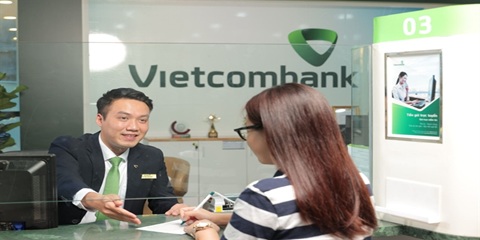
LARGE BANKS FORECAST TO GAIN HIGHER PROFITABILITY IN H2 2026
The return on average assets (ROAA) of the banking sector will likely remain stable at around 1.5 per cent in the second half of 2026, but profitability divergence among banks will increase, with large banks outperforming peers on stronger margins and diversified earnings, analysts forecast. In a recent report on the banking sector, analysts from the Vietnam Investors Service Rating said the sector’s ROAA rose by 10 basis points quarter-on-quarter to 1.51 per cent in the first half of this year, driven by net interest margin (NIM) improvements at some State-owned banks and large private banks.
GARMENT / TEXTILE
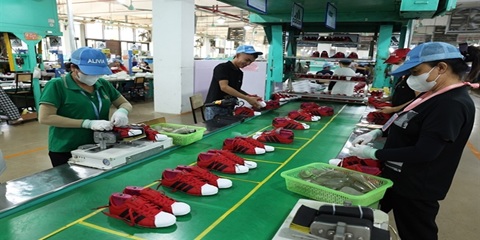
VIỆT NAM'S FOOTWEAR, BAG EXPORTS TO US TOP $8 BILLION IN EIGHT MONTHS
Việt Nam's exports of footwear and handbags to the US exceeded US$8 billion in the first eight months of 2026, as the US and EU remained the country's biggest markets despite sluggish growth in footwear shipments. Exports from Việt Nam's leather and footwear sector reached more than $2.45 billion in August, down 9 per cent from July but up 3 per cent from a year earlier, according to preliminary statistics.
Events Sponsors






















