Want to be in the loop?
subscribe to
our notification
Business News
LOCAL REAL ESTATE SECTOR ALLURES FOREIGN INVESTORS
Notable projects include Samsung’s $300 million 21-storey building in Hanoi, a $300 real estate complex project in Hanoi of TNR Holdings and a Russian partner, and Singapore-backed SynGience’s $18 million investment in DepotMetro Tower – Tham Luong.
According to Marc Townsend, managing director of CBRE Vietnam, the FDI flow into real estate has mostly been on the essential demand of accommodation such as housing and apartments, instead of hospitalities, golf courses and retail as previously.
Especially, Vietnam’s real estate sector is attracting interest from Japan and a range of projects are being developed through the co-operation between Vietnamese and Japanese investors in mid-end housing development instead of high-end and luxury segments.
Foreign investment flow has also been seen through a range of merger & acquisition cases. In many cases, the seller of one had become the buyer of another. “This means that the M&A activity was asset transactions for benefit, but not showing the evidence of less attractive real estate to foreign investors,” Marc commented.
CBRE also cited that international developers are becoming much more careful before deciding to pour their investment into Vietnam’s real estate market.
Sigrid Zialcita, executive director of the research division at Cushman & Wakefield in Asia Pacific said that Circular 06/2016/TT-NHNN dated May 27, 2016, which tightens the use of short-term capital sources for medium and long term lending, would bring more foreign investment into this sector.
“With a higher risk weightage attached to real estate loans, one way around it is to raise a company’s equity base. The need for capital injections is an opportunity for foreign investments to gain exposure to Vietnam,” Zialcita said in her recent visit to Vietnam.
“The recent relaxation of the 49 per cent cap in Vietnamese public companies will also be conducive to an increased level of foreign capital into the country. But this means that companies will have to be more transparent as generally, some due diligence would be required,” she cited.
Zialcita took the example of two real estate developers that have so far decided to extend foreign ownership to 60 per cent. One of them, Hoang Quan Consulting, Trading and Real Estate Services, had seen strong interest from investors in Asia, and wanted to become more transparent. Meanwhile Thu Duc Housing Development Corp., will divest from non-core businesses such as cargo handling because the legal foreign ownership limit for these sectors remain around 50 per cent.
According to Zialcita, in order to attract more FDI, Vietnam’s property market needs more transparency, a better legal framework which will result in a more liquid market and thus, more efficient prices which better reflect value. Real estate developments also need to be better aligned to overall economic objectives as well as urban planning guidelines.
In a study carried out by Financial Times data division FDI Intelligence, Vietnam ranks among the top in terms of greenfield FDI into Asia.
Its demographic profile, rapid urbanisation, growing middle class, rising incomes, status as a manufacturing hub, infrastructure developments and stable political climate are attractive fundamentals.
The potential upside, from a higher level of economic integration, is also compelling.
Source: VIR
Related News
MEMBER CORNER / PROMOTIONS
KNIC EXCLUSIVE GATHERING & NETWORKING 2026: A NEW MEETING POINT FOR INDUSTRIAL INVESTMENT IN HANOI
On October 2, 2026, KN Industrial City (KNIC) will host KNIC Exclusive Gathering & Networking 2026 at the National Innovation Center (NIC) in Hanoi. Building on a series of business networking and investment promotion activities in Ho Chi Minh City and Dong Nai, the event marks a new opportunity for KNIC to connect with businesses, investors, and partners in Northern Vietnam.
MEMBER CORNER / PROMOTIONS
KNIC ENGAGES WITH GOVERNMENT AND HIGH-TECH BUSINESS COMMUNITIES IN CHINA
From Beijing to Shandong, KN Holdings and KN Industrial City are continuing to expand their engagement with government authorities, trade promotion organizations, and high-tech business communities in China. In Beijing, the delegation met with the Center for International Economic and Technological Cooperation under the Ministry of Industry and Information Technology (MIIT), exchanging perspectives on industrial and technology cooperation between the two markets.

VIETNAM ECONOMY INVESTMENT
VIETNAM’S TRADE TOPS $825 BILLION BY MID-SEPTEMBER
Figures released on September 21 showed goods trade reached nearly $55 billion in the first 15 days of September alone, bringing cumulative turnover since the beginning of the year to more than $825 billion. The strong growth reflects robust trade flows, with demand for consumer goods and production inputs remaining high.

TECHNOLOGY
VIỆT NAM'S BUSINESSES MOVE TOWARDS AI AGENTS
Việt Nam’s AI landscape is entering a new phase as businesses move beyond generative AI (GenAI) tools designed to assist human users towards autonomous AI, agentic AI and AI agents that can take action with limited supervision, experts have said. The shift comes as Việt Nam seeks to accelerate science and technology, innovation and digital transformation under Politburo Resolution 57-NQ/TW, issued on December 22, 2024.
GARMENT / TEXTILE
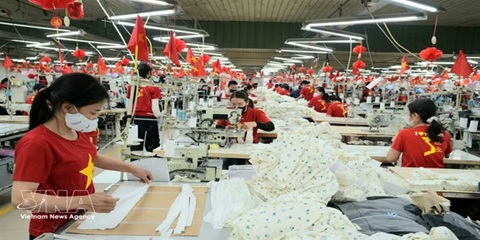
VIỆT NAM TARGETS $48 BILLION IN TEXTILE-GARMENT EXPORTS
Việt Nam’s textile and garment industry is facing both opportunities and challenges amid complex and unpredictable developments in the global market, prompting businesses to improve growth quality, optimise production costs and enhance adaptability in pursuit of an export turnover of about $48 billion this year. The target is considered an important milestone that requires concerted efforts from management agencies and the business community.
INFRASTRUCTURE / CONSTRUCTION / LOGISTIC / PORT
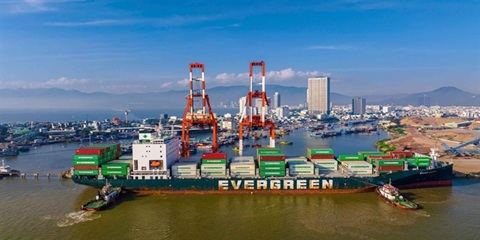
CUTTING LOGISTICS COSTS KEY TO BOOSTING EXPORTS
Reducing costs has become an increasingly urgent priority for import-export activities, particularly logistics costs, a conference in Hà Nội was told on Tuesday. According to Deputy General Director of the Ministry of Industry and Trade's Agency for Foreign Trade, Trần Thanh Hải, import-export activities has remained a bright spot for the economy in recent years, playing an important role and helping drive macroeconomic growth.
Events Sponsors






















