Want to be in the loop?
subscribe to
our notification
Business News
LAND LAW UPDATES OFFER GRAND REAL ESTATE FOUNDATION
The National Assembly has approved the revised Land Law, which will come into full effect next year.
At an extraordinary session in Hanoi on January 18, the 16 chapters and 260 articles of the law were given the green light. According to Vu Hong Thanh, Chairman of the National Assembly’s Economic Committee, the law has been prepared thoroughly by authorities at various levels.
Among the revised issues, the agencies completed provisions on the rights and obligations regarding land use of Vietnamese individuals residing abroad, and the transfer of real estate projects of an economic organisation with foreign investment capital.
Specifically, the new law stipulates that Vietnamese residing abroad who have Vietnamese citizenship will have full rights related to land (not only rights to residential land), the same as Vietnamese individuals, and the current regulations are kept unchanged for those of Vietnamese origin living abroad. This will contribute to promoting investment and attracting remittances from Vietnamese citizens residing abroad, it is believed.
“The provisions in the Land Law have been reviewed to ensure consistency with the Law on Nationality. If a person of Vietnamese origin conducts real estate business activities or is an investor implementing a housing project, the determination of the entity with the right to implement it shall be in accordance with the provisions of the Law on Real Estate Business and the Housing Law,” Thanh said.
Accordingly, the new Land Law retains the provisions of the 2013 Land Law on economic organisations with foreign investment and Vietnamese individuals residing abroad are allowed to receive land use rights transfer in industrial parks, clusters, and high-tech zones. Other foreign capital related organisations can access land through the form of land allocation or land leased by the state.
“The Land Law has provisions in the case of land recovery for projects that have been approved, and decided on investment policies according to the provisions of law,” Thanh said. “With these revisions, the obstacles in foreign-invested economic organisations implementing ventures with land that have been approved by competent authorities and decided on investment policies have been resolved.”
Another issue that foreign investors have been concerned about is economic organisations with foreign investment capital receiving transfer of real estate schemes according to the provisions of the real estate business law.
According to Thanh, to improve land administrative procedures when economic organisations transfer real estate projects according to the Law on Real Estate Business 2023 and ensure financial obligations regarding land inherited for economic organisations, the new Land Law regulates that the government will not repossess land but allocate it with a fee, without bidding.
According to the provisions of Article 79 of the newly passed Land Law, the state can repossess land in 32 necessary cases to implement socioeconomic development initiatives for national and public interests. This is to promote land resources, improve land use efficiency, develop modern socioeconomic infrastructure, implement social security policies, protect the environment, and preserve cultural heritage.
Cases where the state can reposes land are for construction of traffic works, irrigation, water supply, waste treatment, energy, public lighting, oil and gas, postal and telecommunications infrastructure, a range of entertainment or political facilities, and more besides.
The new Land Law stipulates four land valuation methods: comparison, income, residual, and land price coefficients. It clearly stipulates that land pricing must ensure market principles, compliant with correct methodology, order and procedures, honesty, objectivity, openness, transparency, and harmonise the interests between the state, land users. and investors.
The law also stipulates that the People’s Committee develops and submits to the People’s Council at the same level to decide on the first land price list to announce and apply from 2026. After that, every year, the provincial People’s Committee is responsible for submitting to the People’s Council for decision on adjusting, amending, and supplementing the land price list to announce and apply from January 1 of the following year.
The new Land Law will be effective from January 1, 2025, except for articles 190 and 248, which will be implemented from April 1 this year.
Source: VIR
Related News

CHARITY / EXHIBITION / OTHER EVENTS
INVESTMENT OPPORTUNITIES IN CA MAU PROVINCE: 96 PROJECTS AND 20 STRATEGIC PROJECTS
We are pleased to share with you information on investment projects currently seeking investors in Ca Mau Province. Should your esteemed company or association be interested, we kindly invite you to review the project information and complete the registration form via the links provided. The Ho Chi Minh City Investment and Trade Promotion Centre (ITPC) will consolidate the expressions of interest and facilitate connections with the leadership of Ca Mau Province at a meeting tentatively scheduled for 13 November 2026 in Ho Chi Minh City.

MEMBER CORNER / PROMOTIONS
BẰNG KIỀU LIVESHOW - A SYMPHONY OF LOVE UNDER THE GOLDEN GLOW
A masterclass in live music that takes the audience on a soulful journey through immortal love songs, guided by the peerless artistry and emotive storytelling of renowned singer Bằng Kiều. The highlight of the night is his seamless musical chemistry with special guest Triệu Hồng Ngọc, promising passionate and deeply resonant duets inside the magnificent Grand Ballroom.
INFRASTRUCTURE / CONSTRUCTION / LOGISTIC / PORT
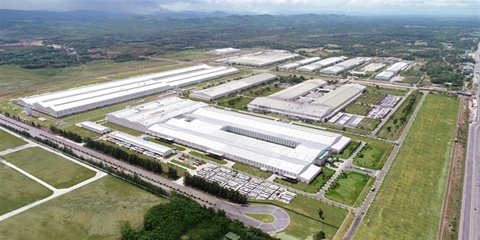
ĐÀ NẴNG GREEN-LIGHTS US$105 MILLION THAI DEVELOPMENT DEAL
The central city has approved an investment proposal by Thailand’s WHA Group to develop infrastructure for the 400ha WHA Đà Nẵng Industrial Park project on two communes of Thăng Bình and Đồng Dương, with an investment of more than VNĐ2.7 trillion (US$105 million). The city said it approved WHA Industrial Development International's status as an investor in the project, which is expected to take place between 2027 and 2034.
VIETNAM ECONOMY INVESTMENT
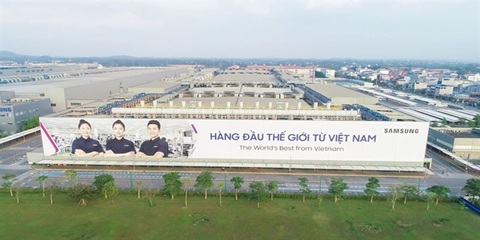
MOBILE PHONE EXPORTS RISE 20% TO $51.8 BILLION IN FIRST NINE MONTHS
Exports of mobile phones and components rose 20 per cent year-on-year to nearly US$51.8 billion in the first nine months of 2026, with China, the US and Republic of Korea accounting for more than half of the total. Shipments to the three markets reached a combined $26.18 billion, or 50.6 per cent of total exports of the product group during the period, according to data from the Vietnam Department of Customs under the Ministry of Finance.
INFRASTRUCTURE / CONSTRUCTION / LOGISTIC / PORT
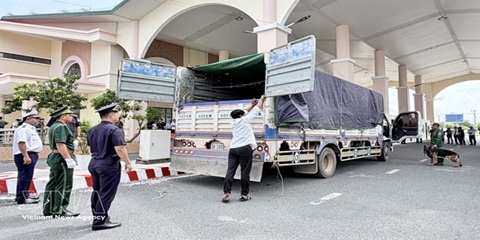
VIỆT NAM-CAMBODIA TRADE GATHERS PACE TOWARDS $20 BILLION TARGET
Trade between Việt Nam and Cambodia continues to grow, remaining a bright spot and a key pillar of bilateral cooperation as the two countries aim to raise two-way trade to US$20 billion in the coming years. After setting a record of more than $11.3 billion last year, bilateral trade reached about $8.7 billion in the first eight months of this year, up 8.3 per cent year on year.
VIETNAM ECONOMY INVESTMENT
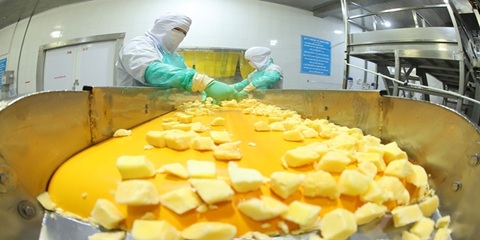
FRUIT AND VEGETABLE EXPORTS POISED TO HIT $10 BILLION IN 2026
Fruit and vegetable exports are on track to reach nearly US$10 billion in 2026, after rising 19.9 per cent year on year to nearly US$7.4 billion in the first nine months, driven by strong seasonal demand and abundant tropical fruit supplies. The Ministry of Agriculture and Environment said the growth reflected stronger international demand for fresh produce and processed agricultural products.
Events Sponsors






















