Want to be in the loop?
subscribe to
our notification
Business News
JUMP IN INFRASTRUCTURE SPENDING OFFERS BRIGHT PROSPECTS FOR CONTRACTORS
The transport infrastructure boom is unlocking strong growth prospects for major construction contractors as massive public investment fuels long-term demand.
According to the government's public investment plan, Vietnam aims to have in place 3,000 km of expressways this year, and an additional 2,000 km by 2030.
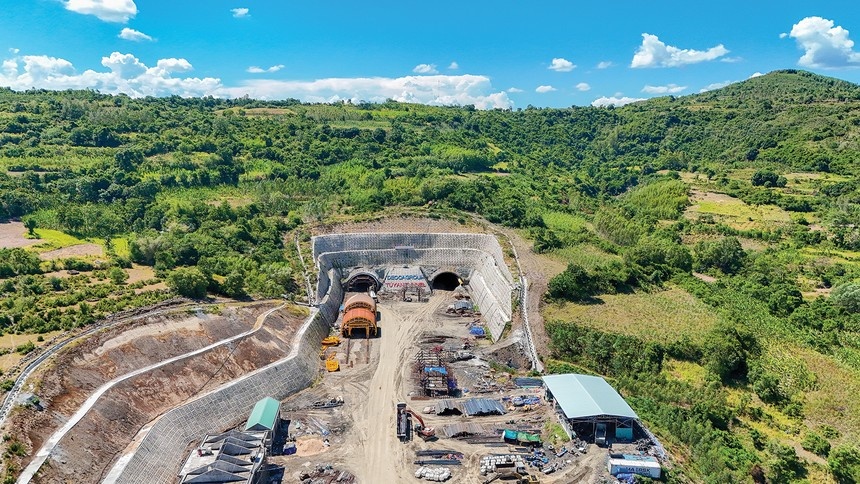
Infrastructure contractors have huge workloads amid an accelerated public investment drive
In the railway sector, Hanoi has planned 10 metro lines with a combined length of 417.8 km, two of which, Nam Thang Long-Tran Hung Dao and Van Cao-Hoa Lac, are scheduled to begin construction in 2025.
Ho Chi Minh City is planning 10 urban rail lines spanning over 510 km, with a total projected investment of $77.2 billion.
Preparations will be finalized from 2025-2027, and by 2035, seven metro lines totaling 355 km are expected to be completed.
The landmark North-South high-speed railway will commence a consideration study this year, targeting completion by 2035. In addition, three railway lines connecting Vietnam with China are also set to launch this year.
Talking to VIR , Nguyen Quang Huy, CEO of Deo Ca Group, a major construction contractor in central Vietnam, noted that the upcoming wave of projects will generate massive workloads, requiring contractors with proven experience, strong financial capacity, technical expertise, and a capable workforce.
Currently, Deo Ca Group is involved in a pipeline of projects with a total investment value reaching $4 billion. Its strength lies in its unique position as both builder and operator of expressways and tunnels, which puts the company in a prime position as more projects move into the operational phase.
Huy revealed that Deo Ca's infrastructure investment segment is expected to grow 10-15 per cent annually.
Diverse infrastructure contractors are reporting backlogs, which significantly exceed their 2024 construction revenues, ensuring they ample work for 2025 and beyond.
For Deo Ca, the total value of signed contracts stands at $1.6 billion, with $1.36 billion worth of work still pending.
Given the company's 2024 revenue of $375 million, the backlog is expected to sustain operations through 2028.
Likewise, major contractor Vietnam Construction and Import-Export Corporation (Vinaconex) reported a backlog of $852 million, which is 3.2 times its 2024 construction revenue.
Southern contractor Lizen Corporation posted a backlog of $200 million, nearly twice its previous year's figure.
Northern contractor Cienco 4 reported a backlog reaching $168 million, 1.5 times higher than in 2024, while Fecon, a giant in foundation engineering and underground construction, recorded a backlog of $152 million, up 1.3 times.
According to Lizen CEO Cao Ngoc Phuong, the company's 2025 profit target of $5.6 million is based on mobilising resources to complete several key infrastructure projects signed in 2024 and carried over into 2025.
These include the Bien Hoa–Vung Tau and Huu Nghi–Chi Lang expressways in the southern region, and Ring Road 4 and the Tan Phuc–Vong Phan motorway section in the northern province of Hung Yen.
Lizen is also proactively seizing opportunities from the government's public investment wave by aggressively bidding on newly approved expressway projects in 2025, aimed at establishing a strong foundation for its revenue and profit plans.
Meanwhile, Vinaconex states that newly signed contracts secured in 2024 will ensure a stable workload for the company through 2025 and the following years.
The company has won several major civil and infrastructure construction contracts, including packages under the North–South Expressway, ring roads 3 and 5 in Hanoi, Hoa Binh–Moc Chau Expressway, Long Thanh International Airport, and the expansion of Terminal 2 at Noi Bai International Airport.
A common strength among infrastructure contractors is their diversified portfolios, particularly in industrial and residential real estate, which often deliver extraordinary profits.
In Vinaconex's case, real estate projects have been particularly effective in supplementing construction income. The company is planning to divest from the Cat Ba Amatina urban-tourism project in the northern city of Haiphong, expected to generate $204 million in revenue and $84 million in profit.
For its part, Cienco 4 Group plans to continue investing in key components of the Cau Cau mixed-use tourism and resort complex in the north-central province of Nghe An, with a total investment of $68 million, as well as engaging in real estate developments in Nghe An, Hanoi, and Ho Chi Minh City.
According to MB Securities, while export growth is expected to slow in the second half of the year due to new tariff policies, public investment is anticipated to be a key growth driver for both 2025 and the years ahead.
In June, the government issued 28 new decrees on decentralisation and delegation of power across local two-tier governments. This legal framework empowers relevant authorities to take more proactive roles in implementing public investment, particularly in newly merged administrative areas.
As reported by the Ministry of Finance, as of the end of June, total public investment disbursement this year had surpassed $10.72 billion, equivalent to nearly 30 per cent of the annual target and 32 per cent of the target assigned by the PM.
With public investment identified as a key engine of economic growth, the PM has involved all ministries, sectors, and localities to accelerate efforts to fully disburse the 2025 public investment budget, aiming for roughly $25.2 billion in the second half of the year.
Source: VIR
Related News

MEMBER CORNER / PROMOTIONS
AN ELECTRIFYING NIGHT WITH THE "QUEEN OF DANCE" THU MINH AT THE GRAND HO TRAM!
The stage at The Grand Ballroom is set to catch fire as Vietnam’s undisputed "Queen of Dance," Thu Minh, takes the spotlight. Renowned for her powerhouse vocals, magnetic stage presence, and sultry, high-energy performances, Thu Minh promises an evening of pure musical euphoria. The energy escalates with an exclusive appearance by special guest and The Voice champion, Vu Thao My.
HR / LABOUR/ EMPLOYMENT
HIGH-QUALITY HUMAN RESOURCES NEEDED TO ATTRACT NEW TECH INVESTMENT CAPITAL
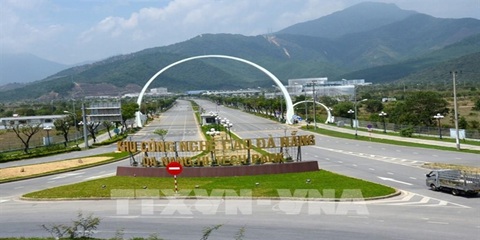
Besides infrastructure, Việt Nam must also rapidly develop a highly skilled workforce to attract investment in AI, semiconductors and advanced manufacturing, experts have said. Don Lam, CEO and co-founder of investment management company VinaCapital, said that global technology investors were increasingly looking at the readiness of the entire ecosystem, with high-quality human resources a decisive factor.

HR / LABOUR/ EMPLOYMENT
HIRING OUTLOOK STRENGTHENS IN Q4 AS SKILLS SHORTAGES PERSIST
Hiring intentions among employers in Việt Nam strengthened in the fourth quarter, with 52 per cent of surveyed companies planning to increase headcount between October and December, according to a ManpowerGroup survey released this week. Việt Nam's hiring outlook was stronger than the Asia Pacific and Middle East (APME) regional average of 33 per cent and the global average of 29 per cent, ranking third in the region and 11th globally among 42 markets surveyed.

BANKING / FINANCE / INSURANCE / TAX
LARGE BANKS FORECAST TO GAIN HIGHER PROFITABILITY IN H2 2026
The return on average assets (ROAA) of the banking sector will likely remain stable at around 1.5 per cent in the second half of 2026, but profitability divergence among banks will increase, with large banks outperforming peers on stronger margins and diversified earnings, analysts forecast. In a recent report on the banking sector, analysts from the Vietnam Investors Service Rating said the sector’s ROAA rose by 10 basis points quarter-on-quarter to 1.51 per cent in the first half of this year, driven by net interest margin (NIM) improvements at some State-owned banks and large private banks.
GARMENT / TEXTILE
VIỆT NAM'S FOOTWEAR, BAG EXPORTS TO US TOP $8 BILLION IN EIGHT MONTHS
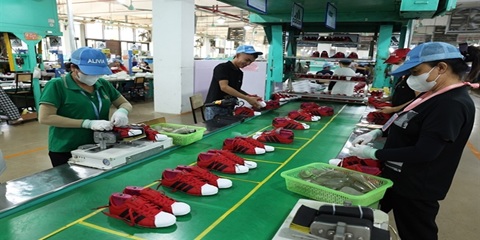
Việt Nam's exports of footwear and handbags to the US exceeded US$8 billion in the first eight months of 2026, as the US and EU remained the country's biggest markets despite sluggish growth in footwear shipments. Exports from Việt Nam's leather and footwear sector reached more than $2.45 billion in August, down 9 per cent from July but up 3 per cent from a year earlier, according to preliminary statistics.
VIETNAM ECONOMY INVESTMENT
LÂM ĐỒNG TARGETS DIGITAL ECONOMY TO ACCOUNT FOR 30 PER CENT OF GRDP BY 2030
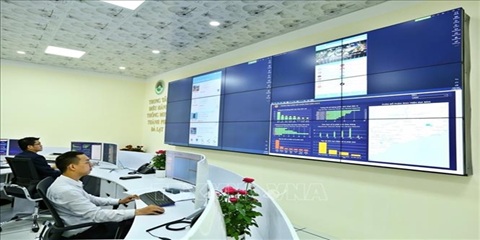
Lâm Đồng Province aims to raise the digital economy’s contribution to around 30 per cent of its gross regional domestic product (GRDP) by 2030, as part of a five-year plan to develop digital economy and society issued recently. Under Plan No. 15358/KH-UBND, the province targets more than 60 per cent of small- and medium-sized enterprises (SMEs) to adopt digital technologies by 2030 while increasing the value of cashless payments to 30 times its GRDP.
Events Sponsors






















