Want to be in the loop?
subscribe to
our notification
Business News
INTER-PROVINCIAL HIGHWAYS CREATE LEVERS FOR LOCALITIES
Interprovincial highway projects will help engage more foreign capital following the merger of localities in Vietnam.
In late March, Lam Dong People’s Committee approved construction of the Bao Loc-Lien Khuong Expressway project under a public-private partnership model.
The scheme has a total funding of $780 million, with state budget funding accounting for 44 per cent of the total in Phase 1. The remaining $400 million will be mobilised by the investor.
The committee has decided to select the investor through a domestic open bidding process. The investor proposing the initiative will be entitled to incentives following current regulations. The selection process is expected to take place this year.
“This is one of three sections of Dau Giay-Lien Khuong Expressway. The project will not only enhance connectivity with the national transportation system but also reduce travel time between the Central Highlands and the southern key economic region, as well as economic and industrial centres along National Highway 20,” said Tran Duc Loc, vice chairman of Lam Dong Urban Development Planning Association.
Earlier this year, Lam Dong and Khanh Hoa provinces sought approval of the Dalat-Nha Trang Expressway plan.
The expressway is a proposed build-operate-transfer highway venture aiming to connect the popular tourist destinations of Dalat and Nha Trang. It would be part of the eastern portion of the North-South Expressway.
According to the plan, the undertaking would have an 80.8 km-long four-lane with an estimated total financial backing of more than $1 billion to shorten the travel time between the two tourism cities by two hours. Over $700 million of capital will come from the state budget, while the developer will raise the rest.
“Inter-provincial highways facilitate faster and more reliable transportation of goods and people, which is crucial for businesses that rely on efficient supply chains and logistics. It will also help to reduce transportation costs, making businesses more competitive and profitable,” said Yoshihiro Wake, an expert from Abeam Consulting Vietnam.
“Highway infrastructure often leads to the development of industrial parks and zones, which are attractive locations for foreign investment due to their access to transportation and logistics,” he added.
Many experts believe that interprovincial expressway projects will help establish a backbone transportation axis for expanding provinces and cities. They open up new development spaces, unlock resources, and create strong momentum for local development, particularly in attracting foreign funding.
For instance, after Ho Chi Minh City incorporates Binh Duong and Ba Ria-Vung Tau provinces, it will cover an area of 6,500 square kilometres, providing space for large-scale infrastructure ventures that connect urban and rural areas and develop industrial, residential, commercial, and tourism zones.
Ho Chi Minh City will be able to efficiently connect suburban areas with the city centre through new transportation routes and modern infrastructure initiatives. With its strategic location in the southeast region, Ho Chi Minh City could become a vital trade gateway, connecting not only domestically but also with international markets, particularly in ASEAN and East Asia.
Currently, the city and Binh Duong province have a relatively well-connected transportation network, with key national highways and bridges linking the two localities. However, transportation connectivity between Ho Chi Minh City and Ba Ria-Vung Tau remains limited, with travel between the two often taking considerable time, especially during holidays, due to traffic congestion.
To address this, key infrastructure projects are being implemented, including Ho Chi Minh City-Moc Bai, Ho Chi Minh City-Chon Thanh, and Ben Luc-Long Thanh expressways, and the expansion of Ring Road 2.
Alongside vertical-axis expressways, the southeast region is also developing numerous ring roads and expressways to establish a robust transportation framework. The most notable is Ring Road 3, passing through mega-urban areas planned for merger, including the expansions of Ho Chi Minh City, Dong Nai, and Tay Ninh localities.
“The merger of localities also facilitates the implementation of interprovincial transportation infrastructure projects. Previously, local roads funded by local budgets were fragmented due to limited financial resources, leading to small-scale, prolonged ventures that caused monetary waste and delayed effectiveness,” said Nguyen Hong Chung, general secretary of the Vietnam Industrial Park Finance Association.
“Now, with the larger scale of a province and prioritised central funding, the selection of priority routes is optimised, investments are faster, and projects are completed efficiently. Combined with new approaches and mechanisms, fragmented and small-scale investments will be significantly reduced,” Chung added.
Source: VIR
Related News

MEMBER CORNER / PROMOTIONS
AN ELECTRIFYING NIGHT WITH THE "QUEEN OF DANCE" THU MINH AT THE GRAND HO TRAM!
The stage at The Grand Ballroom is set to catch fire as Vietnam’s undisputed "Queen of Dance," Thu Minh, takes the spotlight. Renowned for her powerhouse vocals, magnetic stage presence, and sultry, high-energy performances, Thu Minh promises an evening of pure musical euphoria. The energy escalates with an exclusive appearance by special guest and The Voice champion, Vu Thao My.
HR / LABOUR/ EMPLOYMENT
HIGH-QUALITY HUMAN RESOURCES NEEDED TO ATTRACT NEW TECH INVESTMENT CAPITAL
Besides infrastructure, Việt Nam must also rapidly develop a highly skilled workforce to attract investment in AI, semiconductors and advanced manufacturing, experts have said. Don Lam, CEO and co-founder of investment management company VinaCapital, said that global technology investors were increasingly looking at the readiness of the entire ecosystem, with high-quality human resources a decisive factor.

HR / LABOUR/ EMPLOYMENT
HIRING OUTLOOK STRENGTHENS IN Q4 AS SKILLS SHORTAGES PERSIST
Hiring intentions among employers in Việt Nam strengthened in the fourth quarter, with 52 per cent of surveyed companies planning to increase headcount between October and December, according to a ManpowerGroup survey released this week. Việt Nam's hiring outlook was stronger than the Asia Pacific and Middle East (APME) regional average of 33 per cent and the global average of 29 per cent, ranking third in the region and 11th globally among 42 markets surveyed.

BANKING / FINANCE / INSURANCE / TAX
LARGE BANKS FORECAST TO GAIN HIGHER PROFITABILITY IN H2 2026
The return on average assets (ROAA) of the banking sector will likely remain stable at around 1.5 per cent in the second half of 2026, but profitability divergence among banks will increase, with large banks outperforming peers on stronger margins and diversified earnings, analysts forecast. In a recent report on the banking sector, analysts from the Vietnam Investors Service Rating said the sector’s ROAA rose by 10 basis points quarter-on-quarter to 1.51 per cent in the first half of this year, driven by net interest margin (NIM) improvements at some State-owned banks and large private banks.
GARMENT / TEXTILE
VIỆT NAM'S FOOTWEAR, BAG EXPORTS TO US TOP $8 BILLION IN EIGHT MONTHS
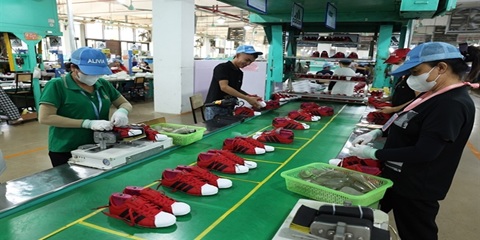
Việt Nam's exports of footwear and handbags to the US exceeded US$8 billion in the first eight months of 2026, as the US and EU remained the country's biggest markets despite sluggish growth in footwear shipments. Exports from Việt Nam's leather and footwear sector reached more than $2.45 billion in August, down 9 per cent from July but up 3 per cent from a year earlier, according to preliminary statistics.
VIETNAM ECONOMY INVESTMENT
LÂM ĐỒNG TARGETS DIGITAL ECONOMY TO ACCOUNT FOR 30 PER CENT OF GRDP BY 2030
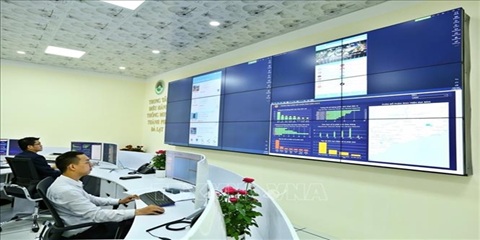
Lâm Đồng Province aims to raise the digital economy’s contribution to around 30 per cent of its gross regional domestic product (GRDP) by 2030, as part of a five-year plan to develop digital economy and society issued recently. Under Plan No. 15358/KH-UBND, the province targets more than 60 per cent of small- and medium-sized enterprises (SMEs) to adopt digital technologies by 2030 while increasing the value of cashless payments to 30 times its GRDP.
Events Sponsors






















