Want to be in the loop?
subscribe to
our notification
Business News
INT’L STANDARD MANUFACTURING INFRASTRUCTURE: KEY TO VIETNAMESE ENTERPRISES TO ENTER GLOBAL SEMICONDUCTOR ECOSYSTEM
Vietnam's semiconductor industry is expected to generate around US$21 billion in revenue in 2025, up 18% from 2024. The country’s electronics and semiconductor sectors are entering a phase of strong growth, fueled by rising global demand, government support policies, and competitive advantages in workforce and geographic location.
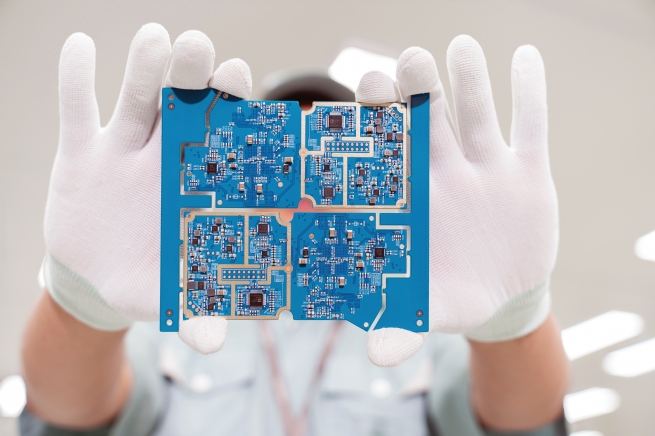
Vietnam's semiconductor industry is expected to earn US$21 billion in 2025
Great potential
According to Do Thi Thuy Huong, a member of the Executive Committee of the Vietnam Electronic Industries Association (VEIA), the electronics and semiconductor industries are important to Vietnam’s economy, especially in exports. Data from the Department of Vietnam Customs shows that in 2024, electronic product exports reached US$126.9 billion, accounting for about one-third of the country’s total export turnover. By 2025, the semiconductor industry alone is projected to reach US$21 billion, up 18% year-on-year, with a compound annual growth rate (CAGR) of 10% from 2025 to 2029, hitting US$31 billion in 2029.
Vietnam has become an appealing destination for global giants like Intel, Samsung, Qualcomm, and Amkor, thanks to competitive labor costs, political stability, and an extensive network of free trade agreements (FTAs). The industry currently focuses on assembly, packaging, and testing, but is gradually shifting toward microchip design.
Vietnam also holds substantial reserves of rare earth elements, making up 18% of the world’s total and ranking second globally in these raw materials essential for semiconductor manufacturing. The country also has a sizable pool of technical talent, with around 1,400 semiconductor-related graduates each year, though this remains far below the projected demand of 50,000 engineers by 2030.
Vietnam’s semiconductor industry is actively adopting advanced technologies such as artificial intelligence (AI), the Internet of Things (IoT), and 5G, driving demand for high-performance microchips. Emerging technologies like nanotechnology, graphene, and silicon carbide are being explored to create smaller, faster, and more energy-efficient components. At the same time, many businesses are integrating green technology into their production processes to minimize environmental impact and promote sustainable manufacturing. AI is increasingly applied to optimize chip design, detect manufacturing defects, and predict market trends.
The government has issued Decision 1018/QD-TTg (dated September 21, 2024), setting a goal to transform Vietnam into a global semiconductor hub. The 2024-2030 roadmap prioritizes attracting foreign direct investment (FDI) and building a highly skilled workforce, opening up opportunities for high-tech supporting industry enterprises to join the global value chain.
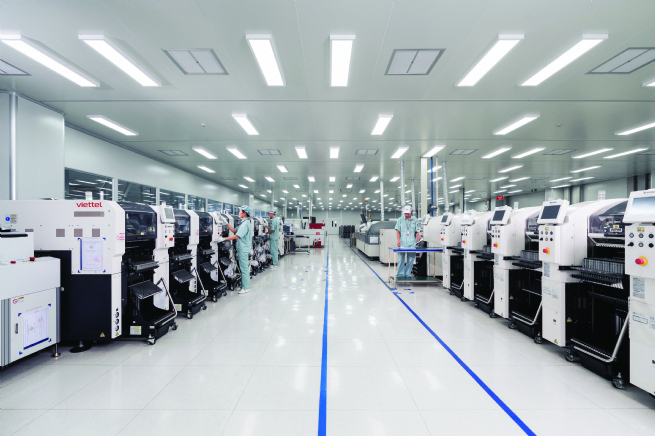
Vietnam’s electronics and semiconductor industry aims to become a regional IC hub, driven by policies, investment, and local resources
International standard manufacturing infrastructure needed
According to Ms. Huong, the global semiconductor industry is projected to reach US$1,000 billion in revenue by 2030, fueled by growing demand in AI, IoT, and 5G applications. Although Vietnam is emerging as a rising destination in the global semiconductor supply chain, advancing to higher value-added stages like chip design and fabrication requires international-standard manufacturing infrastructure, including fabrication plants (fabs), cleanrooms, and advanced quality control systems.
Major corporations such as Intel, Samsung, and Taiwan Semiconductor Manufacturing Company (TSMC) demand that their suppliers meet rigorous international standards for quality, precision, and sustainable production. Semiconductor facilities must adhere to certifications like ISO 9001 (quality management), ISO 14001 (environmental management), and cleanroom classifications from Class 1 to Class 10.
“Standard infrastructure is a decisive factor in attracting FDI, enhancing Vietnam’s competitiveness, and a prerequisite for domestic enterprises - especially SMEs - to move deeper into the global supply chain and beyond traditional assembly and processing,” Huong emphasized.
In practice, Vietnam’s supporting industries for the semiconductor sector remain limited. The country currently has no semiconductor fabs and focuses mainly on packaging and testing operations, such as Intel’s factory in Ho Chi Minh City and Amkor’s facility in Bac Ninh province. Most existing facilities serve FDI enterprises and often fall short of international standards for high-tech production. According to the Global Innovation Index (2023), Vietnam ranked 71st out of 132 countries for infrastructure, underscoring a substantial gap compared to the stringent demands of the semiconductor industry.
Vietnam also faces a shortage of specialized laboratories and international-standard research and development (R&D) centers, limiting its capacity to develop core technologies and modern microchip designs. This infrastructure shortfall weakens the competitiveness of domestic high-tech supporting industry enterprises, particularly SMEs. Huong believed that building international standard production infrastructure would help Vietnamese SMEs meet the requirements of multinational corporations, creating opportunities to win contracts and enter high value-added segments like microchip design, which contributes 53% of a chip’s value. It would also support local players such as FPT Semiconductor and Viettel in producing "Made in Vietnam" chips.
The development and modernization of high-tech parks, including Saigon Hi-Tech Park, Hoa Lac Hi-Tech Park, and Da Nang Hi-Tech Park, with preferential tax incentives and advanced infrastructure, will promote technology transfer from leading economies like the U.S., South Korea, and Taiwan, while attracting major investors such as TSMC, Nvidia, and Qualcomm to Vietnam.
Moreover, international standard infrastructure forms the foundation for a comprehensive semiconductor ecosystem, including R&D centers, laboratories, and human resource training facilities. This ecosystem will support Vietnam’s target of establishing 100 IC design enterprises and 10 packaging and testing factories by 2030, as set out in the Semiconductor Industry Development Strategy.
The semiconductor industry demands strict management of toxic waste and efficient energy use. Therefore, building international standard infrastructure - with advanced environmental management systems and green energy solutions - is important to meet international partners’ expectations and ensure sustainable, responsible growth.
To promote international standard production infrastructure, Huong recommended expanding and upgrading high-tech parks in Ho Chi Minh City, Hoa Lac, and Da Nang with cleanroom facilities, testing centers, and stable energy systems. She also suggests encouraging public-private partnerships (PPP) to mobilize investment for infrastructure projects, especially small-scale chip manufacturing plants for specialized chip research and production. Financial and technical support should be provided to high-tech supporting industry firms, particularly SMEs, to invest in cleanroom systems, quality control technologies, and other international-standard infrastructure.
Vietnam’s electronics and semiconductor industry is at a pivotal moment, with the potential to become a regional hub for IC design and manufacturing, driven by strategic policies, international investment, and strong domestic resources. To realize this potential, Vietnam must prioritize human resource training, R&D investment, and building a sustainable, globally competitive semiconductor ecosystem. With a clear roadmap to 2030 and a long-term vision to 2050, the industry is set to become a major driver of economic growth, significantly boosting the nation’s GDP and export turnover.
Source: VCCI
Related News

BANKING / FINANCE / INSURANCE / TAX
REMITTANCES TO HCM CITY RISE NEARLY 40% IN Q3
Remittances to HCM City reached more than US$2.83 billion in the third quarter of this year, up 39.5 per cent from the previous quarter and 3.6 per cent year-on-year. This was the first quarter showing positive annual growth this year, helping narrow the decline in remittance inflows over the first nine months. According to the State Bank of Vietnam (SBV)’s Regional Branch 2, remittances transferred to HCM City through credit institutions and economic organisations totalled $2.835 billion in Q3, an increase of more than $802 million from the previous quarter.

TECHNOLOGY
TECH SECTOR GROWTH OPENS UP OPPORTUNITIES FOR VIỆT NAM TO GO GLOBAL
The growth of the electronics, semiconductor and high-tech sectors worldwide is opening up a variety of opportunities for Vietnamese enterprises to integrate more deeply into the global supply chain. However, to become suppliers for these corporations, domestic enterprises must meet rigorous standards regarding quality, technology, productivity and order fulfilment capabilities.

VIETNAM ECONOMY INVESTMENT
FOREIGN INVESTORS SEEKING A SYNCHRONISED MANUFACTURING ECOSYSTEM
Instead of focusing only on land costs and incentives as usual, foreign investors are seeking a synchronised manufacturing ecosystem, from stable power supply and logistics to shared infrastructure and the convenience of completing residence procedures for experts to serve their long-term investment in the country.

MEMBER CORNER / PROMOTIONS
SENTRYSAFE FHW40200 – PROTECT YOUR VALUABLES, ENJOY PEACE OF MIND!
Looking for a reliable solution to protect your important documents, cash, and valuables from fire and water damage? Genuine SENTRYSAFE - Reliable protection for your valuables and peace of mind! Contact Sen Wai Vietnam for more information and personalized product recommendations.

PROPERTY / INDUSTRIAL ZONE
HCM CITY ATTRACTS US$5.7 BILLION INTO EXPORT PROCESSING AND INDUSTRIAL ZONES
HCM City attracted US$5.7 billion in domestic and foreign investment into its export processing and industrial zones during the first nine months of 2026. The figure exceeded the city's full-year target by 31 per cent, highlighting strong momentum in high-quality industrial investment under Resolution No.10-NQ/TW. Total investment reached 131 per cent of the 2026 target of $4.25 billion and represented a 29 per cent increase compared with the same period in 2025, according to the city's Export Processing and Industrial Zones Authority (HEPZA).

INFRASTRUCTURE / CONSTRUCTION / LOGISTIC / PORT
DONG THAP PROVINCE STEPS UP INDUSTRIAL EXPANSION AND INFRASTRUCTURE CONNECTIVITY
Accelerating public investment, strengthening inter-regional connectivity, and expanding industrial land are helping Dong Thap efficiently bolster competitiveness and drive economic growth. Following the 2025 merger of the former Dong Thap and Tien Giang provinces, the expanded Dong Thap province in the Mekong Delta faces mounting pressure to accelerate infrastructure development and strengthen connectivity among local economic zones, urban areas, industrial parks (IPs), and production centres.
Events Sponsors






















