Want to be in the loop?
subscribe to
our notification
Business News
IMPROVING HUMAN RESOURCES FOR DIGITAL BANKING TRANSFORMATION
Digital transformation in banking requires banks to quickly and strongly shift to digital services in the online environment in order to effectively interact with customers in the front-end, as well as requiring changes in back-end processes to support front-line transitions and improve operational efficiency through increasing digitization and automation. However, human resources in Vietnam to meet these requirements are scarce, causing many Vietnamese banks to compete fiercely to find and retain high-quality personnel.
Strong digital transformation
In fact, the applications from new digital technologies along with the appearance of new competitors in the market such as Bigtech/Fintech present banks both opportunities and challenges, requiring transforming operating models in the direction of integration, transforming business models, providing services on a digital platform to optimize operations and increase customer experience.
The COVID-19 pandemic is also considered a factor promoting digital transformation awareness in all fields, including the banking industry, putting the banking system in front of the mandatory requirement to switch to digital transformation to survive and develop. Along with that strong digitization trend, the COVID-19 pandemic has also created a leap in non-cash payment activities.
Digitization enables banks to increase efficiency and enhance the customer experience, while reducing operational costs, helping to improve processes and helping leadership teams provide timely data for decision making. Many banking operations such as transferring money, opening accounts, paying bills, and checking loan information are allowed to be performed remotely and some operations can be automatically performed partially or completely on the digital environment through technologies such as AI, Robotic Process Automation (RPA).
According to a survey by the State Bank of Vietnam, 95% of banks have been developing and implementing digital transformation strategies with many having deployed specialized departments to perform digital transformation tasks and creative initiatives. In addition, most banks have applied new technical and technological solutions in their operations and service provision, in which many operations have been completely digitized by some banks such as opening savings accounts; term deposits; opening and using a payment account; bank card; electronic wallet; transferring money; human resource management; and accounting-finance. Many banks have also applied AI, ML and Big Data technologies to evaluate, classify customers and decide on disbursement in order to simplify procedures and shorten disbursement and lending time.
Retraining is appropriate
In addition to the benefits of operational and business efficiency, digital transformation also creates the great challenge of suitable personnel in the banking industry. For effective digital transformation, it is necessary to have people who understand both technology and business operations. Recently, along with direct recruitment, on a number of online job search platforms such as Vietnamworks, Jobstreet, and Careerlinks, there have been recruitment notices for many human resources positions in the field of information technology, much related to digital services such as software development, information technology engineers to serve the construction and administration of Core Banking system. Many banks have also paid attention to developing training plans early, retraining personnel to meet the needs of digital transformation, and implementing plans and programs for rewarding and retaining high-quality personnel.
However, the scarcity of high-quality personnel is still quite common. Therefore, there is fierce competition for personnel among banks. The competition for digital transformation personnel takes place not only among banks, but also between banks and fintech companies, which accept to pay a lot to attract quality personnel.
The development strategy of Vietnam's banking industry to 2025, with an orientation to 2030, has set forth requirements and tasks to focus on developing, applying science and technology, and developing human resources of the banking industry. Therefore, the State Bank issued Decision 1537/QD-NHNN on approving the Implementation Plan of the Action Program of the banking sector with many key contents in developing high-quality human resources.
Accordingly, the plan focuses on developing professional standards; strengthening cooperation between training units and employers in the banking industry; paying attention to training high-quality human resources; training staff to grasp scientific and technological advances and apply them to industry practice. The plan also focuses on building information technology staff at credit institutions; strengthening cooperation, taking advantage of support, technology transfer, and in-depth professional training from international organizations.
According to SBV Deputy Governor Nguyen Kim Anh, human resource issues are considered the foundation of sustainable development for banks and financial institutions. Therefore, the banking industry must focus on training to improve the quality of human resources to be able to adapt to the very high requirements of the fourth industrial revolution. In the coming time, the implementation of solutions to adapt to the changes of the human resource market is very necessary to ensure sustainable development, associated with the development trend of the banking industry in the digital era.
According to Dr. Dinh Trong Thinh, an economic expert, in order to train digital human resources, Vietnam must focus on training, transforming, improving skills and redirecting employees to high technology, which can be divided into different types and forms of employees to have solutions for training.
In addition, in the opinion of some banking experts, in order to continue to upgrade and perfect the human resources to meet the requirements of digital transformation, banks need to build their vision and culture in line with the requirements of digital transformation such as building a digital bank model, a socially engaged bank, and a data-driven bank. A digital culture will strengthen and inspire the bank's human resources to create a digital mindset. To do this, it is essential to have a transformation from the leadership team, and senior managers to create a transformation of awareness from top to bottom, from high to low.
In addition, it is possible to structure the apparatus and rearrange the parts reasonably to facilitate the research, application, and deployment of new products and services flexibly and quickly; build relationships and networks with other organizations and partners such as Fintech, Bigtech, universities and research institutes, in order to deploy training programs and plans, field trips, internships for learning technology as well as to prepare the reserved staff from the student team.
Source: VCCI
Related News

BANKING / FINANCE / INSURANCE / TAX
REMITTANCES TO HCM CITY RISE NEARLY 40% IN Q3
Remittances to HCM City reached more than US$2.83 billion in the third quarter of this year, up 39.5 per cent from the previous quarter and 3.6 per cent year-on-year. This was the first quarter showing positive annual growth this year, helping narrow the decline in remittance inflows over the first nine months. According to the State Bank of Vietnam (SBV)’s Regional Branch 2, remittances transferred to HCM City through credit institutions and economic organisations totalled $2.835 billion in Q3, an increase of more than $802 million from the previous quarter.

TECHNOLOGY
TECH SECTOR GROWTH OPENS UP OPPORTUNITIES FOR VIỆT NAM TO GO GLOBAL
The growth of the electronics, semiconductor and high-tech sectors worldwide is opening up a variety of opportunities for Vietnamese enterprises to integrate more deeply into the global supply chain. However, to become suppliers for these corporations, domestic enterprises must meet rigorous standards regarding quality, technology, productivity and order fulfilment capabilities.
VIETNAM ECONOMY INVESTMENT
FOREIGN INVESTORS SEEKING A SYNCHRONISED MANUFACTURING ECOSYSTEM
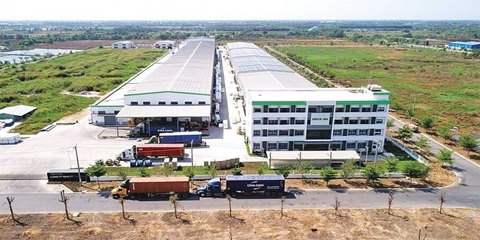
Instead of focusing only on land costs and incentives as usual, foreign investors are seeking a synchronised manufacturing ecosystem, from stable power supply and logistics to shared infrastructure and the convenience of completing residence procedures for experts to serve their long-term investment in the country.

MEMBER CORNER / PROMOTIONS
SENTRYSAFE FHW40200 – PROTECT YOUR VALUABLES, ENJOY PEACE OF MIND!
Looking for a reliable solution to protect your important documents, cash, and valuables from fire and water damage? Genuine SENTRYSAFE - Reliable protection for your valuables and peace of mind! Contact Sen Wai Vietnam for more information and personalized product recommendations.
PROPERTY / INDUSTRIAL ZONE
HCM CITY ATTRACTS US$5.7 BILLION INTO EXPORT PROCESSING AND INDUSTRIAL ZONES
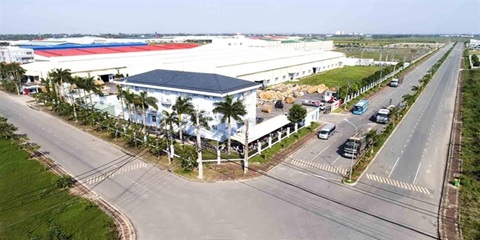
HCM City attracted US$5.7 billion in domestic and foreign investment into its export processing and industrial zones during the first nine months of 2026. The figure exceeded the city's full-year target by 31 per cent, highlighting strong momentum in high-quality industrial investment under Resolution No.10-NQ/TW. Total investment reached 131 per cent of the 2026 target of $4.25 billion and represented a 29 per cent increase compared with the same period in 2025, according to the city's Export Processing and Industrial Zones Authority (HEPZA).
INFRASTRUCTURE / CONSTRUCTION / LOGISTIC / PORT
DONG THAP PROVINCE STEPS UP INDUSTRIAL EXPANSION AND INFRASTRUCTURE CONNECTIVITY
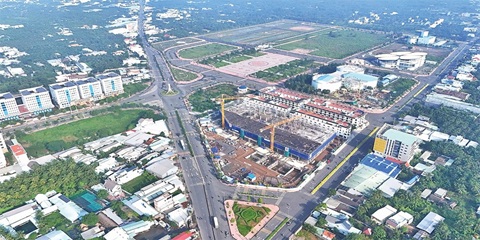
Accelerating public investment, strengthening inter-regional connectivity, and expanding industrial land are helping Dong Thap efficiently bolster competitiveness and drive economic growth. Following the 2025 merger of the former Dong Thap and Tien Giang provinces, the expanded Dong Thap province in the Mekong Delta faces mounting pressure to accelerate infrastructure development and strengthen connectivity among local economic zones, urban areas, industrial parks (IPs), and production centres.
Events Sponsors






















