Want to be in the loop?
subscribe to
our notification
Business News
HOW POST-PANDEMIC REAL ESTATE LIKELY TO FARE?
After the COVID-19 pandemic, real estate in the vicinity of Ho Chi Minh City and projects invested by reputable investors are forecast to attract buyers.
The COVID-19 pandemic outbreak in the past three months has almost frozen the property market in many provinces and cities and largely halted secondary property deals. Particularly, online orders are allowed in suburban apartment projects.
High demand, unchanged prices
Reports by property market research companies show that real estate prices in the suburbs of Ho Chi Minh City have not declined, even increasing sharply during the outbreak of the COVID-19 pandemic. According to DKRA Vietnam, the suburban residential land market continues to take the lead as supplies are short in Ho Chi Minh City for four consecutive quarters. Dong Nai province continues to lead new supplies and new deals in the whole market.
New townhouse and villa supplies in Ho Chi Minh City and neighboring provinces suddenly increased by 78% as compared to the previous quarter but the supplies primarily rolled out in the first and second quarters of 2021. However, sales dropped around 23% over the same period in 2020 due to mandatory social distancing to prevent COVID-19 contagion.
A report from CBRE Vietnam also shows that, from the beginning of 2021, the cash flow into real estate has increased very quickly, especially early in the year. Many provinces even witnessed land frenzies. According to surveys, 75% of respondents wanted to invest in real estate and 35% planned to invest in the stock market before the COVID-19 outbreak.
However, in the last three months, mandatory social distancing to fight the pandemic resulted in a sharp redirection of cash flows into the stock market. There is no sign of property selloffs, especially in localities adjacent to Ho Chi Minh City. This shows that many investors are placing their money in property and waiting for the opportunity to buy real more after the pandemic.
Mr. Vo Huynh Tuan Kiet, Deputy Director, Housing Marketing Head of CBRE Vietnam, said, despite economic difficulty caused by the COVID-19 pandemic, the demand for housing is always high. The more the pandemic spreads, the more strongly people want to own a safe private accommodation.
Besides, for professional investors or high-income earners, when the pandemic occurs, their money cannot flow into manufacturing and consumption channels and they therefore tend to pour money into real estate, which is always considered a safe and sustainable choice in the long run.
Inevitable trend
Associate Professor Nguyen Minh Hoa, Vice Chairman of Ho Chi Minh City Planning and Development Association, said that high-rise buildings and separate houses better prevent COVID-19 infections than densely populated areas with deep narrow alleys at the heart of the city during the social distancing time.
In particular, when the pandemic contagion is becoming more complicated, many people return to their native land outside of Ho Chi Minh City to have a more peaceful and healthy life with their extended families. This will drive up property demands after the pandemic. Let alone, many areas in Ho Chi Minh City no longer have land funds for the time being. In neighboring localities like Dong Nai and Binh Duong, the land fund is still very abundant and the traffic is also increasingly convenient.
Dr. Hoa added, in order to adapt to climate change and sea level rise, Ho Chi Minh City intended to develop the main urban space to the East and North-Northwest. Only these areas have large enough land for investors to carry out creative planning, design large affordable projects to attract more buyers. Then, projects in neighboring localities like Tay Ninh, Dong Nai, Binh Duong and Ba Ria - Vung Tau will draw investors.
Importantly, consumers now tend to prefer spacious residences open to nature to small residences in the downtown, said Mr. Tran Khanh Quang, General Director of Viet An Hoa Real Estate Company, adding that the magnet of downtown property will weaken as a result.
More importantly, primary investors tend to develop large projects to build high-class residences with various added values and high profit margins. Therefore, they will actively direct buyers to such projects.
According to experts, the profit margin of projects in Ho Chi Minh City is currently only about 15%, relative to 30%-40% in other provinces. This explains why many real estate giants in Ho Chi Minh City and other countries are moving away from downtown.
“In my opinion, well-located residences where climate is pleasant, giant projects that are 60-100 km from Ho Chi Minh City invested by reputable investors will entice buyers, even a mild post-COVID-19 frenzy anticipated for a while. Especially, more interests will be placed on products to be delivered in 2023 and applied with flexible payment policies, he added.
Remarking on the appeal of real estate in the vicinity of Ho Chi Minh City, Mr. Vo Huynh Tuan Kiet said that real estate there has never been saturated to date. It may be quicker or slower, depending on drives generated by leading projects. He cited that real estate in Bien Hoa City, Dong Nai province is quite hot when many big developers such as Novaland, Nam Long and Hung Thinh all focus on deploying large urban areas and catch the attention of primary investors and end-buyers to place orders online.
Source: VCCI
Related News

CHARITY / EXHIBITION / OTHER EVENTS
INVESTMENT OPPORTUNITIES IN CA MAU PROVINCE: 96 PROJECTS AND 20 STRATEGIC PROJECTS
We are pleased to share with you information on investment projects currently seeking investors in Ca Mau Province. Should your esteemed company or association be interested, we kindly invite you to review the project information and complete the registration form via the links provided. The Ho Chi Minh City Investment and Trade Promotion Centre (ITPC) will consolidate the expressions of interest and facilitate connections with the leadership of Ca Mau Province at a meeting tentatively scheduled for 13 November 2026 in Ho Chi Minh City.
MEMBER CORNER / PROMOTIONS
BẰNG KIỀU LIVESHOW - A SYMPHONY OF LOVE UNDER THE GOLDEN GLOW
A masterclass in live music that takes the audience on a soulful journey through immortal love songs, guided by the peerless artistry and emotive storytelling of renowned singer Bằng Kiều. The highlight of the night is his seamless musical chemistry with special guest Triệu Hồng Ngọc, promising passionate and deeply resonant duets inside the magnificent Grand Ballroom.
INFRASTRUCTURE / CONSTRUCTION / LOGISTIC / PORT
ĐÀ NẴNG GREEN-LIGHTS US$105 MILLION THAI DEVELOPMENT DEAL
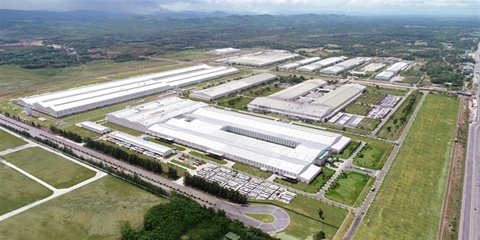
The central city has approved an investment proposal by Thailand’s WHA Group to develop infrastructure for the 400ha WHA Đà Nẵng Industrial Park project on two communes of Thăng Bình and Đồng Dương, with an investment of more than VNĐ2.7 trillion (US$105 million). The city said it approved WHA Industrial Development International's status as an investor in the project, which is expected to take place between 2027 and 2034.
VIETNAM ECONOMY INVESTMENT
MOBILE PHONE EXPORTS RISE 20% TO $51.8 BILLION IN FIRST NINE MONTHS
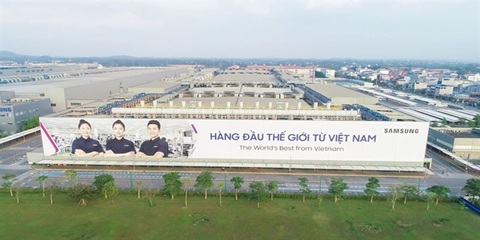
Exports of mobile phones and components rose 20 per cent year-on-year to nearly US$51.8 billion in the first nine months of 2026, with China, the US and Republic of Korea accounting for more than half of the total. Shipments to the three markets reached a combined $26.18 billion, or 50.6 per cent of total exports of the product group during the period, according to data from the Vietnam Department of Customs under the Ministry of Finance.
INFRASTRUCTURE / CONSTRUCTION / LOGISTIC / PORT
VIỆT NAM-CAMBODIA TRADE GATHERS PACE TOWARDS $20 BILLION TARGET
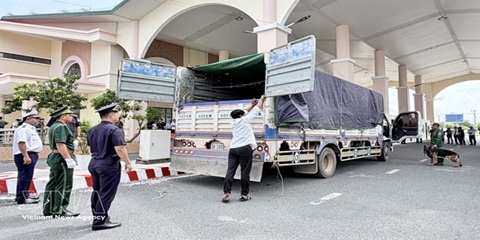
Trade between Việt Nam and Cambodia continues to grow, remaining a bright spot and a key pillar of bilateral cooperation as the two countries aim to raise two-way trade to US$20 billion in the coming years. After setting a record of more than $11.3 billion last year, bilateral trade reached about $8.7 billion in the first eight months of this year, up 8.3 per cent year on year.
VIETNAM ECONOMY INVESTMENT
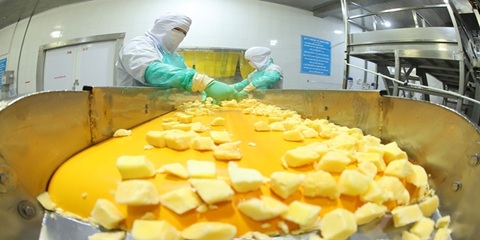
FRUIT AND VEGETABLE EXPORTS POISED TO HIT $10 BILLION IN 2026
Fruit and vegetable exports are on track to reach nearly US$10 billion in 2026, after rising 19.9 per cent year on year to nearly US$7.4 billion in the first nine months, driven by strong seasonal demand and abundant tropical fruit supplies. The Ministry of Agriculture and Environment said the growth reflected stronger international demand for fresh produce and processed agricultural products.
Events Sponsors






















